Super-Earths might be solid deep on the inside
Super-Earths might be solid in their deep insides, a new study says. Minerals might take unusual forms and remain solid despite the intense heat and pressure. The post Super-Earths might be solid deep on the inside first appeared on EarthSky .
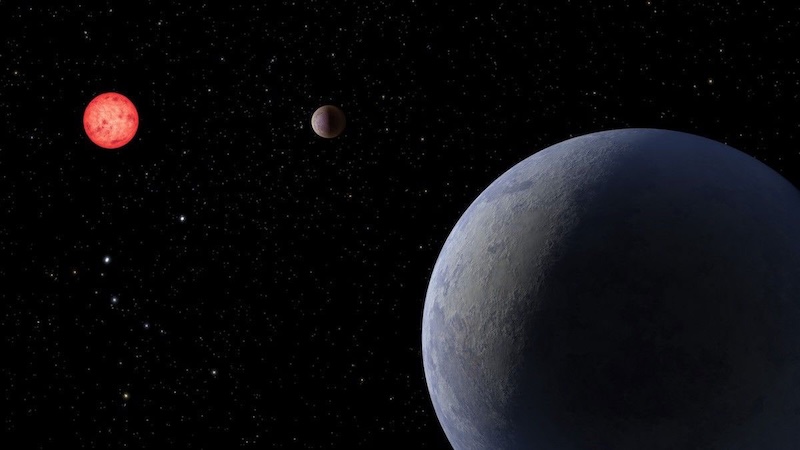
Super-Earths are rocky exoplanets, larger and more massive than Earth but smaller than Neptune. A new study from Princeton University suggests these intriguing celestial bodies might be entirely solid deep within their mantles. Under the extreme pressure and temperature millions of times higher than on Earth, certain minerals could form unusual crystal structures and remain solid.
This surprising revelation challenges previous assumptions that super-Earths could contain oceans of magma. Scientists expect common minerals like magnesium orthosilicate to be present within super-Earths as well. However, the intense conditions at their cores force these minerals to transform into new crystal structures, such as post-post-spinel Mg2SiO4.
Even when mixed with iron, this ultrahigh-pressure phase of Mg2SiO4 remains stable at temperatures exceeding those found at Earth's core-mantle boundary. The study's findings, published in AGU Advances, imply that super-Earths are likely to have solid deep mantles, which could impact their internal convection and magnetic fields. These unique characteristics may also influence their potential to support life.
Written by urgent.news from EarthSky's reporting — not their text. Machine-written — may contain errors; check the original before relying on it.