Santiago de Compostela quiere tirar a los peregrinos al pilón
Este verano se han vuelto virales los vídeos de caminantes que culminan a ritmo de charanga su viaje a la ciudad
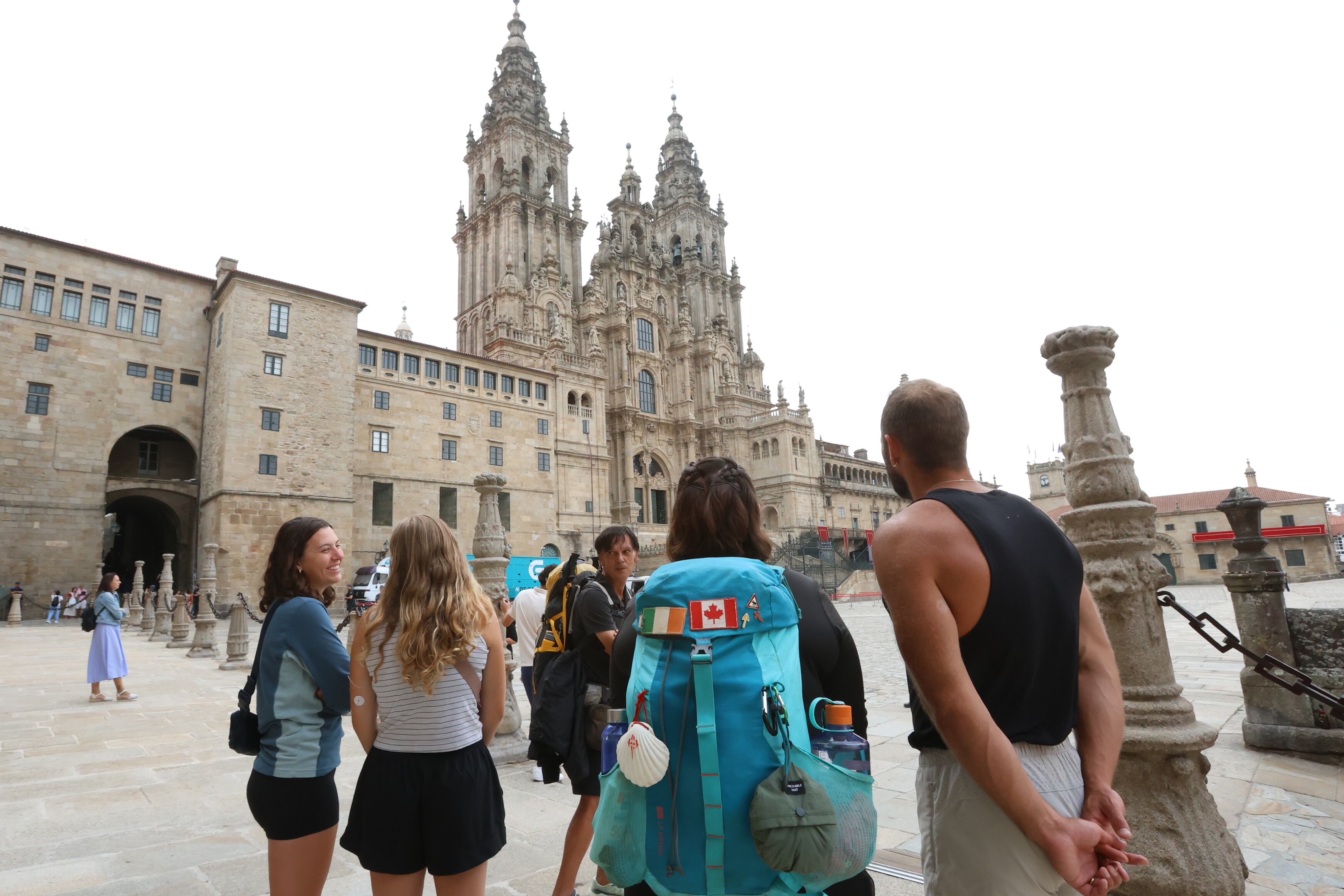
This summer, videos of pilgrim groups arriving in Santiago de Compostela have been abundant, showcasing how the journey has transformed them for the better. Their newfound traits include being more thoughtful, reflective, aware, subtle, and wise. This is evident in their singing of charanga songs, intimidating pedestrians, guzzling beers in the spiritual bars of the area, and urinating boldly in the corners of the historic district.
The deep Christian devotion and introspective fervor of the city's residents have left them in a state of radical atheism and nihilism. Some have even considered throwing Nietzsche's complete works off balconies at passing pilgrims: if we cannot convince them that God is dead, at least we will shake up two or three. We deplore the philosophical violence, but we sympathize with them.
I used to make yearly visits to Santiago, though I no longer do. My apprehension stems from both the pilgrims and the possibility of being mistaken for one, resulting in being thrown at one of the Roman columns still standing in the squares. The hatred for tourists is a common refrain in tourist destinations, but in Santiago, it has become a paradox.
After all, the city only exists due to the Camino. It was founded by an Asturian king around the tomb, hoping to attract tourism to a depressed area of his kingdom. A few centuries later, the Cluny order, akin to the Meliá of the time, established a chain of comfortable accommodations to divert tourism from Rome to Galicia. Álvarez Junco notes that around that time, the term “Spanish” emerged, a French word used by tourists to refer to those living south of the Pyrenees and extracting quarters from them through the sale of poor wine and regional products.
Santiago and Spain share a tourist origin. While it may be tempting to criticize tourism as corrupting the essence of cities and countries, Santiago deserves special consideration. The pilgrim charangueros represent the city's primal spirit, reminding everyone of what it once was, like the sheep that cross Madrid once a year to remind everyone that Castellano is a canyon.
In this case, perhaps the only remedy is to ask the apostle for patience to endure the summer. And to the pilgrims, less fervor.
Written by urgent.news from El Pais's reporting — not their text. Machine-written — may contain errors; check the original before relying on it.