Urgent.News

What's breaking now, across thousands of outlets.

Science

Raumfahrt: Nasa zeigt Krater nach SpaceX-Einschlag auf dem Mond

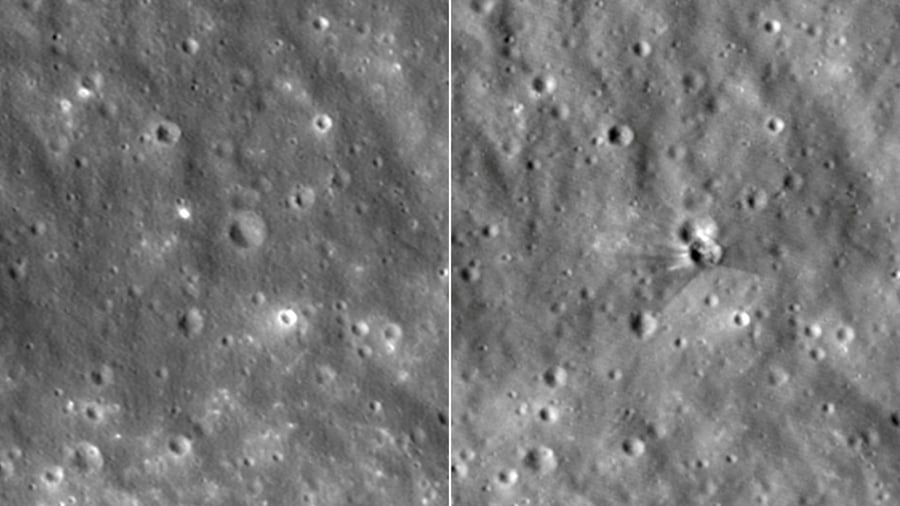
Nach Schätzung der Nasa ist der Krater etwa 18 Meter breit und weniger als drei Meter tief. Zuerst hatte die südkoreanische Raumsonde Danuri die Stelle erreicht und Aufnahmen übermittelt.
Original German Read in English

Raumfahrt: Nasa zeigt Krater nach SpaceX-Einschlag auf dem Mond

The U.S. space agency NASA has unveiled its sharpest images yet of a SpaceX rocket stage crashing into the moon, according to newly released photos from the Lunar Reconnaissance Orbiter. The images, released on Tuesday, show a crater approximately 18 meters wide and less than three meters deep, created by the impact of a SpaceX Falcon rocket's upper stage.

The spacecraft had been traveling through space for over a year before its mission ended on August 5th, when it struck the lunar surface at a speed of around 8,700 kilometers per hour. South Korean space probe Danuri had previously captured images of the impact site, which took six days to come into view of the orbiter. The upper stage of the Falcon rocket had transported two private lunar landers with experiments and even a small rover to the moon in 2025, supporting the increasing commercial exploration of the lunar surface.

Written by urgent.news from Handelsblatt's reporting — not their text. Machine-written — may contain errors; check the original before relying on it.

Read the original at handelsblatt.com →

More in Science

China successfully recovered its second reusable rocket in just one month, intensifying its pursuit of the United States in the space race. The state-owned China Aerospace Science and Industry Corporation (CASIC) announced on April 27 that it had successfully recovered a reusable rocket, the "Zhuque-2", which was launched on April 25 from the Jiuquan Satellite Launch Center in Gansu Province. CASIC said that after the rocket reached an altitude of 350 kilometers and completed its mission, it successfully re-entered the atmosphere and landed back on Earth. The recovery of the Zhuque-2 rocket comes just a month after China's first reusable rocket, the "Zhuque-1", was successfully recovered on March 30. China's rapid progress in reusable rocket technology has raised expectations that it will be able to launch satellites and other spacecraft at a lower cost. The United States has been a leader in reusable rocket technology, with companies such as SpaceX and Blue Origin making significant advancements in recent years. However, with China's latest success, the country is now closing the gap with the United States in the space race. China's space program has made significant strides in recent years, with several notable achievements, including landing a rover on the far side of the Moon and launching a lunar probe. The country's space agency, the China National Space Administration (CNSA), has set ambitious goals for its space program, including sending humans to the Moon by 2030 and establishing a permanent human presence on the lunar surface. With its reusable rocket technology, China is expected to play a major role in the global space industry in the coming years. Analysts say that China's success in reusable rocket technology will have significant implications for the global space industry, as it will provide a more cost-effective option for launching satellites and other spacecraft. The development of reusable rockets is a key area of focus for the global space industry, as it has the potential to significantly reduce the cost of accessing space. China's progress in this area is likely to put pressure on other space-faring nations to accelerate their own development of reusable rocket technology. The country's success is also expected to inspire other countries to pursue their own space programs, which could lead to a new era of space exploration and development.

More from Wednesday 19 August →