OPINIÃO. Além das urnas: dez anos de PPI
Em 2022, às vésperas das eleições gerais, optei por tornar públicas as medidas que considerava essenciais à infraestrutura brasileira, em vez de vinculá-las a uma candidatura. Parti de uma convicção que permanece válida: concessões e parcerias de longo prazo são contratos celebrados com o Estado brasileiro, e não com determinado governo. Rodovias, ferrovias, portos, aeroportos, […] The post…
In 2022, ahead of the general elections, I decided to make public the measures I believed were essential for Brazil's infrastructure, rather than linking them to a specific candidate. My conviction - that concessions and long-term partnerships are contracts with the Brazilian State, not a particular government - remained valid. Roads, railways, ports, airports, energy and sanitation systems span across mandates and generations, so infrastructure must be treated as a national agenda, technical and resilient to electoral disputes.
Four years later, as Brazil returns to the polls and the Program of Partnerships for Investments (PPI) marks its decade, I revisit that reflection to assess what experience has taught. In 2022, I highlighted regulatory liabilities that urgently needed addressing, unsustainable partnership contracts from an economic and financial standpoint, risk matrices inadequately aligned with assets, and the need for project timelines (predictability).
While I acknowledge that significant progress was made in tackling these challenges, many persist. The advances in addressing these issues largely stem from the institutional framework of the PPI, which has survived governments of differing orientations, and therefore deserves preservation and improvement. The roles played by sector ministries of infrastructure and regulatory agencies, particularly the improvement provided by the National Land Transport Agency (ANTT) in constructing the risk matrix for federal road concessions, were essential.
Crucial was the action of the Union Accounts Court (TCU), which, through consensual solutions, provided technical and legal guidance to unviable concession projects and major regulatory liabilities that hampered infrastructure growth and hindered adequate service provision to users. Instituted initially by Provisory Measure No. 727 on May 12, 2016, and consolidated by Law No. 13,334 on September 13 of that year, the PPI represented a significant innovation in governance.
The law created a collegiate council to evaluate and recommend to the President of the Republic the priority projects, and a dedicated secretariat to coordinate, monitor and support its execution. I had the opportunity to participate in this trajectory as head of the PPI Secretariat. The experience confirmed the perception that the value of the PPI lies not only in the quantity of assets offered, but in reducing decision fragmentation in the State, articulating ministries, regulatory agencies, developers, public banks, environmental and control bodies, and creating more predictable interaction with investors and society.
This distinction is important: qualifying a project in the PPI means giving it national priority and mobilizing coordination for its expeditious completion. When the Program reached its ninth anniversary in September 2025, the Civil House recorded 385 projects delivered to society since 2016, of which 90 were completed in the management that began in 2023, with approximately R$ 220 billion in contracted investments.
The figures are impressive, but, as measured, success should not be determined solely by them and should not be read in isolation. In a country where political transitions frequently discontinue teams, studies and mature projects, preserving institutional memory has economic value: each abandoned model without technical justification and each restarted timeline impose costs on taxpayers and users.
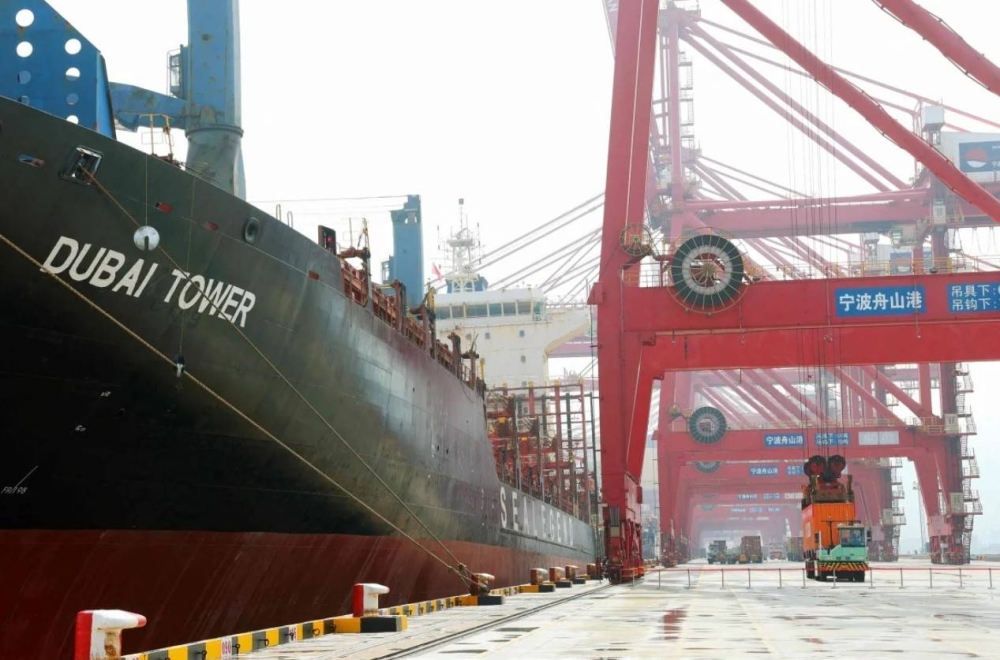
In this journey, the PPI supported undertakings that altered Brazil's infrastructure, such as aeropuerto concessions in blocks, including Congonhas, the new Dutra and Rio-Santos concession, port leases and the privatization of Codesa, capitalization of Eletrobras, regional sanitation projects, and in railways, the central Norte-Sul section, Fiol 1, and premature renewals of the Paulista and Carajás lines, among others.
These are assets built by teams from different governments and subjected, to varying degrees, to scrutiny by various entities of society. Keeping the "project factory" active that I referred to in 2022 is indispensable. Brazil's infrastructure deficit demands a permanent portfolio and continuous capacity to structure projects. The mistake is to make the auction the final measure of success.
The auction is merely the entry door. The real test occurs in the following twenty or thirty years, when investments must be carried out, service must improve, tariffs must remain sustainable, and the contract must absorb changes without relying, on each crisis, to endless rebalancing or exceptional legislative solutions. At this point, the 2022 diagnosis, despite progress, remains with significant challenges.
We continue to replicate, sector by sector, regulation by contract, or non-cost-based, with ex-ante price ceiling and limited revisions to few parameters. I myself advocated this option years ago. However, experience has led me to conclude that the issue does not admit a uniform response: the model must provide flexibility compatible with demand volatility, input prices, capital cost and investment obligations.
This does not make regulatory discretion, or cost-based, a universal solution. It does require that the choice be made asset by asset. The rigidity of contracts, combined with risk matrices that do not always consider the private partner's effective management capacity, turns manageable events into long-lasting crises. In this context, ordinary risks of extraordinary effects are inserted: risks commonly allocated to the concessionaire, but whose effects are often extraordinary.
Written by urgent.news from Brazil Journal's reporting — not their text. Machine-written — may contain errors; check the original before relying on it.