My 5 favorite sights to see in the night sky with binoculars
Here are our top picks on what to look for when using binoculars to explore the night sky.
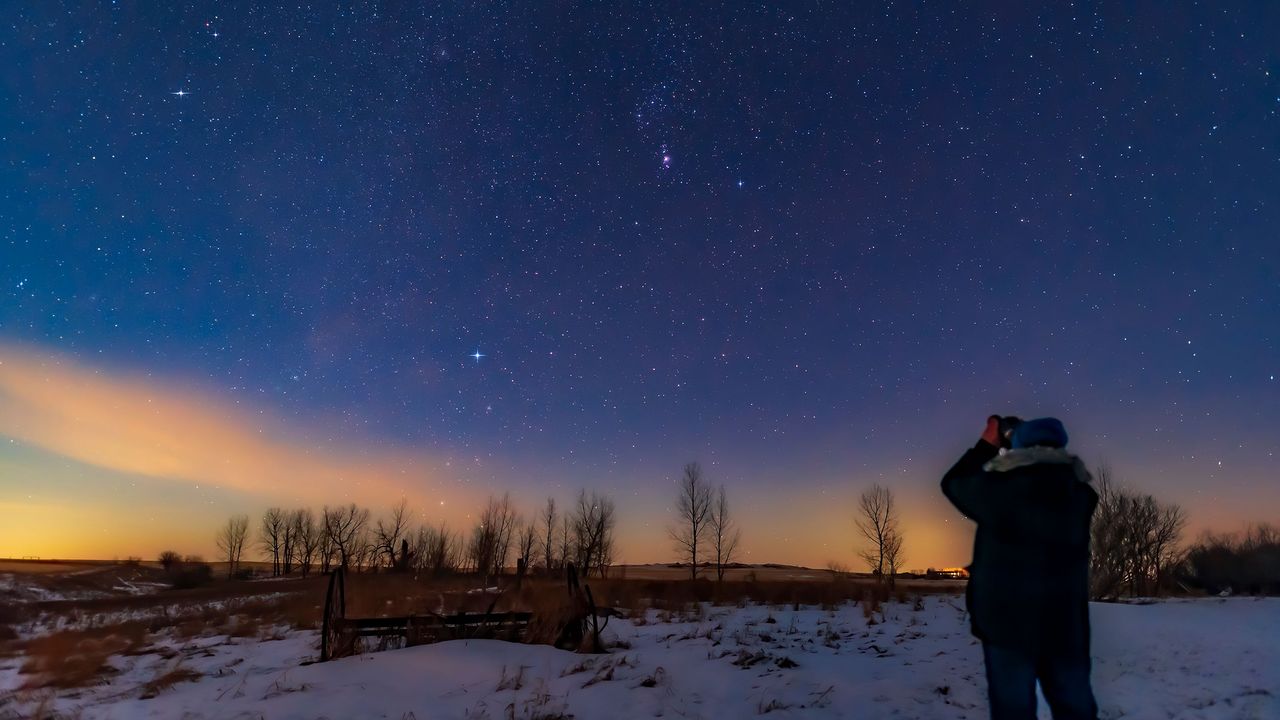
1. The moon is an ideal starting point for observing with binoculars due to its intricate features that appear differently depending on the illumination. Low-magnification, smaller-aperture binoculars like 8x40 or 7x50 are sufficient to see some interesting details on the moon. The moon undergoes a 29.5-day cycle of phases, making it a dynamic target to observe.
2. Jupiter's four largest moons, Io, Europa, Ganymede, and Callisto, known as the Galilean moons, are visible through binoculars. Although binoculars cannot show Jupiter's belts or the Great Red Spot, these moons appear as tiny pinpricks of light surrounding Jupiter. The moons may disappear behind or in front of Jupiter, providing an engaging view of their motion.
3. In the handle of the Big Dipper constellation lies a pair of stars called Mizar and Alcor. Visible to the naked eye and even more striking through 10x50 binoculars, these stars are physically bound by gravity and orbit each other. Mizar is a double star itself, making this an impressive six-star system in total. However, these additional companions are too close together for binoculars or even telescopes to resolve them.
4. The constellation Auriga is known for its brilliant yellow star Capella and an array of magnificent open clusters, including Messier 36, 37, and 38. A pair of 10x50 binoculars can display all three of Auriga's open clusters within a single view. Open clusters are young groups of stars that were born together and are gradually dispersing. Binoculars provide a fantastic opportunity to explore these celestial treasures.
Written by urgent.news from Space.com's reporting — not their text. Machine-written — may contain errors; check the original before relying on it.