Mashaba says ‘tenderpreneurs’ cannot be South Africa’s economic policy
ActionSA leader Herman Mashaba says government must build its own capacity to deliver permanent essential services, warning against unnecessary outsourcing and the growing influence of tenderpreneurs in public procurement.
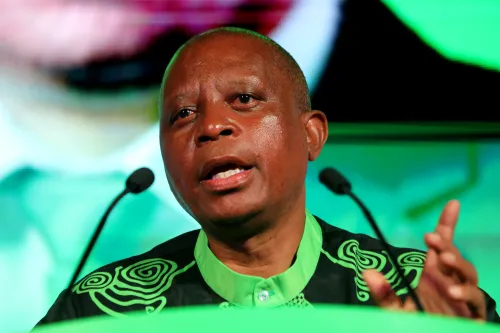
Herman Mashaba, leader of the ActionSA party and Johannesburg mayoral candidate, argues that the government should develop its own capacity to deliver essential services instead of relying on private contractors. He contends that there are cases where political parties may disagree on policy, but on some issues, like the consequences of getting the answer wrong, a principled and unapologetic stance is necessary.
Mashaba emphasizes that the government's role is distinct from that of the private sector, and it should question why municipalities pay intermediaries to hire individuals for permanent functions. He cites his tenure as Johannesburg mayor, during which his administration integrated thousands of security guards and cleaners into permanent City employment, as evidence.
Mashaba contends that tenderpreneurs may earn significantly more than the workers ultimately performing the labor, describing this as exploitation rather than empowerment. He references protests by over 300 casual workers at Pikitup's Randburg depot in July, demanding permanent employment directly from Pikitup. Mashaba questions why workers performing refuse collection should remain in precarious employment when Johannesburg will continue to require the service indefinitely.
He suggests that municipalities should first evaluate whether they can build the capacity to provide essential services before automatically issuing tenders. ActionSA advocates for investing in institutional knowledge and skills, including training for artisans and developing professionals like engineers, technicians, electricians, and plumbers within public institutions.
The party praises Tshwane Executive Mayor Dr Nasiphi Moya's efforts to bolster the City's internal capacity through measures such as filling critical vacancies, skills development, artisan training, and insourcing initiatives. Mashaba acknowledges the role of private-sector participation but advocates for outsourcing only when there is a genuine lack of government capacity, and the private sector can deliver better value for citizens.
He stresses that South Africa needs to address its reliance on tenders and argues that issuing tenders should not equate to economic empowerment, as it often results in the politically connected becoming wealthy while workers remain in insecure employment. Mashaba supports Helen Zille's view that the private sector should play a significant role in Johannesburg's rebuilding but disagrees that private-sector partnerships should replace the government developing its own capacity.
In 2022, Mashaba called for legislation requiring municipalities to conduct feasibility and financial-impact assessments before outsourcing core functions, a stance that remains unchanged. ActionSA aims to train South Africans where skills are needed and build capacity where municipalities lack it, but asserts that it will not outsource government simply because it has forgotten how to perform its duties.
Written by urgent.news from IOL's reporting — not their text. Machine-written — may contain errors; check the original before relying on it.
Also reported by 5 other outlets
- Xenophobia: South Africa denies suspending visas for Nigerians dailypost.ng
- South Africa denies stopping visas for Nigerians over anti-migrant protests nairametrics.com
- Cancel Women’s Day: South Africa’s annual insult to women mg.co.za
- The role of women in South Africa's tooling industry iol.co.za
- MPs demand answers on South Africa’s growing refugee appeals backlog citizen.co.za