Lifeforms Can Survive on ‘Significant’ Regions of the Moon, Study Finds
The Moon was long thought to be inhospitable to life, but scientists have discovered that common Earth microbes could survive for up to a week in shadowed regions of the lunar south pole, a region targeted for future human exploration.
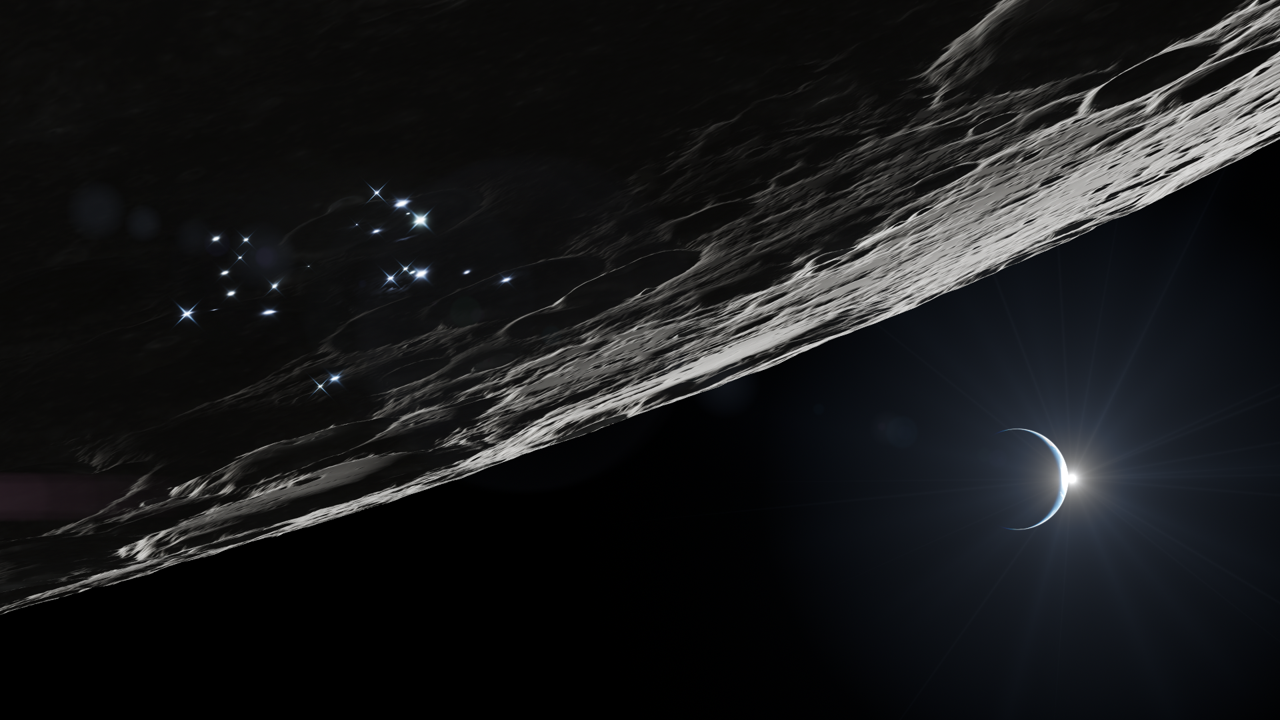
Recent research published in Sciences Advances suggests that certain microbial life forms could survive on parts of the Moon for up to a week. This finding indicates that the lunar surface may not be as hostile as previously believed, and has implications for upcoming human missions to the Moon. These areas are located in the polar regions, specifically the Nobile Rim and Connecting Ridge, where water ice is present in permanently shadowed regions.
These areas are sheltered from harmful ultraviolet light and extreme temperatures, creating a more habitable environment for life. The study modeled the conditions at these locations using data from NASA's Lunar Reconnaissance Orbiter and assessed the resilience of common earthly microbes, such as bacteria and fungi, to survive in these conditions.
The findings revealed that fungi, specifically Aspergillus, proved to be highly resilient, persisting for up to seven Earth days in some shadowed regions. While these organisms would likely enter a dormant state rather than growing, the fact that they can survive long periods in these conditions is a testament to the adaptability of Earth life.
This discovery also highlights the potential for microbial contamination during future missions and the need to consider these factors in mission planning. Additionally, the possibility of microbial life already existing on the Moon through meteoric exchanges of rocks cannot be ruled out, making the lunar surface a potential time capsule of Earth's history.
Written by urgent.news from 404 Media's reporting — not their text. Machine-written — may contain errors; check the original before relying on it.