Lagarde avisa de que Europa no puede quedarse rezagada en la revolución de la IA
Insta a facilitar que la inversión y las empresas puedan ganar escala reduciendo la fragmentación de los mercados europeos. Leer
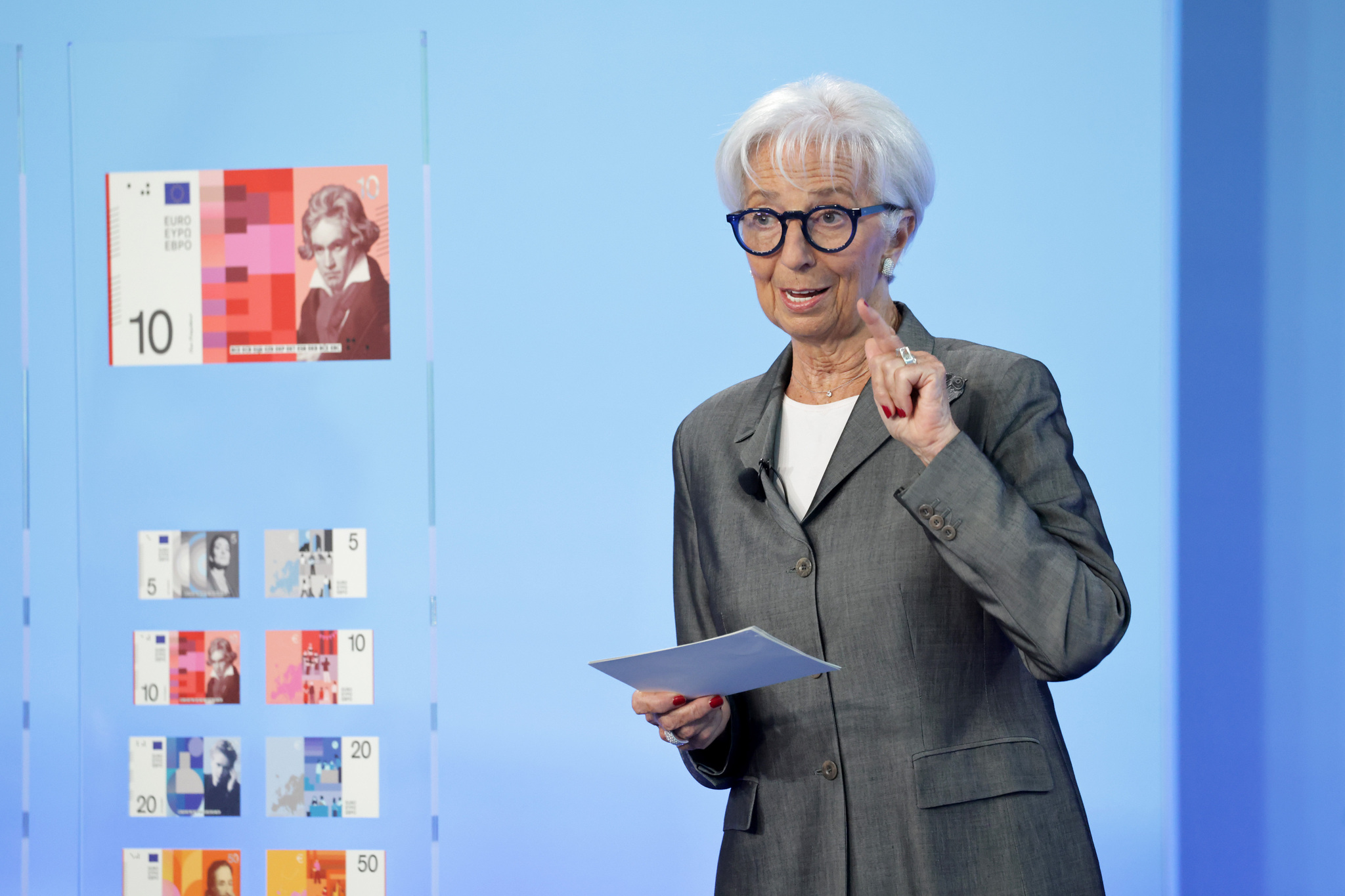
Europa risks falling behind in the Artificial Intelligence (AI) revolution, warns European Central Bank President Christine Lagarde. Speaking at the International Business Council of the World Economic Forum, Lagarde emphasized the need for Europe to create a less restrictive environment for companies to compete with U.S. and Chinese giants and scale up in the AI era.
Europe lost growth advantages it had for decades, the ECB president explained, and called for a transformation process to remove barriers preventing European companies from investing, innovating, and scaling across the continent. Lagarde believes that only then can European companies compete against U.S. and Chinese giants.
The post-war growth model, which relied on three pillars - global trade expansion, a competitive industry powered by cheap energy, and a stable international order based on rules, is now wobbling. The Ukraine and Middle East wars, combined with U.S. President Donald Trump's protectionist measures, have disrupted this scenario that benefited Europe for decades.
China's progress in the value chain is cited as an example, as it now competes directly with the eurozone in nearly 40% of the sectors where Europe had a comparative advantage. This percentage has grown rapidly since the beginning of the century, when it was only around 25%.
Energy abundance as a European industry advantage has also disappeared. European high-energy industries now pay, on average, more than double the electricity prices in the U.S. and about 50% more than in China. Global trade faces more restrictive conditions with over 2,500 commercial restrictions introduced worldwide last year. Geopolitical tensions highlight supply chain dependencies and bottlenecks worldwide.
Lagarde sees Europe's single market of 27 members and 450 million consumers as its best asset, but laments that companies cannot fully leverage its size due to obstacles when scaling beyond national markets. This hampers Europe's ability to reap the benefits of the digital revolution, the second one being AI.
Lagarde proposes removing internal barriers that prevent companies from operating and growing as European companies, not necessarily national ones, like the EU Inc. concept - a voluntary legal form at the EU level allowing a company to be incorporated once and operate under a single set of rules across the community. She also stressed the challenges companies face in securing capital as they grow, noting that while startups in San Francisco, U.S., receive similar amounts of funding in their first five years, EU fast-growing companies capture 50% less by the tenth year.
This under-investment has led around 12% of fast-growing EU companies to relocate abroad, mainly to the U.S. The French economist called for faster integration of EU capital markets to ensure companies can scale and access adequate capital.
Written by urgent.news from Expansion ES's reporting — not their text. Machine-written — may contain errors; check the original before relying on it.