How Organizations Use ChatGPT: Insights for Automation Builders
What Happened OpenAI’s whitepaper, How Organizations Use AI: Evidence from ChatGPT , shows that ChatGPT is moving from pilot projects to full‑scale production. Companies embed the model in customer‑service chatbots, internal knowledge bases, and data‑analysis pipelines. Teams report faster response times, fewer errors, and higher employee productivity. Organizations are building end‑to‑end…
OpenAI's recent whitepaper reveals that ChatGPT is transitioning from experimental pilots to integrated production systems across businesses. Companies are utilizing the model in customer service chatbots, internal knowledge repositories, and data analysis workflows. The results indicate improved efficiency with reduced response times, decreased errors, and heightened employee productivity.
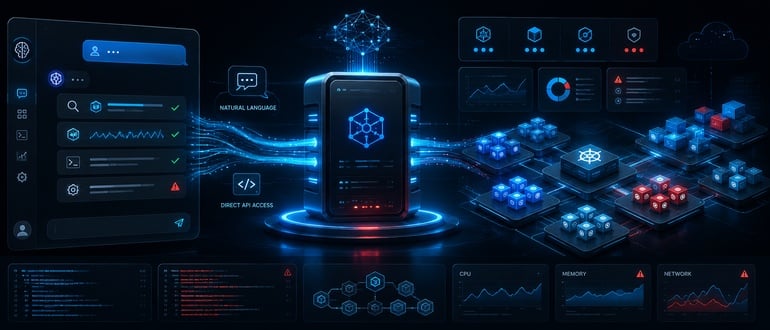
For automation builders, end-to-end workflow design is crucial. This involves managing data input, crafting effective prompts, and validating responses. n8n nodes can coordinate these tasks, but additional quality assurance and fallback processes are necessary.
Compliance and governance are also paramount for enterprises. They need to maintain audit trails, enforce data residency rules, and track model versions. Automation systems ought to record prompt information, model metadata, and user activity to adhere to regulatory standards.
Scalability and cost management present another challenge. As the number of tokens increases, so do expenses. To maintain cost predictability, token budgeting nodes, dynamic prompt truncation, and caching mechanisms can be implemented.
Continuous improvement is key to success. Teams should use real-world feedback to retrain or fine-tune models. This feedback loop can be integrated into automation, processed through a retraining pipeline, and redeployed using CI/CD practices.
Security and data isolation are critical considerations when working with generative AI models. These models should be segregated from sensitive information. Environment-specific credentials should be used, data masking enforced, and secure endpoints employed for all calls.
The FAQ section addresses specific concerns. For instance, integrating ChatGPT into an n8n workflow while controlling token usage can be achieved by placing a token-counting node before the OpenAI call. Setting a maximum token budget, truncating or summarizing prompts that exceed this limit, and caching frequent responses can help manage token consumption.
Regarding governance, enterprises should log every prompt, response, and model version in a centralized audit table. This table should include timestamps, user identifiers, and a hash of the input. A rollback mechanism to a previous model version should also be available in case of compliance issues.
Lastly, companies can retrain the model on their own data without exposing it to OpenAI's servers. They can deploy an on-premise or private-cloud LLM compatible with OpenAI's API, trigger a fine-tuning job from their workflow, monitor training metrics, and deploy the new checkpoint when ready.
Written by urgent.news from Dev.to's reporting — not their text. Machine-written — may contain errors; check the original before relying on it.