Human-Related Microbes May Survive Moon’s South Pole, NASA Finds
Lee esta historia en español aquí. Some of Earth’s microbes likely to hitch a ride to space with human explorers could survive in the shaded nooks and crannies of the Moon’s South Pole region, NASA scientists say. Published on Aug. 19, 2026, in Science Advances, these findings highlight a need to better understand microbial persistence […]
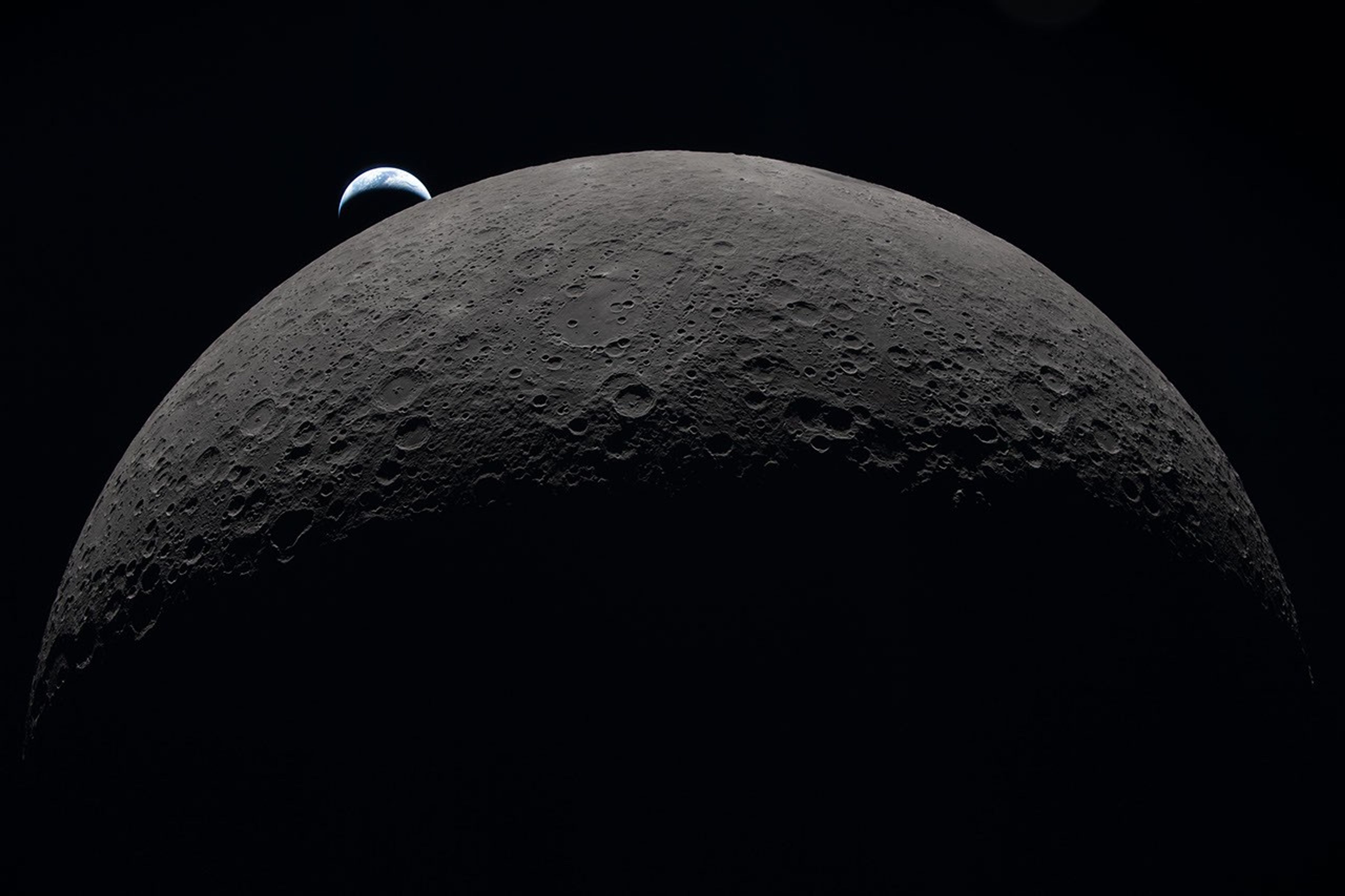
NASA scientists have discovered that human-related microbes might be able to survive in the Moon's South Pole, according to a study published in Science Advances on August 19, 2026. The finding emphasizes the need to comprehend microbial persistence in extreme lunar environments, as humans establish a permanent presence on the Moon.
Prabal Saxena, a planetary scientist from NASA's Goddard Space Flight Center, highlighted the unsettling possibility that humans, with their accompanying microbes, are becoming a part of the lunar landscape. Saxena noted that with 1 million bacteria living on each patch of human skin the size of a pencil eraser, their presence is unavoidable. These bacteria can detach from spacesuits and habitats, potentially contaminating the lunar surface.
The study focused on selecting microbes known for their resilience in spaceflight environments. One such microbe, Aspergillus niger—a fungus that thrives in warm, damp conditions—was chosen due to its ability to survive in space. This discovery surprised scientists, as Aspergillus niger is not typically considered an extremophile capable of withstanding harsh conditions like the vacuum of space.
NASA's concern is centered around contamination, as it may interfere with the search for chemical clues about ancient geology or biology on the Moon. However, Saxena and his team argue that utilizing the Moon as a natural lab is beneficial. Shaded regions around the South Pole provide an environment that mimics the Moon's harsh conditions, making it an ideal setting to test microbial survival.
The Apollo program, which landed six pairs of astronauts on the Moon between 1969 and 1972, placed all six landing sites near the lunar equator. In contrast, the new study's focus on the Moon's South Pole offers an opportunity to explore microbial survival in an environment vastly different from those near the equator.
Understanding what contaminants humans bring to the Moon is crucial, as scientists will want to ensure that any findings on Mars are not due to human contamination. Despite strict sterilization procedures, some organisms persist, as demonstrated by the survival of Aspergillus niger on the International Space Station. This fungus, known for growing in warm, damp environments, has also been found to survive outside the space station, exemplifying the resilience of certain microbes in space.
Written by urgent.news from NASA's reporting — not their text. Machine-written — may contain errors; check the original before relying on it.
This story
This is one outlet's version. Read the fullest account.
- Human-Related Microbes May Survive Moon’s South Pole, NASA Finds science.nasa.gov