How Long Can a Person Survive Under Earthquake Rubble?
After Colombia’s 7.4-magnitude earthquake on Aug. 10, 2026, rescue teams continued searching collapsed buildings for people who might still be alive. There is no fixed time limit for survival under rubble. The outcome depends on injuries, breathable air, water, temperature, the structure of the debris, and whether the victim remains inside a protected space. Most […]
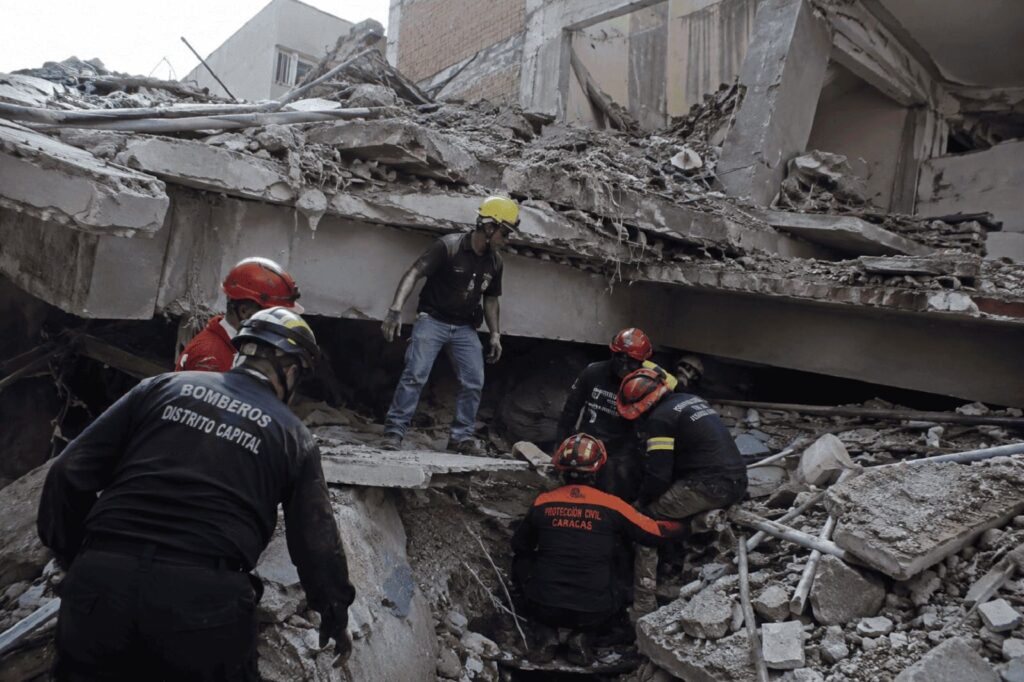
The first 48 to 72 hours are critical for finding earthquake survivors, but some individuals can endure for days or even weeks under the rubble if they have access to air and water. Colombia's 7.4-magnitude earthquake on August 10, 2026, prompted rescue teams to continue searching collapsed buildings for possible survivors. While most rescues happen within the first day, documented cases show that people can survive for several days, and in rare instances, over a week.
The outcome depends on factors such as injuries, air supply, water availability, temperature, debris structure, and whether the victim remains in a protected space. The first 24 hours offer the highest probability of finding survivors, but the chances diminish as time passes due to severe injuries, dehydration, exposure, and complications from prolonged compression.
In exceptional circumstances, people with minor injuries can survive for a week or more. However, survival becomes increasingly unlikely beyond this window. The condition of the collapsed structure also plays a role, with some victims remaining in survivable voids that offer protection from the building's weight while still allowing breathing.
Injuries sustained during entrapment can drastically reduce survival chances over time, with severe bleeding, head trauma, and chest injuries being potentially fatal before dehydration does. Factors like fire, smoke, toxic substances, extreme temperatures, and the availability of water become increasingly important during prolonged entrapment.
Water is more vital for survival than food, and breathable air is an immediate requirement. While there is no fixed time limit for survival under rubble, the study by Prehospital and Disaster Medicine examined rescue data from 34 earthquakes between 1985 and 2004, finding numerous documented rescues after 48 hours, with the longest reported survival reaching 14 days.
However, they could not establish a precise maximum survival time, with a recent example of a security guard in Venezuela surviving eight days under rubble due to an intact security booth creating an air pocket. Recent disasters, such as Japan's 2011 earthquake and tsunami, demonstrate that rescuers have found individuals alive several days after such events, though these cases remain rare.
In Colombia's own earthquake response, doctors and firefighters rescued doctor Diana Marcela Troncoso from the rubble after almost 30 hours using structural stabilization and canine searches. After finding a trapped person, rescue teams must assess and stabilize victims, as crush syndrome—a potentially fatal condition caused by prolonged compression of muscle tissue—can develop.
Teams need to stabilize victims during extraction whenever conditions allow, as removing debris too quickly can shift the structure and injure both victims and rescuers.
Written by urgent.news from Colombia One's reporting — not their text. Machine-written — may contain errors; check the original before relying on it.