How Listening to Ocean Waves Can Predict Volcanic Eruptions
The speed of the soothing sounds could spell disaster The post How Listening to Ocean Waves Can Predict Volcanic Eruptions appeared first on Nautilus .
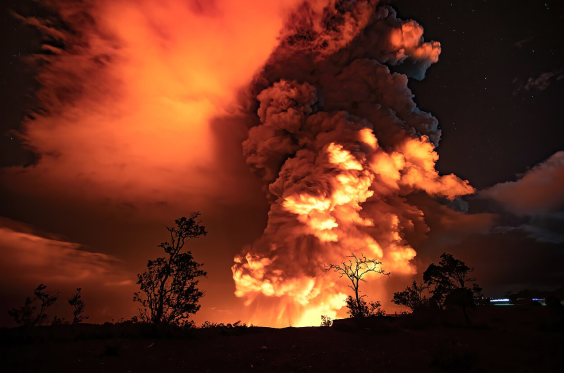
In 2010, a volcanic eruption in Iceland caused significant disruption to air travel across Europe. This prompted the U.S. Geological Survey (USGS) to invest in modernizing volcano monitoring equipment, despite criticisms. Now, the USGS has unveiled a new method to predict volcanic eruptions by listening to ocean waves. As waves from the Pacific hit Hawaii’s shores, they travel through the island's rocks and can be detected by seismometers.
During an eruption, magma accumulation beneath the surface forms cracks that slow down the sounds of ocean waves. Conversely, when magma fills fissures in the volcanic rim, the speed of the sound waves increases. By comparing the velocity of these sounds measured by seismometers at the base and the rim of the volcano, scientists can estimate the likelihood of an eruption.
This technique, known as "ambient noise interferometry," was successfully applied to data from Kīlauea volcano. Seismometers near the base of Kīlauea recorded slower ocean wave sounds two months before the 2020 eruption, reaching their slowest pace right before the eruption. Meanwhile, a seismometer on the rim of the volcano detected the fastest ocean noise sounds just four days prior to a 2025 fountaining event.
While still in testing, USGS scientists believe ambient noise interferometry could be a valuable tool for predicting volcanic activity at Kīlauea.
Written by urgent.news from Nautilus's reporting — not their text. Machine-written — may contain errors; check the original before relying on it.