Historian's American road trip examines parallels between the Gilded Age and today
For her latest book, Pulitzer Prize-winning historian Beverly Gage traveled across the country, exploring the people, places and turning points that have shaped America over its 250-year history. Judy Woodruff joined her for part of that journey, starting in Chicago. It's part of her series, Crossroads: America at 250.
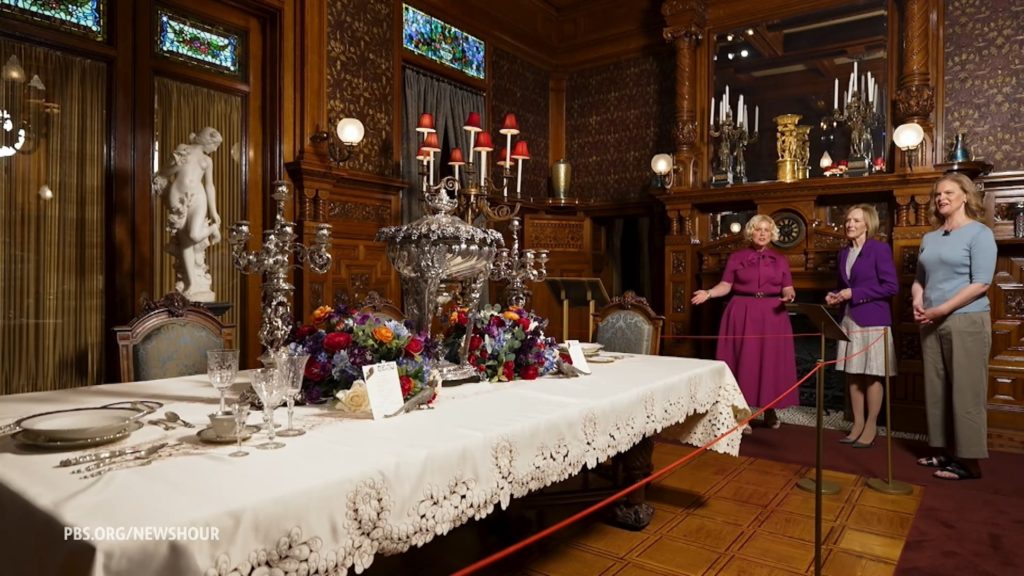
Historian Beverly Gage embarked on a cross-country journey to examine parallels between America's Gilded Age and the present day. Joined by journalist Judy Woodruff, Gage visited various sites across the United States, delving into the era's defining features and its relevance today.
Their first stop was the Driehaus Museum in Chicago, showcasing the opulence of the Gilded Age. The museum's lavish decor, reflecting the wealth of the Nickerson family, symbolized the era's concentration of power and wealth. Gage compared the museum to a social media feed, highlighting the curated presentation of values and beliefs.
Gage and Woodruff then traveled to the Griffin Museum of Science and Industry, which once served as the Palace of Fine Arts during the 1893 World's Fair. This fair, attended by 27 million visitors, showcased the ambition and aspirations of the era. Gage emphasized how Chicago, as a symbol of the Gilded Age, embodied the future of modern civilization, albeit with significant challenges.
Further south, in Pullman, Illinois, Gage visited the historic neighborhood that housed the nation's first planned industrial company town. Here, the stark contrast between the luxurious executive houses and the cramped, poorly paid worker dwellings highlighted the growing class conflict that would shape America's social and political landscape.
Written by urgent.news from PBS NewsHour's reporting — not their text. Machine-written — may contain errors; check the original before relying on it.