Google and the UK think changing flights paths could cut down on climate change
A 30-month, $6.76 million trial will nudge hundreds of flights off course over the Atlantic to test whether contrails can be engineered away.
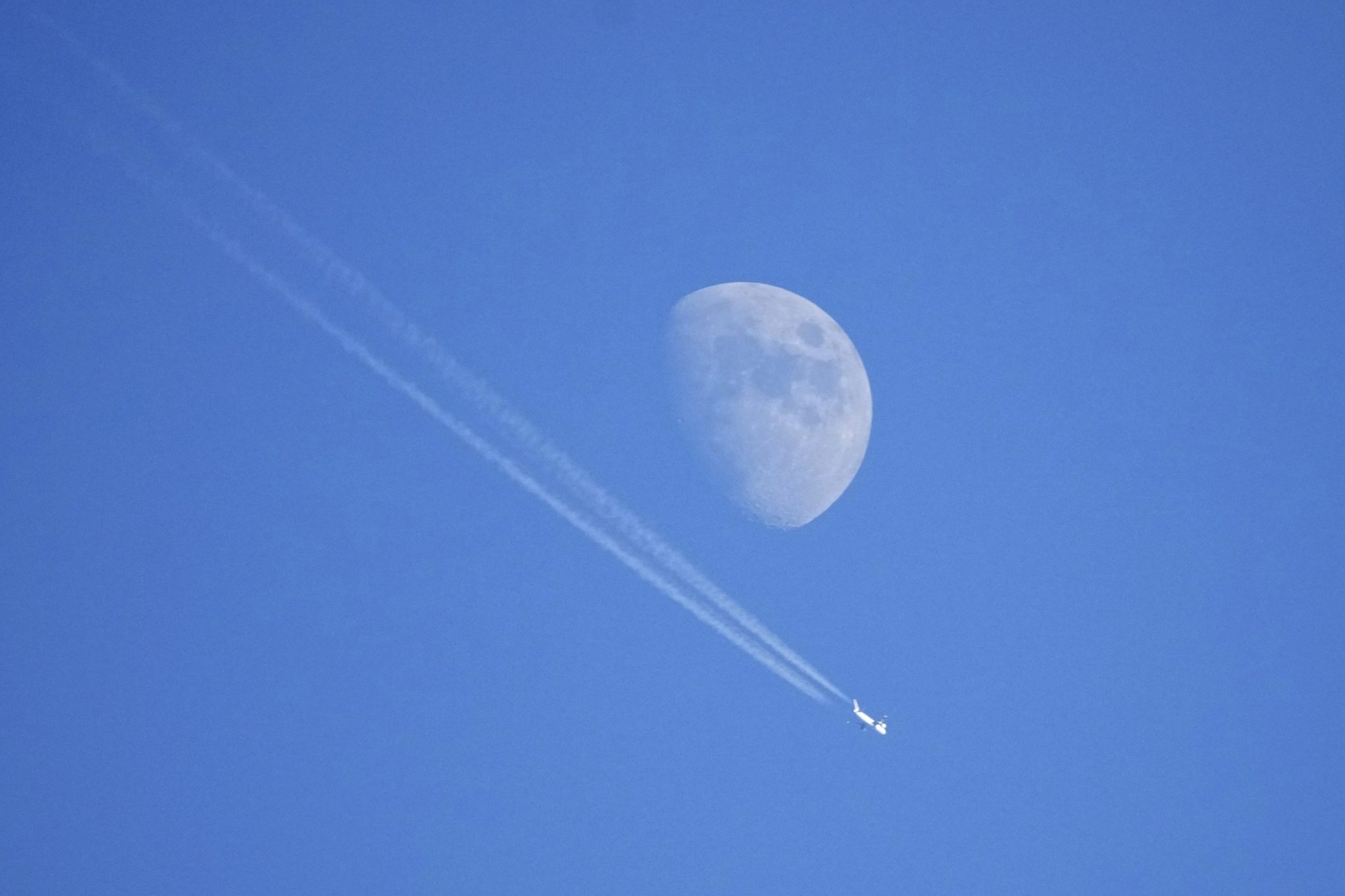
A landmark trial involving hundreds of commercial flights is set to begin this winter, with the aim of demonstrating how altering flight paths can help reduce aviation's climate impact. The British government is supporting the initiative, known as Operation Blue Skies, which is being led by Google UK and involves the use of artificial intelligence-powered forecasts to identify areas where contrails are likely to form.
Contrails, or condensation trails, are thin, white lines that trail behind airplanes and are responsible for a significant amount of Earth's warming, approximately 1% to 2%. The trial will take place in the Shanwick Oceanic Control Area, a busy air traffic corridor between Europe and North America, where contrails are known to form.
During the 30-month research program, air traffic controllers will instruct some flights to deviate up to 2,000 feet (610 meters) from their usual routes to avoid contrail formation. This will be a minor altitude adjustment within standard flight operations, and there will be around 20 to 40 test days per winter when air traffic is typically lighter.
About 10,000 flights are expected to pass through the Shanwick airspace during the testing, with around 10,000 of those flights deviating their routes. Paul Hodgson, Google's technical lead for Operation Blue Skies, estimates that 1% to 5% of the flights would be enough to demonstrate a statistically significant reduction in contrail formation on an airspace-scale.
The UK minister responsible for aviation, Keir Mather, emphasized the government's commitment to partnering with Google to find practical ways to make flying cleaner, with the government covering more than half of the £6.76 million ($6.76 million) study budget.
Written by urgent.news from Fortune's reporting — not their text. Machine-written — may contain errors; check the original before relying on it.