From $823 to $200: A Practical AWS Cost Optimization Case Study
See how a production SaaS cut estimated AWS costs from $823 to about $180–$220 while preserving reliability, scalability, and rollback paths.
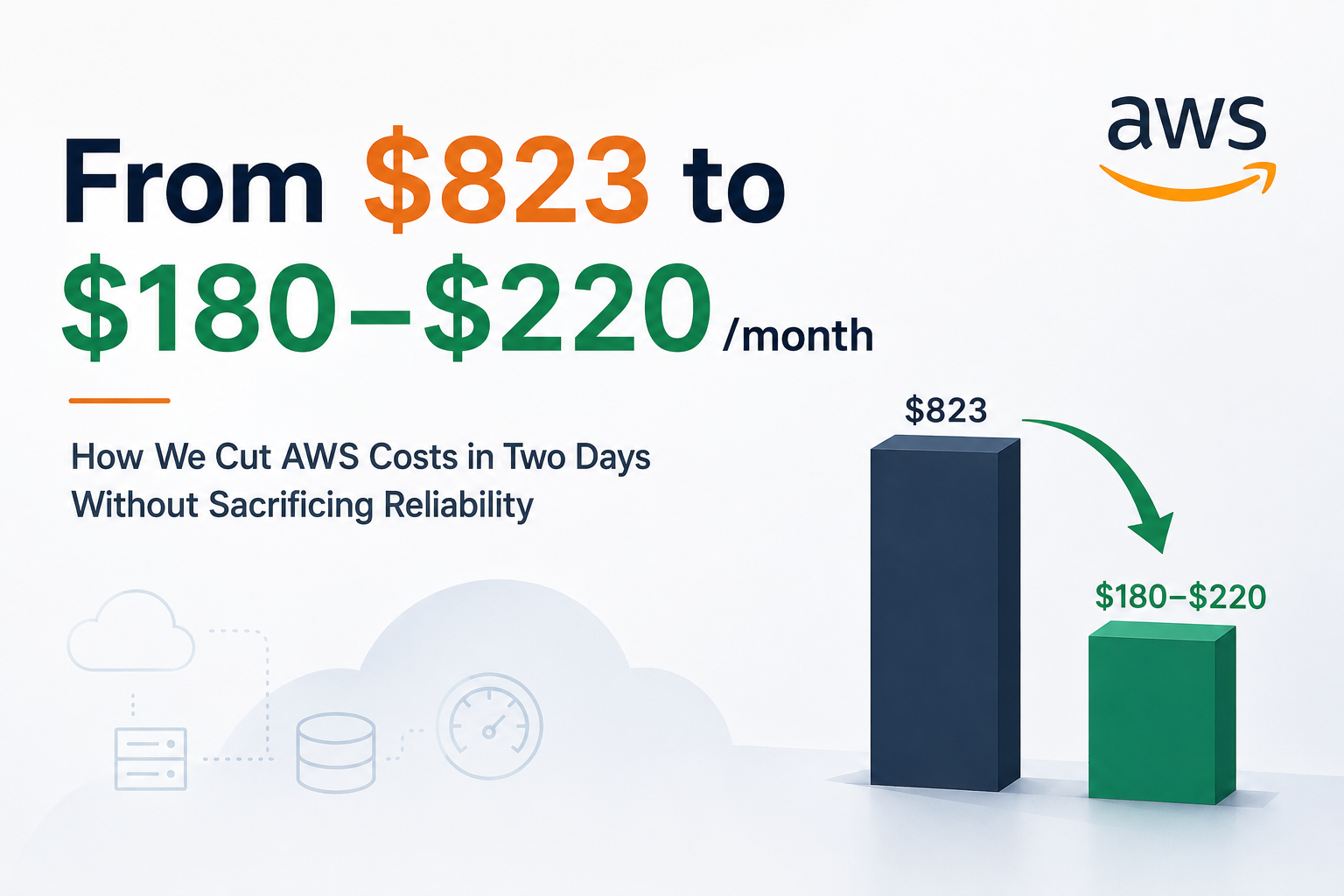
The cost of a SaaS system that runs both a Production and Staging environment on AWS was $822.96 before optimization. The primary drivers of this bill were fixed costs from constant compute resources, such as NAT Gateways and load balancers, as well as monitoring and data processing charges. To achieve a monthly infrastructure cost of $100–$200, the optimization process focused on reducing these fixed costs while maintaining critical system capabilities and ensuring the system could scale quickly in the future.
First, the team identified which system components were necessary for production use, such as the database, cache, object storage, and a stable public ingress layer. They decided to keep the existing database (RDS), cache, object storage, secrets management, and public ingress layer. However, they chose not to consolidate all services onto a single low-cost instance, as this would create a single point of failure and disrupt the current deployment workflow.
One of the key optimization steps was to consolidate the Application Load Balancers (ALBs) used in Production and Staging. By using Host Header and Path Rules, requests for various services were forwarded to their respective Target Groups, allowing multiple domains and independent services to operate separately while sharing the same ingress layer. After validating that all domains, certificates, and application entry points were working correctly, the old ALBs were removed, preserving a clear rollback path if needed.
Finally, the team used monitoring data to guide the downsizing of Fargate tasks. The Production API and Web services were initially configured conservatively, with average CPU usage of around 2.6% and 2.36% respectively. By analyzing this data, they were able to reduce the number of tasks running, ultimately lowering overall costs while maintaining the necessary system performance.
Written by urgent.news from HackerNoon's reporting — not their text. Machine-written — may contain errors; check the original before relying on it.