The Government wants to normalise Ceuta by blaming the people of Ceuta and the PP.
Un país que no es capaz de defender sus fronteras es un Estado fallido. Y un Gobierno que se niega a dar las explicaciones pertinentes en el Parlamento incumple las reglas básicas de la democracia. La situación de Ceuta exige medidas urgentes para normalizar la situación de verdad. Leer
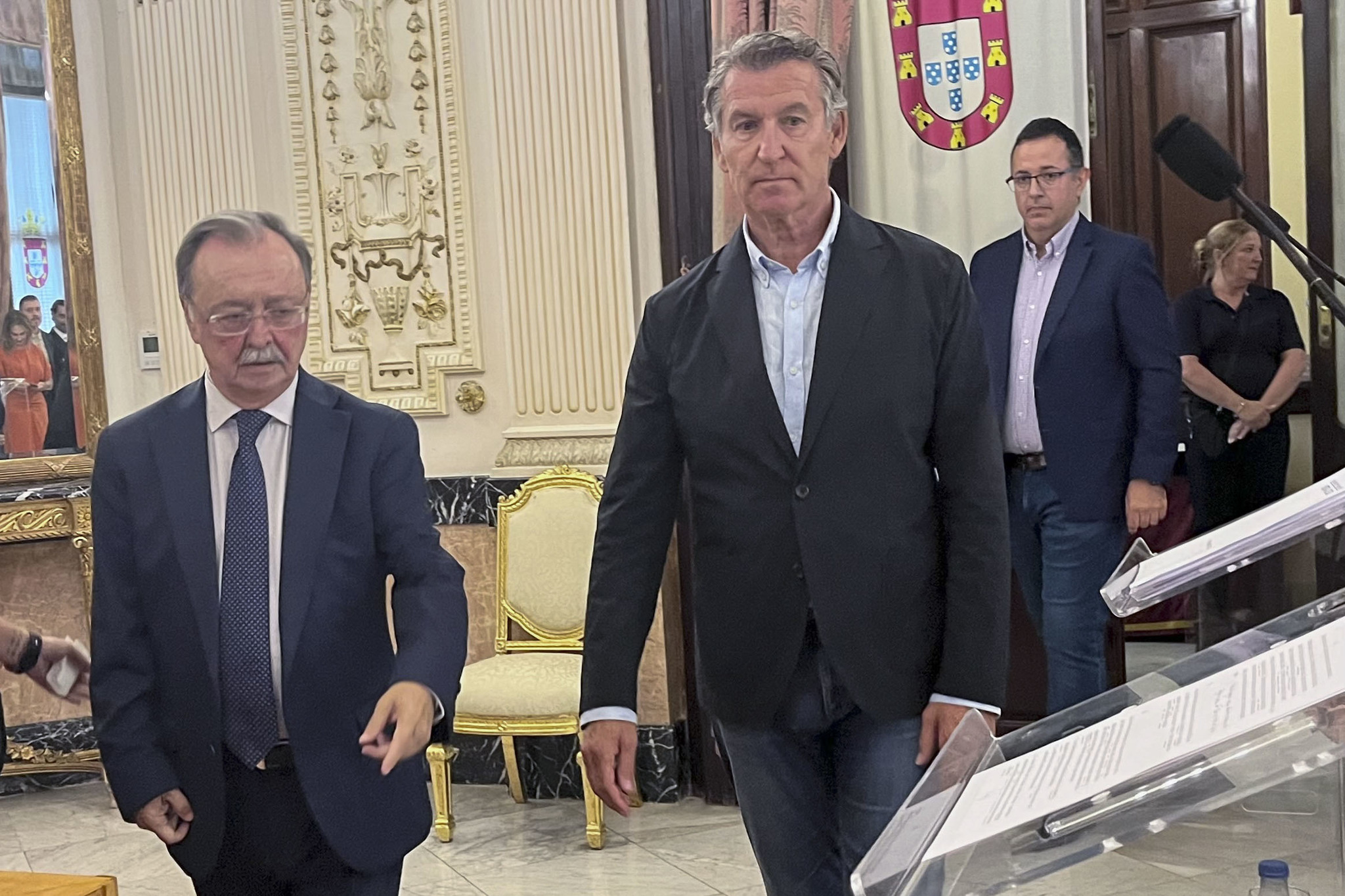
Spain's government seeks to normalize Ceuta while blaming its residents and the People's Party (PP). A nation incapable of safeguarding its borders represents a failed state, and a government refusing to provide necessary explanations in Parliament violates fundamental democratic rules. Ceuta's situation demands urgent measures to restore normalcy.
We are accustomed to the government never being blamed for anything, as it has been doing for years. Whenever there is a catastrophe, accident, power outage, or a blatant corruption case, the Executive always looks elsewhere for scapegoats to avoid taking responsibility. The same is happening with the invasion of 80,000 immigrants into Ceuta.
After days of shock and ineffective response, several orders were given by La Moncloa to its ministers. The first was to defend collaboration with Morocco against the orchestrated wave of people breaching Spain's border, which also concerns Europe. The second was to ensure normalcy is recovered with the return of most immigrants from the southern neighbor.
And the third, to inform that all means will be put in place for Ceutan citizens to live in peace. Twenty days have passed since the invasion (why is it insisted on calling it a migration crisis when it's an attack on Spanish sovereignty?), and it's more than proven that this is three blatant lies. An official campaign accompanied by ministers visiting the taken city tried to change the prevailing narrative of poor crisis management.
This week, the last two ministers who traveled to Ceuta, Mónica García and Elma Saiz (the latter, the government spokesperson), started to suggest that the blame for the crisis not ending lies with the poor management of its president, Juan Jesús Vivas, and the Ceutan citizens themselves, whom they even label as xenophobes. Naturally, these statements came from video conferences chaired by Pedro Sánchez during his deserved vacations in the Palacio de la Mareta, in Lanzarote.
Their advisors have been explaining for years that managing crises consists of controlling the narrative. To face the general clamor about the poor management of the conflict, they decided to launch a counterattack. However, official spokespersons have lost credibility, as none of the promises made by the successive ministers sent to the autonomous city have been fulfilled.
They say one thing and do the opposite, or directly do nothing while the situation deteriorates day by day. The nearly 10,000 invaders still there (men, women, and children) have no intention of leaving and are sowing chaos in a locality of barely 70,000 inhabitants. The situation is so dramatic that European authorities have had no choice but to intervene and give a clear order: None of the invaders can pass to the peninsula, not even children or minors.
Brussels knows it's a blatant attack on Europe's southern frontier and that if regularizations, political asylum grants, or transferring minors without accompaniment to other Spanish communities begin, it would be a dangerous precedent. Spanish security forces and justice have raised the alarm about the deterioration of the situation.
There are not enough soldiers, police officers, civil guards, and judges in Ceuta to effectively carry out their work. There is a tremendous climate of citizen insecurity, with sexual assaults on minors happening almost every day. What were once beaches have become camps where invaders barely survive, while healthcare services are collapsing and infectious diseases are starting to spread.
Despite the crisis growing, the government has decided not to provide official explanations about what happened. The three ministers called to testify this week in the Senate gave evasive answers to representatives of the people, citing that they will do so when it's convenient for them in the Congress of Deputies, where they have more allies to defend them.
A question remains unanswered: Did intelligence services warn about the invasion? Minister of the Interior Fernando Grande-Marlaska says no, but Defense Minister Margarita Robles, who depends on the CNI, has opted for silence. This is not a game; both Ceuta and Melilla are in grave danger of new assaults from Morocco. Their southern neighbor is setting up an authentic jail to prevent new migratory waves.
However, Moroccan soldiers and police can always return to their barracks, leaving these walls defenseless or with inflatable floats that can be easily bypassed. Therefore, the borders of Ceuta and Melilla depend on Morocco's decision, a country exploiting any Spanish weakness to claim sovereignty over these autonomous cities. It's clear that the July 30th invasion is part of a hybrid war.
Written by urgent.news from Expansion ES's reporting — not their text. Machine-written — may contain errors; check the original before relying on it.