BFI Thailand Opens Debate on Technological Sovereignty: Lessons from India for Thailand’s Next Growth Model
BANGKOK, 18 August 2026 — BFI Thailand, or the Boiling Frog Institute, has begun its work as an independent think tank focused on addressing Thailand’s long-term structural challenges before they develop into deeper economic and social crises. The institute was founded by Dr. Suthikorn Kingkaew, who pioneered the use of the “Boiling Frog Crisis” metaphor […] The post BFI Thailand Opens Debate on…
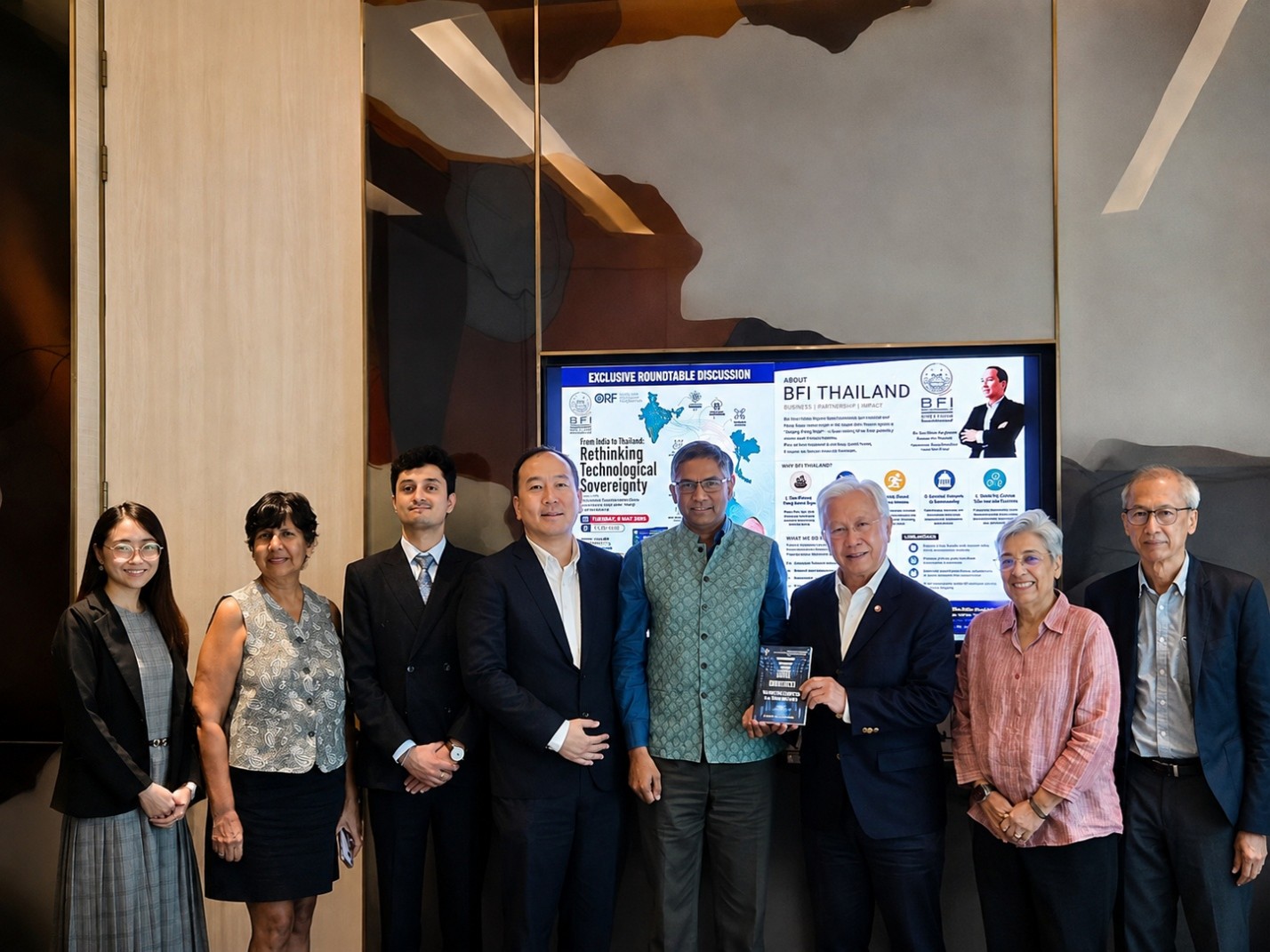
Bangkok, 18 August 2026 — The Boiling Frog Institute (BFI) Thailand, an independent think tank, has launched a debate on Thailand's technological sovereignty. The initiative was founded by Dr. Suthikorn Kingkaew in March 2017, who used the "Boiling Frog Crisis" metaphor to describe Thailand's economic challenges. BFI Thailand operates under the principles of "Bridging, Framework, Impact" and hosted a roundtable discussion with Indian experts to explore the concept of technological sovereignty.
The roundtable discussion gathered senior representatives from government, diplomacy, business, and academia. They considered which technologies Thailand should own, co-develop, or outsource. The presentation of Pranjal Sharma's book, "India Innovates: Technological Sovereignty in a Weaponized World," served as the foundation for the discussion.
Sharma's book emphasizes that no country should rely on a single external supplier for essential technologies, such as data, computing, digital infrastructure, rare earths, navigation, space, defense, national security, manufacturing, agriculture, and other strategic capabilities.
The discussion highlighted the importance of diversifying technology partners and suppliers to avoid becoming overly dependent on a single country. India serves as a case study for Thailand, as it combines foreign investment with policies to foster domestic production capacity and technological capability. These include outcome-linked manufacturing incentives, local alternatives for strategically important digital sectors, support for electronics and semiconductor manufacturing, and targeted development in areas like electric vehicles, defense, and space.
Experts at the roundtable stressed that Thailand should focus on attracting foreign direct investment while ensuring that such investments leave behind skilled workers, local suppliers, manufacturing know-how, research capacity, and some degree of technological ownership. Human capital emerged as a critical constraint, as Thailand needs technicians, engineers, robot operators, automation specialists, programmers, and skilled industrial workers to operate, maintain, integrate, and improve new technologies.
Written by urgent.news from Khaosod English's reporting — not their text. Machine-written — may contain errors; check the original before relying on it.