Before and after photos show impact of SpaceX rocket that slammed into Moon
A NASA spacecraft circling the moon is providing the sharpest views yet of a crater carved by a crashing SpaceX rocket.
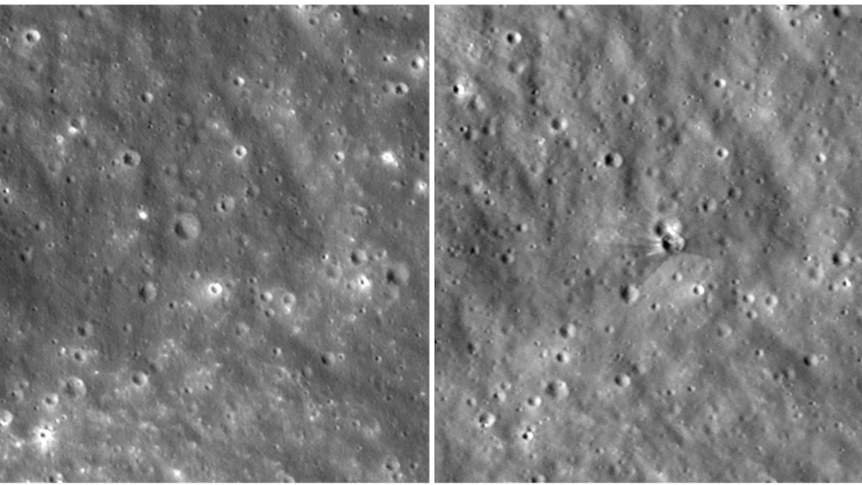
NASA's Lunar Reconnaissance Orbiter has captured the most detailed images yet of a crater formed by a SpaceX rocket's upper stage crashing into the Moon. Earlier this month, the rocket's upper stage plummeted towards the lunar surface after being adrift in space for over a year. The fresh crater measures 18 meters in diameter and is less than 3 meters deep.
NASA's spacecraft, which has been circling the Moon since 2009, provides the most detailed view of the impact area. Between August 11 and August 12, the Lunar Reconnaissance Orbiter took a series of images showing the new crater. Scientists determined the crater's size by analyzing the length of its shadow. Dark and bright streaks emanate from the crater like butterfly wings, with darker lines representing excavated material that has been shaped by solar wind, cosmic rays, and micro-meteorite strikes over time. Brighter rays indicate fresh rocks and dirt that were ejected from deeper within the Moon.
The spacecraft photographed the crater from a distance of 96 kilometers, traveling at a speed of 1.6 kilometers per second. Flight controllers had to tilt the spacecraft so its cameras could capture the impact site. The orbiter had to wait six days to capture the images as the location of the impact came into view.
South Korea's Danuri spacecraft was the first to detect the crater and transmit photos back to Earth. The Lunar Reconnaissance Orbiter has been orbiting the Moon since 2009, serving as NASA's primary source of up-close images as the agency works to return astronauts to the lunar surface.
Written by urgent.news from ABC News AU's reporting — not their text. Machine-written — may contain errors; check the original before relying on it.