As bodies pile up, Cachalia insists Operation Prosper is working
Operation Prosper is facing renewed scrutiny amid continued gang violence, but Acting Police Minister Firoz Cachalia says arrests, firearm seizures and crime reductions indicate progress across operational areas.
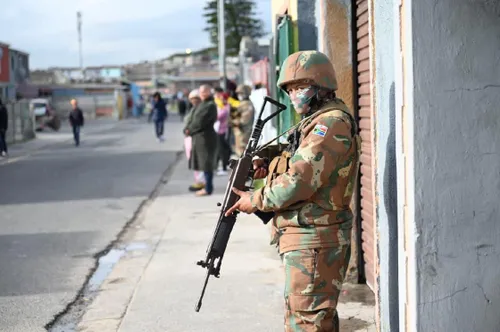
Acting Police Minister Firoz Cachalia defended Operation Prosper, claiming the initiative is delivering positive outcomes in certain areas despite ongoing gang violence and doubts about its efficacy. Cachalia addressed a parliamentary inquiry from Glen Taaibosch, who queried the government's plans to bolster Prosper in high-gang activity regions, asserting that killings and mass shootings were apparently rising rather than declining.
The statement follows mounting scrutiny over Operation Prosper's influence on gang violence in the Western Cape. Initiated in April, the operation, a collaboration between the South African Police Service (SAPS) and the South African National Defence Force (SANDF), was initiated to combat gang violence, extortion, organized crime, and the spread of illegal firearms in designated crime hotspots and has cost over R823 million.
Reports previously highlighted sustained mass shootings in Cape Town during the operation's early months. Cachalia admitted initially no gangs had been dismantled during the initial phase. More recently, over 30 fatalities occurred in the Western Cape within a single weekend, prompting Police Portfolio Committee chairperson Ian Cameron to query whether Operation Prosper was making a significant impact on gang violence.
Despite concerns, Cachalia stated that the police acknowledged the issues but maintained that Prosper had yielded positive results since its implementation. The minister explained that the operation is a component of a larger integrated intervention overseen by the National Joint Operational and Intelligence Structure and supported by SANDF deployments in identified priority zones.
Cachalia emphasized that Prosper is shifting from its initial high-visibility and stabilization phase to focus on intelligence-driven operations to disrupt, neutralize, and dismantle organized criminal and gang networks, including targeted actions against key violators, seizure of illegal firearms and ammunition, disruption of drug trafficking, and bolstering criminal investigations for successful prosecutions.
He acknowledged that it is premature to assess the operation's full impact due to recent deployments in specific priority action zones. "Although deployments have commenced recently in certain priority action areas, it may be premature to draw definitive conclusions about the operation's full impact. Preliminary indicators indicate reductions in selected crime categories within some operational areas," Cachalia stated.
Several arrests, as well as the confiscation of firearms, ammunition, explosives, and illicit narcotics, were reported. The minister affirmed that SAPS is continuously evaluating the effectiveness of Operation Prosper and will modify deployments, tactics, and resource allocation as needed. Cachalia underscored the focus on enhancing intelligence-led operations, improving cooperation between law-enforcement agencies and other security stakeholders, improving investigative outcomes, and maintaining a visible police presence in affected communities.
The response comes amid ongoing pressure on authorities to demonstrate that the expensive deployment is making a meaningful difference in communities struggling with gang violence. While the government has reported arrests, firearm seizures, and reductions in selected crime categories, persistent mass shootings have sparked criticism about the operation's ability to achieve its primary objective of reducing gang violence.
Reports from IOL have previously documented 672 arrests under Operation Prosper in the Western Cape by June and reductions in murders at 11 police stations.
Written by urgent.news from IOL's reporting — not their text. Machine-written — may contain errors; check the original before relying on it.