A hidden Holocaust story from Lithuania's forests is revealed in one survivor's diary
Berl Kagan and his wife fled the Kovno Ghetto in 1943 and found refuge in a Lithuanian peasant's house. But, as he details in 'A Jew in the Woods,' even the righteous among the nations could be violent drunkards
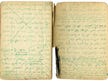
The forest has long been a place of mystery and intrigue in Holocaust studies, often overshadowed by the infamous concentration camps and ghettos. However, one survivor's diary has shed new light on the lesser-known aspect of the Holocaust taking place in the woods of Lithuania.
Berl Kagan, a Yiddish diarist who managed to escape from the Kovno Ghetto, provides a unique perspective on the role of forests during this dark period. In his diary, titled "A Jew in the Woods," Kagan recounts his harrowing experience of seeking refuge in the forest, a far cry from his previous life in the Jewish community.
Kagan describes the forest as a place of danger, inhabited by thieves and robbers, a stark contrast to the Jewish way of life. Despite the inherent risks, Kagan and others found solace in the forest, utilizing it as a protector during their time there.
Unlike the well-documented stories of Anne Frank's attic and Elie Wiesel's harrowing account of Auschwitz, Kagan's account of life in the forest remains relatively unknown. This new revelation offers a fresh understanding of the diversity of experiences during the Holocaust, highlighting the importance of not focusing solely on the most infamous sites.
Written by urgent.news from Haaretz's reporting — not their text. Machine-written — may contain errors; check the original before relying on it.