Work on £1.5m nature reserve to start next month
A charity says the nature reserve will be a "very special thing" for the town once complete.
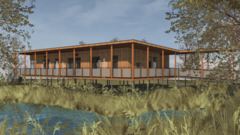
An £1.5 million project to establish a new nature reserve in a town with substandard, unmanaged meadows is set to commence next month. Known as the Kennet Valley Wetland Reserve, the 40-acre site at Undy s Meadow, on the northern outskirts of Hungerford, will be located close to the River Kennet. The initiative is spearheaded by The Town and Manor of Hungerford, a charity responsible for organizing its Tutti Day events.
Kate Edwards, from the charity, expressed excitement about the project, describing it as "a very special thing." She emphasized that the reserve will serve as a peaceful haven for visitors, offering opportunities to sit quietly and observe wildlife. Edwards highlighted the primary focus on the area's diverse bird species, particularly willow warblers and grasshopper warblers, expressing hope that the reserve will attract a variety of wetland birds.
The charity received overwhelming support from the local community, which motivated them to ensure the project's success. However, the construction timeline has specific constraints. Work must commence between September and December, avoiding September due to nesting birds and avoiding December because the ground would be too wet for construction. The initial phase, involving landscape creation, paths, and boardwalks, is projected to be completed by next summer.
Written by urgent.news from BBC Science's reporting — not their text. Machine-written — may contain errors; check the original before relying on it.