WATCH: Trump scales back US-South Korea drills
President Donald Trump cited a "very good relationship" with North Korean Supreme Leader Kim Jong Un.
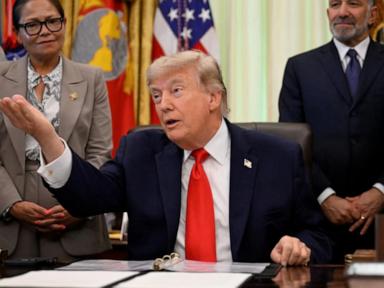
President Trump is creating strain in one of America's most significant military alliances, South Korea, by cutting back joint military exercises. The president cites their high cost, strained relations with North Korean leader Kim Jong Un, and South Korea's refusal to join the Iran war as reasons for this decision. This move marks another instance of Trump's "transactional" approach to international alliances, expecting partners to not only increase their defense spending but also to support U.S. interests globally.
Retired Navy Rear Adm. Mark Montgomery, a former U.S. Navy official and senior fellow at the Foundation for Defense of Democracies, discussed this shift in the U.S. relationship with South Korea with Geoff Bennett. He emphasized that the U.S. has traditionally viewed its allies as strengths, leveraging them, rather than penalizing them.
Montgomery also highlighted the unusual nature of Trump's approach, noting that the U.S. should be working with allies, not against them. He pointed out that South Korea is facing a significant threat from North Korea, which is growing more powerful due to its ties with Russia and its contributions to the Russian war in Ukraine.
The Admiral criticized Trump's attempt to make South Korea take sides in the U.S. conflict with Iran, calling it inappropriate. He further explained that Trump's strategy involves personal relationships with authoritarian leaders, believing he can influence their decisions. However, this strategy is unlikely to bring about the desired outcomes, given Kim Jong Un's stance on nuclear weapons and the complexities of international diplomacy.
Montgomery concluded by expressing concern about the impact of Trump's transactional approach on the credibility of U.S. alliances. He warned that this approach risks undermining the trust and reliability that allies, including South Korea, Japan, and Taiwan, place in the United States.
Written by urgent.news from PBS NewsHour's reporting — not their text. Machine-written — may contain errors; check the original before relying on it.
This story
This is one outlet's version. Read the fullest account.