Uncertain future in a sea of poppies
Three districts in Madhya Pradesh and Rajasthan together contribute to 80% of India’s opium production. Already facing the problem of stagnant procurement rates and rising input prices, farmers are now angry with the Union government for opening opium production and processing to private players. A.M. Jigeesh talks to farmers in the Mewar region about their concerns
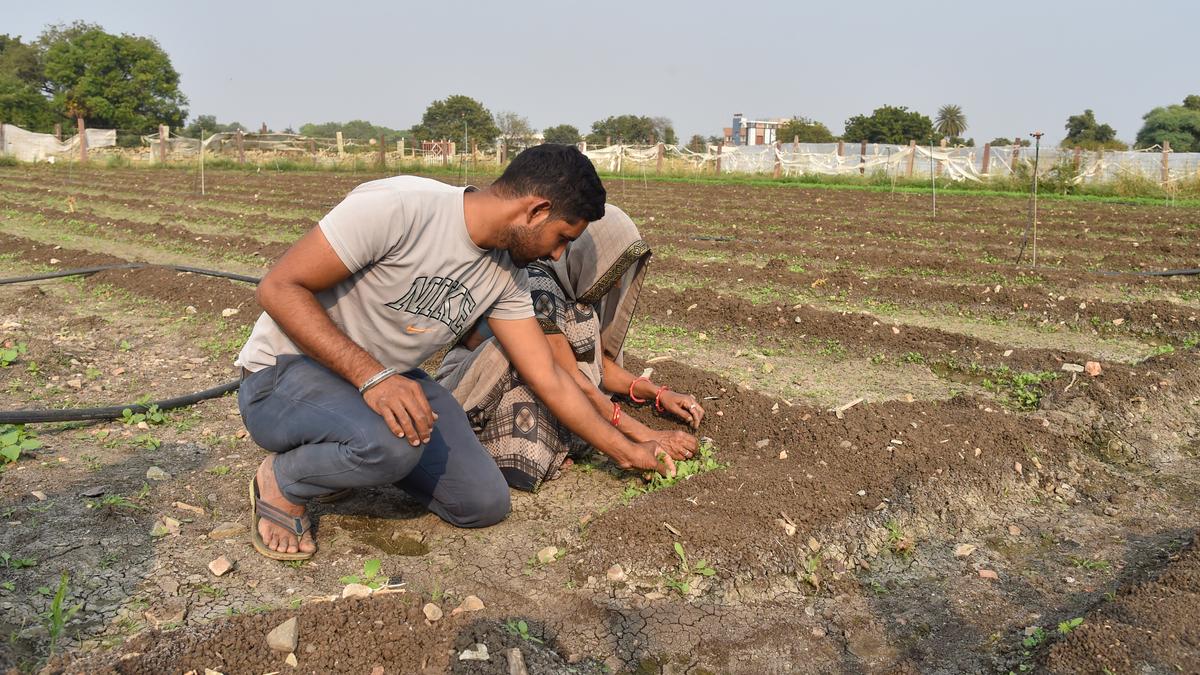
In a region known as the Mewar, spread across Madhya Pradesh and Rajasthan, opium cultivation holds great cultural significance. Families have been involved in this practice for generations, with some even dating back 200 years. The crop is held in high regard, believed to deserve the same dignity as children, as expressed by the local saying, "Afeem aur aulat barabar."
When Shiv Narayan passed away during the COVID-19 pandemic, his widow Sunder Bai inherited his land and his license to cultivate opium. Bai lives with her two children in a village near Nayagaon, on the border of Madhya Pradesh and Rajasthan. Both of her children, who are graduates, assist her in the opium business, employing four to five others to help with cultivation.
Farmers in the region take great pride in their age-old trade, with opium being referred to as "swabhiman ki kheti" (agriculture of dignity) in the Mewar region. However, they face challenges, as the procurement rate for opium has remained stagnant for years, while input costs like fertilizers, labor, and pesticides have increased. Farmers also have to remain vigilant to protect their crop from theft. Despite these challenges, they continue to cultivate opium as it is a deeply ingrained family tradition.
The opium trade in this region is highly regulated, with farmers collecting opium gum, which is sent to the Government Opium Alkaloid Works in Neemuch. However, in 2021-22, the Union government changed its opium policy, allowing private players to produce Concentrate of Poppy Straw (CPS). This shift has raised concerns among farmers, who worry about the potential threat to their livelihood, profits, and national security.
They argue that the CPS system could lead to drug abuse and put the drug mafia in control of alkaloids.
Written by urgent.news from The Hindu - Sci-Tech's reporting — not their text. Machine-written — may contain errors; check the original before relying on it.