Urgent.News

One page, thousands of outlets. See who else covered it.

Editions

World

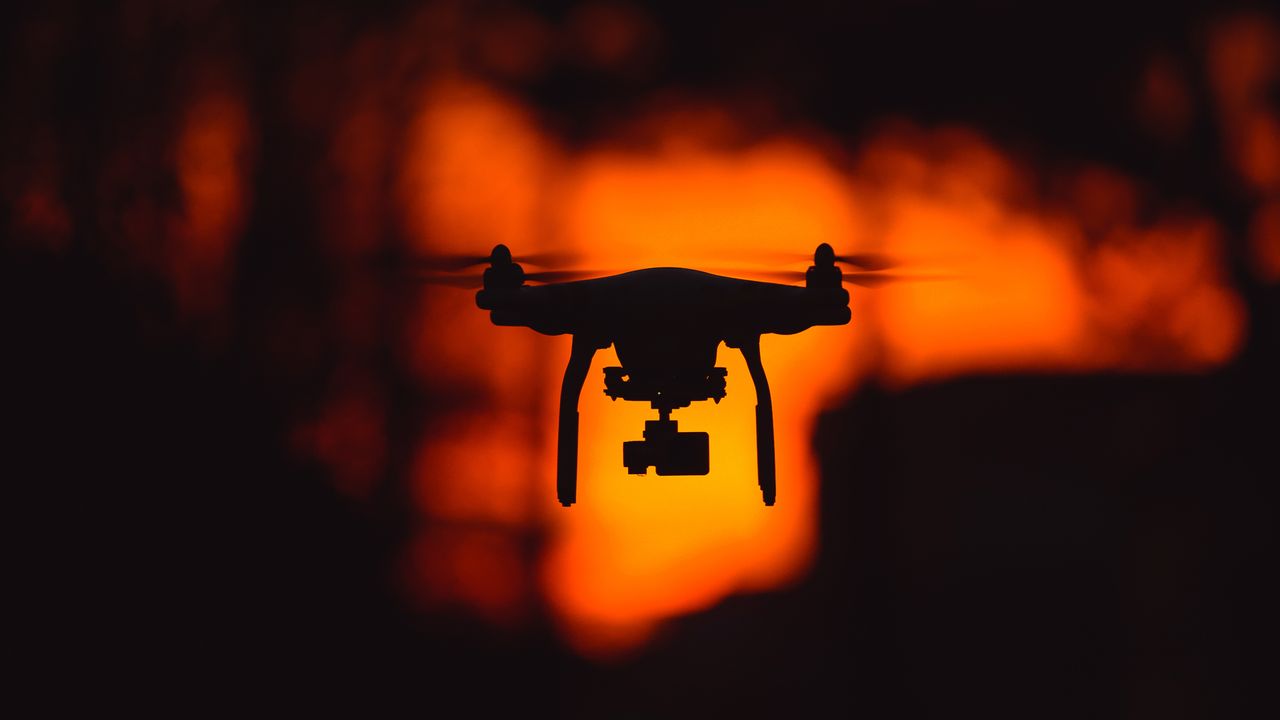
Ubiquiti sued by Ukrainian families over claims its tech powered Russian battlefield drones

Lawsuit asks whether a networking company owes a duty of care to civilians hunted by drones 5,000 miles from its nearest point of sale.
Ubiquiti sued by Ukrainian families over claims its tech powered Russian battlefield drones

Ukrainian civilians and bereaved families have filed a lawsuit against Ubiquiti in a Manhattan federal court. Their claims allege that Ubiquiti's long-range wireless technology was a crucial component of Russia's drone campaign against civilians in Ukraine. Ubiquiti has not yet responded publicly to the allegations or commented on the matter.

The company has also not been charged by any US or EU authorities with sanctions or export-control violations related to Ukraine. The lawsuit asserts that Ubiquiti's wireless equipment became the backbone of the command network supporting Russia's drone attacks. The NYSE-listed company manufactures long-range wireless bridges, which are used to deliver internet access where cable connections are not available.

The plaintiffs claim that devices bypassing export controls reached Russian forces through intermediary supply chains, linking reconnaissance units, drone operators, strike units, and commanders across about 100 kilometers of the battlefield network. They also allege that Ubiquiti could have prevented the pipeline from reaching the Russian forces by implementing geofencing, terminating distributors involved in sanctions evasion, or incorporating a remote-disable feature into its firmware.

Scott Gilmore, lead counsel for the plaintiffs at DiCello Levitt, stated, "This case is about corporate accountability for enabling crimes against humanity." Despite the lawsuit, Ubiquiti has not conceded any wrongdoing and maintains that it lacks visibility into the location or scope of individual purchases made by network operators and service providers.

The case could potentially alter supply-chain accountability litigation for a company that did not directly sell its products to a sanctioned entity, especially amidst the controversy surrounding Nvidia AI chips reaching China despite export restrictions.

Written by urgent.news from TechRadar's reporting — not their text. Machine-written — may contain errors; check the original before relying on it.
Read the original at techradar.com →

More in World

“Seeing Father Lee Tae-seok in the photo gives me strength.” The first neurologist from South Sudan was born. On the 15th, a graduation ceremony was held at the Catholic University of Sudan in Juba, South Sudan, for 29 medical students, including Dr. Achuil Lual Deng, the first neurologist in South Sudan. Dr. Lual, who was born in 1986 in Malakal, South Sudan, said in an interview, “I was inspired by Father Lee Tae-seok, who devoted himself to the poor in Uganda and South Sudan.” He continued, “I was in high school when I first met Father Lee, who was working as a doctor in Torit, Eastern Equatoria, South Sudan. At that time, I was struggling with the idea of becoming a doctor, but seeing his devotion to the poor, I decided to become a doctor.” Dr. Lual, who graduated from the Catholic University of Sudan with a degree in medicine in 2011, worked at the Juba Teaching Hospital and then moved to Australia to pursue his dream of becoming a neurologist. He studied at the University of Adelaide in Australia and returned to South Sudan in 2022 after completing his studies. Dr. Lual said, “I am very happy to be able to help my people. I am grateful to the Catholic Church and Catholic University of Sudan for giving me this opportunity.” Bishop Thomas Mangold of the Catholic Diocese of Juba also expressed his gratitude, saying, “I am very grateful to Dr. Lual for his dedication to the people of South Sudan.” The Catholic Diocese of Juba has been actively involved in the medical field in South Sudan, and in 2019, it established the Saint Theresa Hospital in Juba, with the support of the German Catholic Church. The hospital provides medical services to local residents, and it also offers training and education for medical students. Dr. Lual’s achievement is expected to have a significant impact on the medical field in South Sudan, where there is a severe shortage of medical professionals. The country has a population of about 14 million people, but it only has about 100 doctors. In particular, there are only two neurologists in the entire country, and Dr. Lual is the first neurologist from South Sudan. Dr. Lual’s dream is to establish a rehabilitation center in Juba and to provide medical services to patients with neurological disorders. He said, “I want to help my people recover from illness and return to their daily lives.”

More from Tuesday 18 August →