The Milky Ways center holds the ruins of another ancient galaxy
Using NASA's Hubble Space Telescope, astronomers discovered evidence of a galaxy merger in the Milky Way's ancient history.
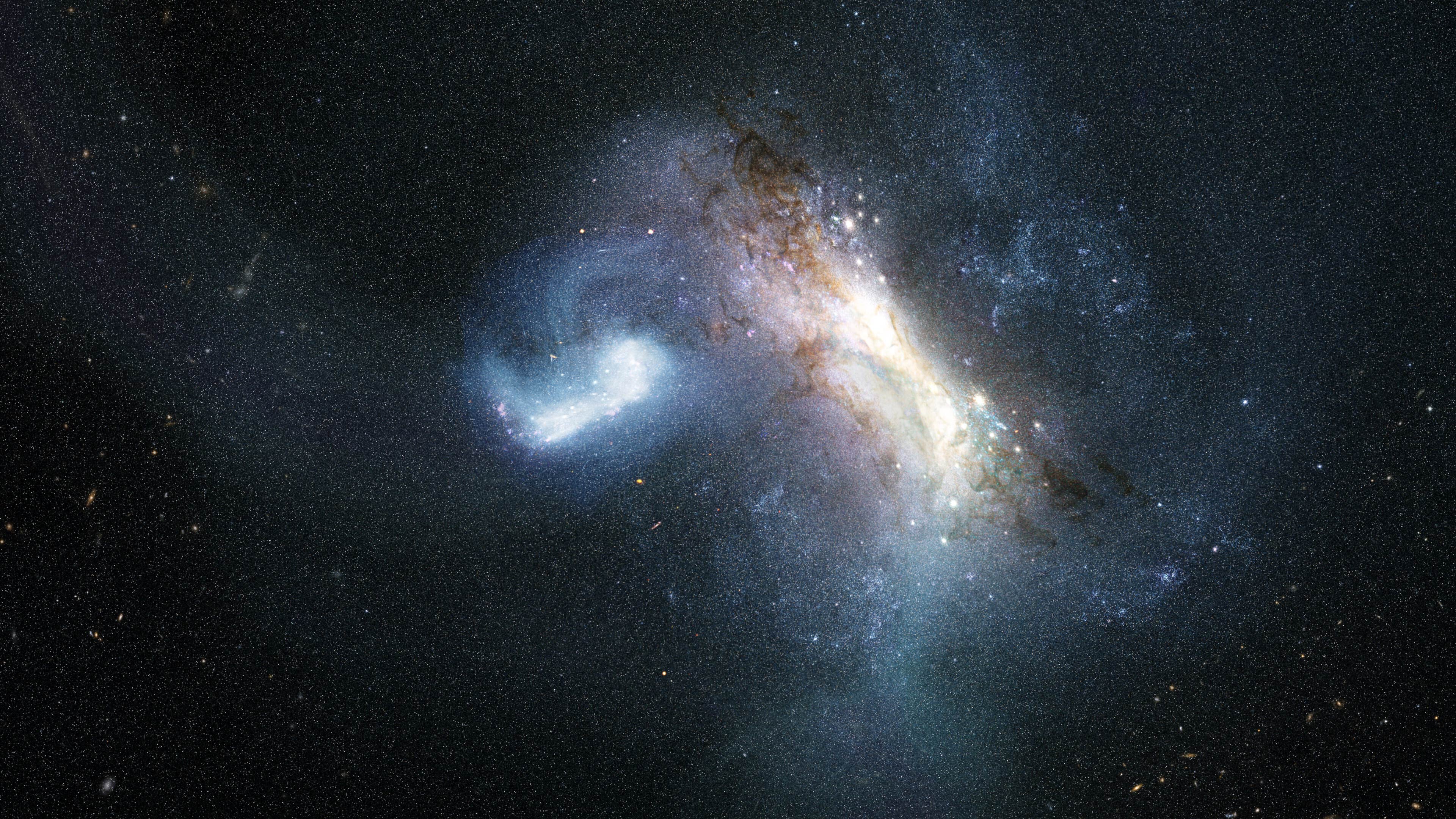
Scientists have discovered the remnants of an ancient galaxy hidden within the Milky Way's center, dating back 12.3 billion years. Our home galaxy has grown by colliding with smaller dwarf galaxies over billions of years, and this new finding sheds light on the Milky Way's violent past. The research, published in Nature Astronomy, utilized NASA's Hubble Space Telescope to study 39 globular clusters in the inner galaxy, comparing their ages, chemical compositions, and orbits.
The analysis revealed three distinct groups of star clusters, with one group belonging to an unknown galaxy called Low-energy-Kraken-Heracles (LKH). This galaxy collided with the Milky Way about 1.8 billion years before the previously known Gaia-Sausage-Enceladus merger. The LKH system contributed most of its stars, gas, and material into the inner 20,000 light-year region of the Milky Way.
Advanced computer simulations confirm the team's findings, matching the timelines and chemical patterns predicted by the Hubble cluster data. Researchers aim to continue studying globular clusters for more evidence about the Milky Way's early history, as future space telescope missions will help reveal more about the galaxy's beginnings.
Written by urgent.news from Mashable's reporting — not their text. Machine-written — may contain errors; check the original before relying on it.