The Milky Way devoured a smaller galaxy about 11.8 billion years ago
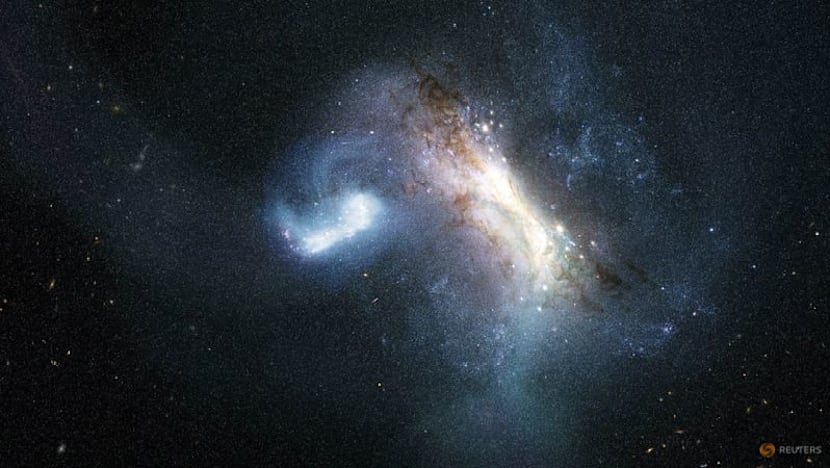
Approximately 11.8 billion years ago, during the universe's early stages, the Milky Way galaxy consumed a smaller galaxy, marking its first-known galactic merger. This merger, involving a dwarf galaxy, contributed significantly to the Milky Way's growth by introducing a substantial amount of stars and interstellar gas. The dwarf galaxy, named Low-energy-Kraken-Heracles or LKH, was approximately a quarter of the size of the Milky Way at the time of the merger.
Researchers utilized the Hubble and Gaia telescopes to study stellar clusters in the Milky Way's innermost 20,000 light-years, determining the merger's age, chemical composition, and trajectory. The merger was primarily beneficial to the Milky Way, infusing it with gas and dark matter essential for further star formation. The aftermath of the merger led to the incorporation of some stars from the LKH galaxy into the inner regions of the Milky Way, although they are difficult to identify due to the region's high interstellar dust.
This galactic merger, along with two others, played a crucial role in shaping the Milky Way and, consequently, Earth.
Written by urgent.news from Channel News Asia's reporting — not their text. Machine-written — may contain errors; check the original before relying on it.
This story
This is one outlet's version. Read the fullest account.