Oil climbs as fading US-Iran peace hopes raise supply risks
Oil prices rose on Tuesday as a deal to end the Middle East war seemed further out of sight, with Iran saying it will adopt a more offensive stance and the U.S. ruling out extending a ceasefire agreement, heightening worries about energy supply.
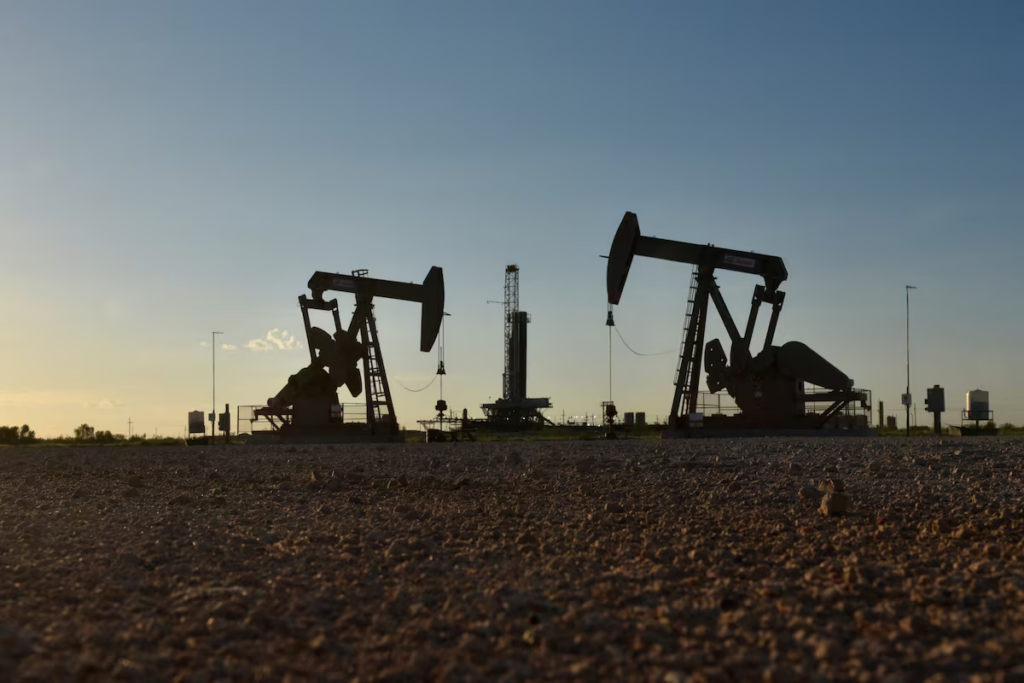
Oil prices surged on Tuesday as the prospects of ending the Middle East conflict appeared increasingly remote. Iran announced it would adopt a more aggressive military stance, while the United States dismissed the possibility of extending a ceasefire agreement, raising concerns about potential energy supply disruptions. A senior Iranian official informed Reuters that Iran would transition to a "fully offensive" military posture, as talks aimed at achieving a permanent peace resolution with the U.S. had stalled. Simultaneously, Washington refused to prolong a temporary ceasefire arrangement.
Efforts to restore peace talks and resume oil tanker traffic through the crucial Strait of Hormuz have stalled, exacerbating the ongoing conflict that the U.S. and Israel initiated with strikes on Iran on February 28. Brent crude futures jumped 27 cents, or 0.3%, to $91.14 by 0003 GMT, having reached their highest level since July 30 on Monday. U.S. West Texas Intermediate crude futures increased by 42 cents to $85.04 a barrel, following a more than 1% rise to $85.37, their highest mark since July 31.
According to KCM's chief market analyst, Tim Waterer, "Oil has jumped to start the week as U.S.-Iran relations look increasingly shaky. A deal to reopen the Strait of Hormuz still does not appear to be in sight, and shipping numbers remain at a trickle." Notably, only five commodity vessels traversed the Hormuz Strait on Saturday, with none reported for Sunday, as per ship-tracking data from Kpler. This stands in stark contrast to the 31 vessels recorded during the previous weekend.
Furthermore, Yemen's Houthi rebels attacked what they claimed was a Saudi military ship and four escort vessels in the Red Sea using missiles, according to the group's military spokesperson, Yahya Saree, on Telegram. KCM's Waterer emphasized that "the dual chokehold on the Strait of Hormuz and the Bab el-Mandeb remains highly significant. These are not secondary concerns. They sit at the center of the current supply-risk narrative."
In another development, Iran is concurrently negotiating an agreement with Oman to manage the strait, and claims significant progress has been made. However, U.S. President Donald Trump responded to these talks by threatening to bomb the Gulf state, a longstanding U.S. security ally. Amid this backdrop, there are faint hopes for diplomacy, with reports suggesting Trump has initiated back-channel discussions with the Islamic Revolutionary Guard Corps.
U.S. crude oil inventories were projected to have declined last week, alongside product inventories, as indicated by a preliminary Reuters poll on Monday.
Written by urgent.news from MyJoyOnline Ghana's reporting — not their text. Machine-written — may contain errors; check the original before relying on it.
This story
This is one outlet's version. Read the fullest account.
- Oil climbs as fading US-Iran peace hopes raise supply risks dawn.com
- Oil climbs as fading US-Iran peace hopes raise supply risks brecorder.com
- Oil climbs as fading US-Iran peace hopes raise supply risks businesstimes.com.sg
- Oil climbs as fading US-Iran peace hopes raise supply risks investing.com
- Oil climbs as fading US-Iran peace hopes raise supply risks channelnewsasia.com