Ministry pushes EV battery policy
ISLAMABAD: The Ministry of Industries has directed the Pakistan Standards and Quality Control Authority (PSQCA) to begin developing standards for lithium-ion vehicle batteries. The ministry was already working with stakeholders to finalise Pakistan’s Next Generation Energy Storage Policy (2026-2033). Engineering Development Board (EDB) Chief Executive Hammad Mansoor is expected to present the…
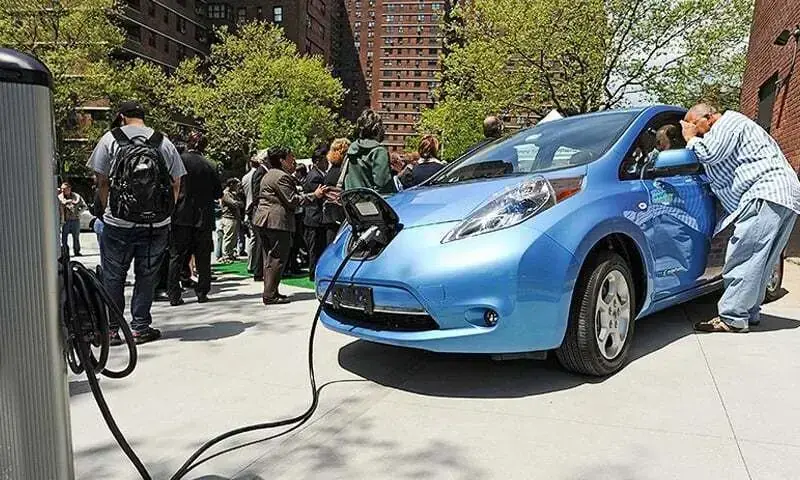
Islamabad, Pakistan has tasked the Pakistan Standards and Quality Control Authority (PSQCA) with creating standards for lithium-ion vehicle batteries, according to the Ministry of Industries. This directive comes as the ministry collaborated with stakeholders to finalize Pakistan's Next Generation Energy Storage Policy, set to be implemented from 2026 to 2033. Hammad Mansoor, CEO of Engineering Development Board (EDB), is set to introduce the revised policy at an upcoming stakeholders' meeting.
Currently, only basic, consumer-grade lithium batteries are available for everyday devices like mobile phones and laptops. However, electric vehicles (EVs) demand advanced, high-grade industrial frameworks to manage high-voltage and high-capacity needs. PSQCA is tasked with establishing standards for lithium-ion batteries.
Many EV assemblers in Pakistan have shown interest in collaborating with EDB to set up a Li-ion battery assembly or cell manufacturing plant. Standards are crucial to guarantee the safety and durability of lithium batteries imported to Pakistan. The industries ministry has requested PSQCA to develop these standards, which will be adopted under the Next Generation Energy Storage Policy.
The battery standards encompass several key aspects. "Cell Safety & Abuse Testing" involves Extreme Stress Validation, and cells must undergo computerised physical destruction tests, including mechanical crushing, overcharging, and thermal abuse, without catching fire. Dedicated baseline standards for four-wheeler batteries were also lacking.
The PSQCA must develop standards for Battery Management Systems (BMS) as well, as there are currently no regulations in place. Smart BMS microsecond cutoffs are necessary to prevent cell swelling due to overvoltage and undervoltage. Thermal Defect Logging is required to ensure batteries remain functional and safe under local temperature conditions.
Li-ion batteries must incorporate a "Fire Containment" mechanism, with aerogel or fire-retardant epoxy sheets integrated into the finished batteries to prevent heat transfer during a single-cell failure. The batteries must also withstand a '1-metre' drop onto bare concrete without any structural damage or leaks. Environmental considerations such as dust shields and weatherproofing, especially for submersion in water due to flooding or monsoons, are also part of the standards.
Written by urgent.news from Dawn Business's reporting — not their text. Machine-written — may contain errors; check the original before relying on it.