Mercedes F1 Shuts Down the “AI-Driven” Myth Surrounding the 2026 Engine Regulations
Formula 1’s transition to the new 2026 power unit regulations has fundamentally altered how a Grand Prix car behaves on track. With the removal of the complex MGU-H (Motor Generator Unit – Heat) from the turbocharger, the sport shifted to…
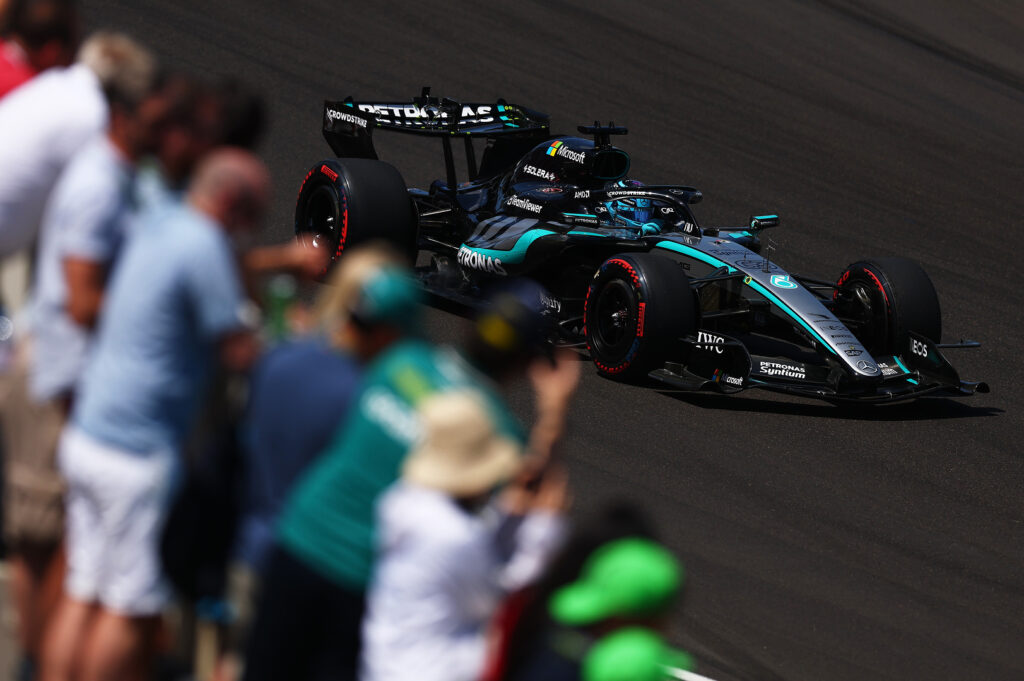
Formula 1’s shift to the new 2026 engine regulations has fundamentally transformed how a Grand Prix car performs on track. The removal of the intricate MGU-H (Motor Generator Unit – Heat) from the turbocharger has resulted in a roughly 50/50 power split between the conventional internal combustion engine (ICE) and the electrical battery system.
Despite producing tight racing, the aggressive energy management required has left fans puzzled. Mercedes-AMG Petronas' simulator and development driver Anthony Davidson recently clarified the system’s mechanics during an episode of the Nu Silver Arrows Radio Show.
Davidson debunked the widespread fan theory regarding the "AI" driving the car, emphasizing that the complex energy management system is not an automated computer override. Instead, the system aggressively harvests kinetic energy, causing a sudden deceleration just before the braking zone—a phenomenon known as "super clipping." To casual viewers, this abrupt loss of top speed appears unnatural.
Davidson explained that his prior experience in World Endurance Championship (WEC) driving LMP1 hybrid sports cars made him familiar with the system’s energy management techniques. He noted that the new 50/50 power split is reminiscent of his old sports car knowledge, making him at ease with the super clipping process.
However, the 2026 regulations do have a significant flaw: circuits demanding continuous, flat-out throttle applications. Tracks like Monza, Spa-Francorchamps, or the Jeddah Corniche Circuit require drivers to spend a large portion of the lap at full throttle. On these layouts, the battery drains rapidly due to the limited braking zones.
Once the electrical energy is exhausted, the internal combustion engine must carry the heavy chassis on its own while also generating power, leading to substantial drops in lap times and top speeds. Davidson candidly admitted that these energy-reliant circuits have become the "Achilles heel" of the current regulations, but efforts are underway to address this issue.
The FIA and Formula 1 are reportedly considering heavy revisions for the 2027 and 2028 aerodynamic rules. Potential solutions include implementing highly adjustable front and rear wings to reduce drag on straights, thereby lowering the overall electrical demand on the power unit and enabling drivers to push flat-out without hitting an artificial speed limit.
Written by urgent.news from Yahoo Sports's reporting — not their text. Machine-written — may contain errors; check the original before relying on it.
![Golden Boy Awards 2026: Current rankings revealed [Top 5]](/img/1685001)