Lazy eye in children may go unnoticed — when is an eye check-up needed?
Often called lazy eye, amblyopia may have no obvious signs and can remain undetected during early childhood. Screening, timely treatment and sustained follow-up are important because visual development is time-sensitive
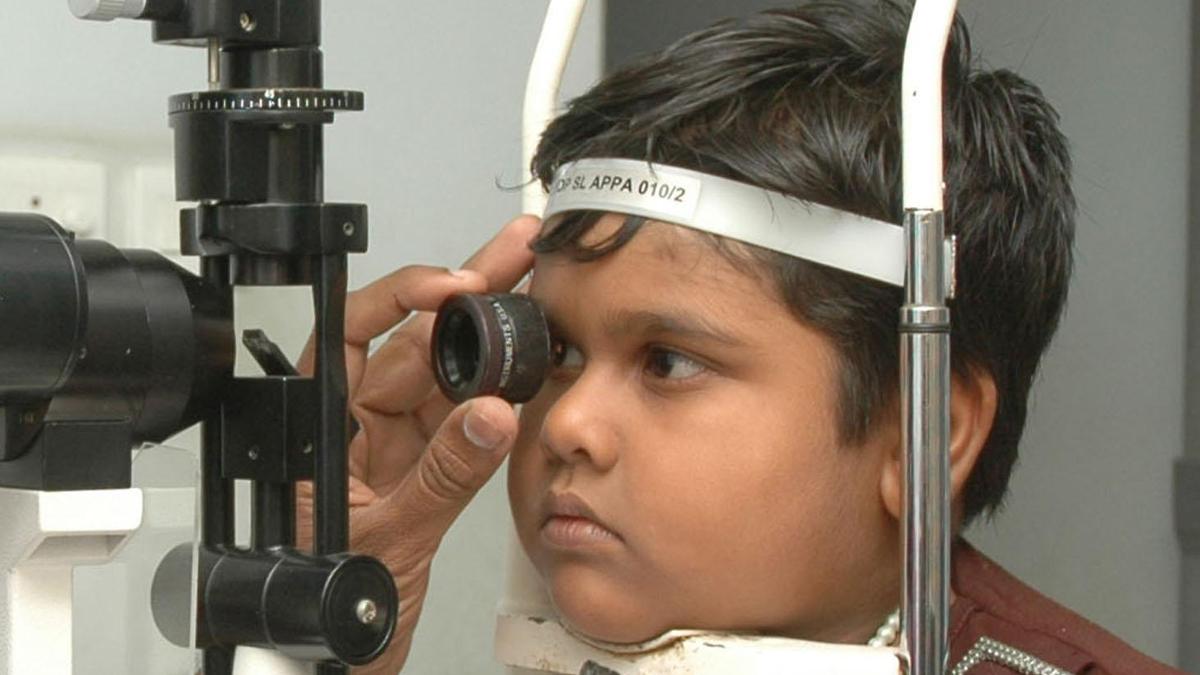
Amblyopia, often referred to as lazy eye, arises when the brain fails to properly interpret visual information from one eye. Even though the eye's structure appears normal, the input reaching the brain is incomplete or poorly coordinated. This condition can arise due to an untreated refractive error like nearsightedness, farsightedness, or astigmatism.
Another cause could be misalignment of the eyes, such as in a squint. Congenital cataracts, corneal opacity, and other visual obstructions may also lead to amblyopia. Roughly 2% to 4% of children below the age of five are believed to suffer from this condition, though the actual number might be higher as many children show no obvious symptoms.
An eye examination is crucial because a child might simply adapt to using the better eye without any visible signs of discomfort. Despite the apparent normalcy of school activities, children can go unnoticed without a routine vision screening. School screening programs can help identify children around the age of four to five, allowing for early intervention.
However, this is particularly challenging in preschool children and those living in rural or semi-urban areas where access to an ophthalmologist is limited. Moreover, families dependent on daily wages may find it difficult to take time off work for hospital visits. Even when preschool screening is available through Anganwadi centres, the process of referral to an ophthalmologist can be challenging.
The effectiveness of treatment largely depends on the timing, as visual development occurs during childhood. When the underlying cause, such as refractive errors, is corrected early, it can lead to optimal vision development, whereas later treatment might result in limited visual outcomes. The treatment process begins by addressing the root cause.
Refractive errors are rectified through appropriate glasses. In cases of cataracts, corneal opacity, or other media opacities, surgical intervention might be necessary, followed by refractive correction if needed. For misaligned eyes, a squint treatment is required. Often, occlusion therapy is employed, where the eye with better vision is covered for a specific period.
This encourages the affected eye to function, forcing the brain to utilize it more actively. While occlusion therapy is effective, it can be challenging for children to accept, as they might find the eye patch uncomfortable or self-conscious about wearing it at school. In such cases, pharmacological penalisation using atropine can be considered, where the better-seeing eye is kept dilated to reduce its accommodation ability, thus encouraging the amblyopic eye to function.
Practical modifications can also make treatment more manageable. For instance, frosted spectacle lenses can be used, occluding the better-seeing eye while providing appropriate correction for the affected eye, making it less conspicuous and easier to integrate into daily routines. The timing of occlusion therapy is crucial, and children should ideally engage in visually demanding activities while undergoing treatment, such as reading, schoolwork, or visually stimulating games.
Treatment typically spans months or even years, depending on the child's condition and response. One of the major challenges in amblyopia treatment is adherence. Studies have shown that only about 45% of families achieve the prescribed treatment adherence target. To improve adherence, personal counseling, setting realistic goals, regular follow-ups with the ophthalmologist, and considering newer approaches like dichoptic or binocular vision therapies are essential.
These newer methods involve digital platforms and interactive games to train both eyes together, potentially improving stereopsis and binocular vision. While these approaches are not replacements for conventional treatment, they highlight the importance of a treatment method that both the child and their family can realistically follow.
Written by urgent.news from The Hindu - Sci-Tech's reporting — not their text. Machine-written — may contain errors; check the original before relying on it.
This story
This is one outlet's version. Read the fullest account.