Indian Pilots' Union Calls For Overhaul Of DGCA Drug-Testing Rules Following Air India's Phuket Flight Incident; Suggests Increasing Random Testing To 25% Crew
The Federation of Indian Pilots (FIP) has urged the Directorate General of Civil Aviation (DGCA) for a comprehensive overhaul of the country’s psychoactive-substance testing regulations following the incident on an Air India flight earlier this month. The pilots’ body has asked to double mandatory random drug testing, introduce oral-fluid screening alongside existing urine tests, and enforce…
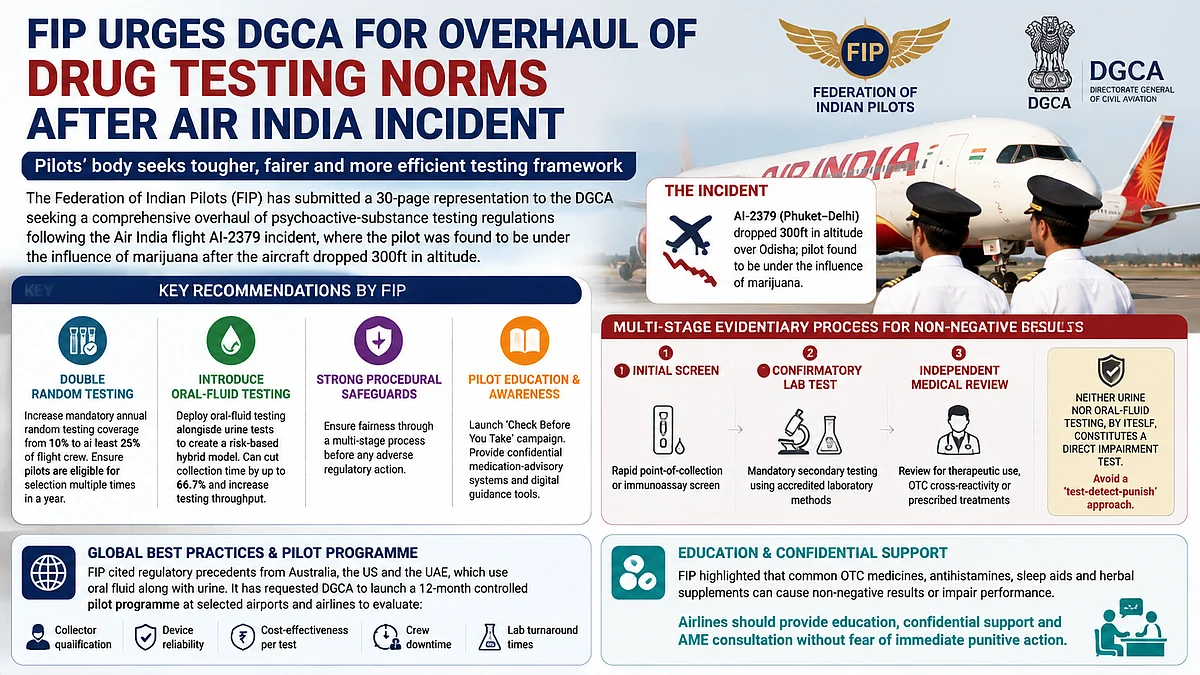
The Federation of Indian Pilots (FIP) has pressed the Directorate General of Civil Aviation (DGCA) for a radical overhaul of psychoactive-substance testing regulations in India following an incident on an Air India flight. The pilots' union is proposing a doubling of mandatory random drug testing, introducing oral-fluid screening, and tightening procedural safeguards to protect crew members.
The 30-page petition follows a case where the pilot-in-command of Air India's Phuket-Delhi flight AI-2379, which plummeted 300ft over Odisha, tested positive for marijuana. The FIP argues that the existing framework, requiring urine-based screening with a minimum annual random-testing coverage of 10%, is outdated due to the rapid growth of India's aviation sector.
They urge the DGCA to raise the mandatory annual random testing benchmark from 10% to at least 25% of flight crew and ensure pilots remain eligible for selection multiple times in a year to maintain continuous deterrence. The union also suggests incorporating oral-fluid testing as a complementary tool alongside urine sampling to expedite testing and reduce crew downtime by up to 66.7%.
The FIP insists that detecting a substance during preliminary screening does not automatically imply functional impairment or deliberate misuse, warning against a "test-detect-punish" approach. They demand strict medical and procedural safeguards, including a multi-stage evidentiary sequence for non-negative results. The federation also recommends a 12-month pilot program to evaluate collector qualification, device reliability, cost-effectiveness, crew downtime, and laboratory turnaround times under Indian operational conditions.
Written by urgent.news from Free Press Journal's reporting — not their text. Machine-written — may contain errors; check the original before relying on it.