How the Supreme Court remade religious liberty in the Christian right’s image
The Republican Party’s supermajority on the Supreme Court was barely a month old when the justices handed down one of the most consequential religion decisions of the last several decades. It was Amy Coney Barrett’s first significant vote as a justice. The issue in Roman Catholic Diocese of Brooklyn v. Cuomo (2020) was whether churches […]
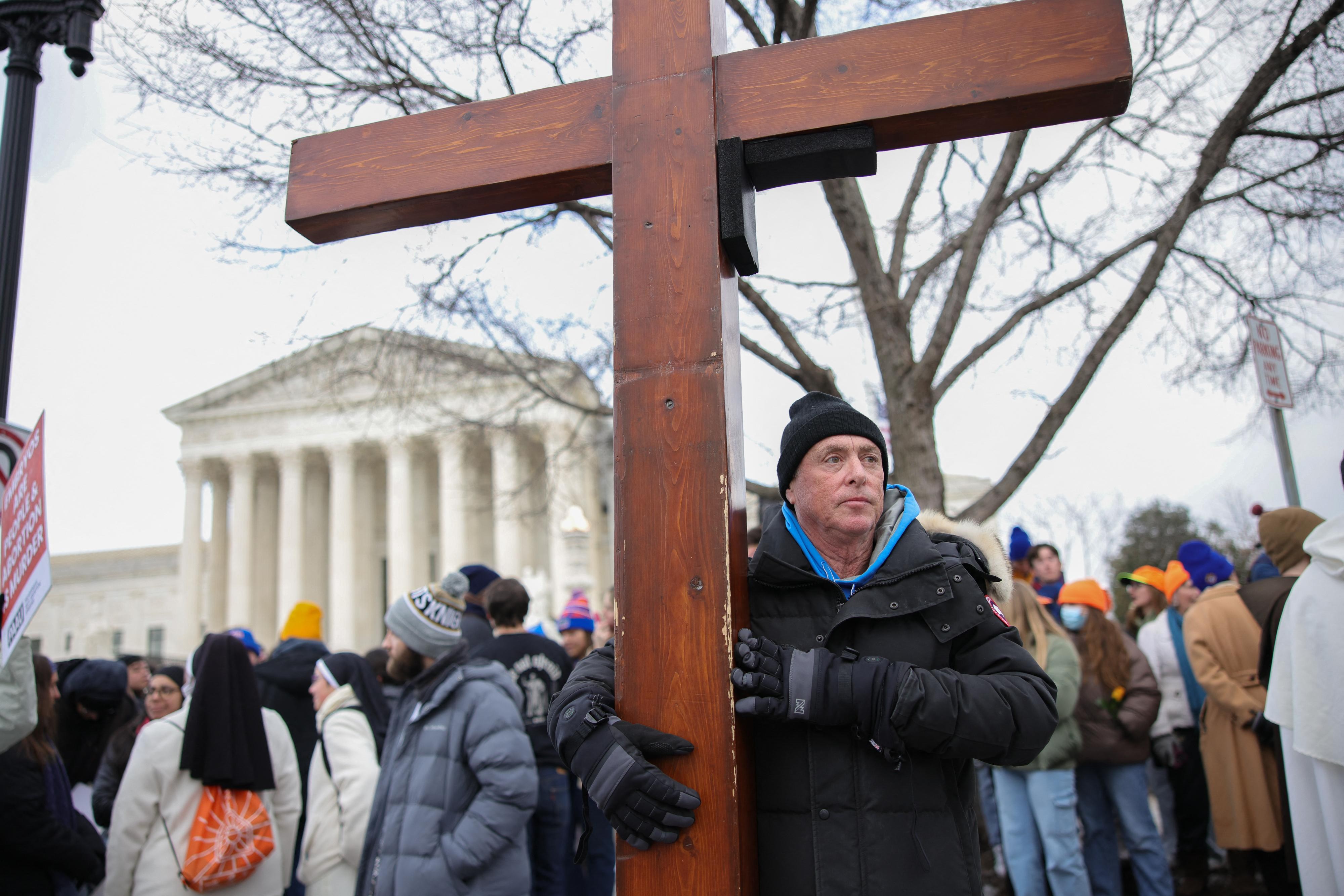
In a pivotal 2020 ruling, the Supreme Court reshaped its stance on religious exemptions from state laws, a change that swiftly aligned with the Republican majority's ideology. The case, Roman Catholic Diocese of Brooklyn v. Cuomo, revolved around the question of whether houses of worship should be exempt from Covid-19 pandemic restrictions on attendance.
New York had imposed limits on worship service capacity, a move that ignited a political debate over the appropriateness of pandemic restrictions. Prior to the Supreme Court's decision, states typically received considerable latitude in navigating the complex legal questions that emerged when religious practices potentially interfered with others' rights or freedoms.
However, the Court's new supermajority, consisting of six Republican justices, chose to diverge from that approach. They determined that churches and religious institutions could be subject to the same, least restrictive rules as any other secular business, irrespective of the perceived risk of transmission. The majority highlighted that churches should be treated similarly to outdoor spaces like campgrounds or garages, where the risk of transmission was significantly lower.
The shift in the Court's approach to religious exemptions was evident even among Republican justices who typically aligned with their party's interests. For instance, Chief Justice John Roberts, known for his bipartisan voting pattern, expressed concerns about the judiciary's ability to assess public health matters. In the wake of the Diocese ruling, the Court has consistently sided with religious conservatives, often allowing them to circumvent the rights of others.
This development significantly altered the balance between the freedom to exercise one's religious beliefs and the rights of others, particularly in cases involving sexual freedoms like access to birth control or same-sex marriage.
Before the Diocese decision, the rule was clear: religious institutions must comply with state laws unless the state targeted them for discriminatory treatment. If a state closed all venues where people gathered, including auditoriums or theaters, it would be deemed constitutional. However, the Diocese ruling fundamentally altered this paradigm, extending the principle to churches as well.
The Court's new majority appears to be leveraging religion cases to advance partisan policy goals that resonate with their political base but may clash with the views of Democrats. These decisions often involve disputes that pit Republican and Democratic constituencies against one another, typically favoring the former. The Court's approach to religion cases also mirrors its stance on other contentious issues such as voting rights, abortion, race relations, and the constitutional standing of Former President Donald Trump.
The implications of the Supreme Court's evolving approach to religious liberties are far-reaching, potentially impacting public education, anti-discrimination laws, and the overall fabric of American society. As conflicts between religious and secular visions of America become increasingly common, the Court's decisions will play a crucial role in shaping the nation's future.
Written by urgent.news from Vox's reporting — not their text. Machine-written — may contain errors; check the original before relying on it.