Body found at bottom of Scottish well may be from rare ritual burial performed centuries ago
An Iron Age grave has been discovered in the Scottish Highlands. The person was buried within what may have been a ritual well.
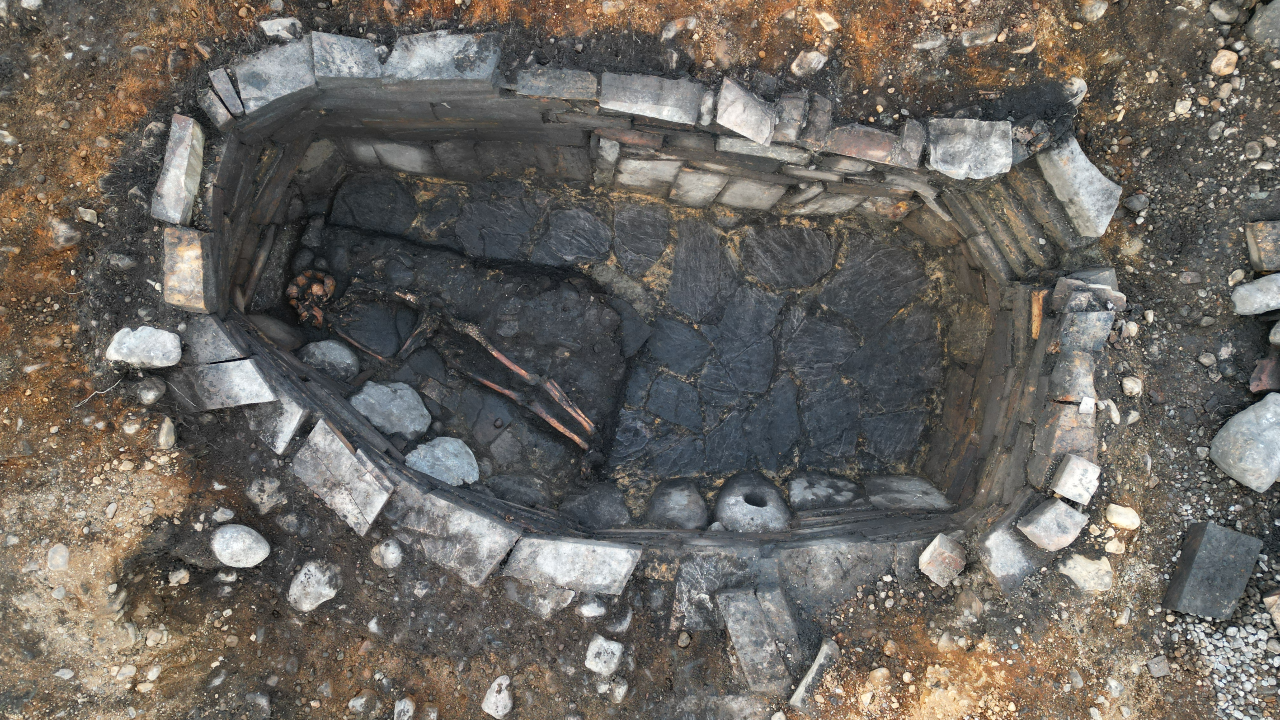
Archaeologists in Scotland's Highlands have uncovered a 2,000-year-old burial in a potential ritual well. The discovery occurred during a quarry expansion near Camore Wood and may have been carried out during a closing ceremony when the well was no longer in use. The well's base, measuring around 10 feet long and 3 feet deep, is lined with stone slabs and clay, possibly used to maintain water flow.
Based on artifacts found near the site, the team believes the burial took place during the Iron Age era (800 B.C. to A.D. 400). No grave goods were discovered aside from animal bones placed atop the burial, and the sex, age, and cause of death remain undetermined. Further examination over the next few months will provide more details on the feature, the human remains, and their confirmed sex, age range, and pathologies.
The burial site is located close to an Iron Age settlement at Camore Wood, where previous excavations revealed at least 20 hut circles and possible roundhouses. However, it is unclear whether the burial is connected to the settlement, which is situated about 1 mile away. Researchers propose that the burial may belong to a ritual performed during the well's closure, with similar practices observed at High Pasture Cave on Skye, where archaeologists found a woman and two infants buried at the entrance of a ceremonial cave closure during the Iron Age.
Analysis of the remains is ongoing, and the team anticipates releasing additional information on the burial in the coming months.
Written by urgent.news from Live Science's reporting — not their text. Machine-written — may contain errors; check the original before relying on it.