Belfast's Harland & Wolff cranes set for £3m overhaul
Two giant shipyard cranes which have come to symbolise the city of Belfast are to get a major refurbishment.
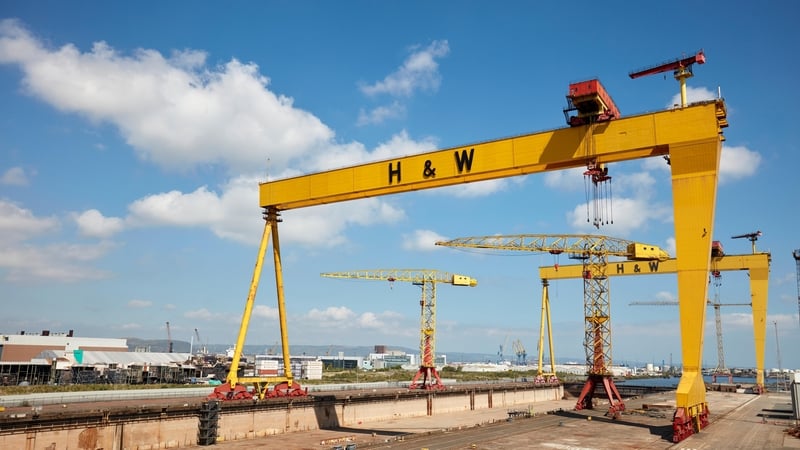
Two towering cranes, known as Samson and Goliath, stand as iconic landmarks in Belfast's Harland & Wolff shipyard, where the Titanic was once constructed. These impressive structures, each reaching a height of 100 meters and capable of lifting 840 tonnes, have not been fully operational for decades. They were last utilized for shipbuilding in 2003.
Spanish shipbuilding firm Navantia UK is now investing over £3 million to overhaul the cranes, aiming to restore them to their full potential before an expansion in shipbuilding activities. This major repair project, encompassing mechanical, electrical, hydraulic, and fabric maintenance, is set to replace parts, upgrade technology, and rigorously test the cranes to ensure they can lift at their maximum capacity.
Harland & Wolff anticipates the cranes will play a crucial role in fulfilling contracts, including the construction of three supply vessels for the British Navy—expected to be the largest in the fleet after the two aircraft carriers. The company is optimistic about a future driven by increased UK defense spending. Carlos Lopez Carregado, General Manager at Harland & Wolff, expressed pride in the cranes, stating their refurbishment will restore them to their best state.
The company has committed a total of nearly £100 million to the expansion of the yard, including the installation of cutting-edge cutting equipment. Established in 1861, Harland & Wolff was a leading global shipbuilder, famously constructing the Titanic for the White Star Line. The ship, hailed as "unsinkable," tragically sank on its maiden voyage in 1912 after striking an iceberg.
Despite its troubled history during the Troubles, with reports of sectarianism against Catholic workers, Harland & Wolff now plans to increase its workforce to 1,500 by 2030.
Written by urgent.news from RTE News's reporting — not their text. Machine-written — may contain errors; check the original before relying on it.