Archaeology: 1,400-year-old remains discovered during excavations in Peru
In the middle of the Peruvian capital Lima, an archaeological find has been made. This is supposed to provide new insights into the ritual practices in Huaca Pucllana.
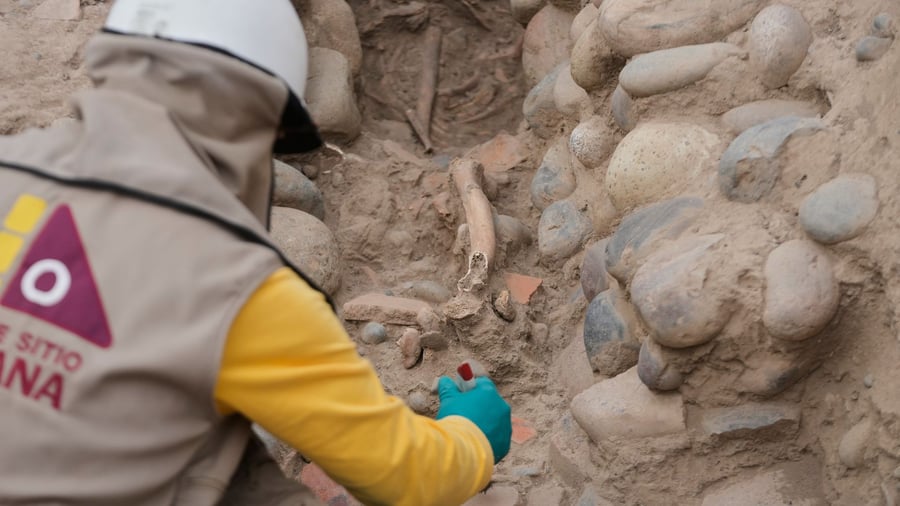
Archaeologists in Lima, Peru have discovered the 1,400-year-old remains of a possible human sacrifice at the Huaca Pucllana ruins. The find was made in a site associated with the Lima culture, which flourished from 450 to 650 AD. The remains of an adult male were found along an underground water channel, which was ritually closed, and had been placed with a ceramic snake head.
The skeleton was deliberately arranged to face a pyramid and the sea, suggesting a link to the ritual inauguration of the structure. The discovery sheds new light on the ritual practices at Huaca Pucllana, a site known for its impressive stepped pyramid made of millions of handmade mud bricks.
Written by urgent.news from Handelsblatt's report — not a translation of it. Machine-written — may contain errors; check the original before relying on it.