After building transport assets, we must make every journey work
LETTER: Budget 2027 should start measuring whether people’s daily journeys improve. Malaysia can spend billions of ringgit building a railway and still lose the passenger during the final 800 metres.
Budget 2027 should commence evaluating the impact of daily journeys on individuals. Malaysia might invest substantial funds in constructing a railway, yet passengers could still be left stranded within the final 800 meters. Picture a worker residing mere kilometers away from a train station. The train service is up-to-date and frequent, but the connecting bus arrives only once every 40 minutes.
Navigating to the bus stop presents challenges due to the route crossing a busy road without a safe crossing point. A missed connection could result in tardiness for work, consequently reducing daily earnings. While driving proves more expensive, it appears as the most dependable option. On paper, the railway appears functional.
However, in the life of that individual, the public transport system has proven unsuccessful. This encapsulates the challenge that Budget 2027 must address. Malaysia has mastered announcing allocated funds, vehicle quantities procured, and completed infrastructure. Yet, they fail to convey whether people's lives have improved. The government must allocate transport responsibilities among various agencies, operators, programs, and administrative levels.
Commuters remain oblivious to these divisions. Their focus lies in ensuring every aspect of their journey operates seamlessly. If one connection falters, the entire journey becomes longer, more arduous, and less dependable. Nevertheless, we persist in planning and assessing transport on a project-by-project basis. Every significant public transport allocation in Budget 2027 should be tracked through a straightforward chain: Allocation → Actual Expenditure → Physical Delivery → Service Provided → Passenger Experience → Economic and Social Outcome.
If the government allocates funds for buses, the public should be informed about the improved routes, additional services offered, and reduced waiting times. We do not require yet another transport announcement concluding once the purchase is finalized. This matters beyond mere commuter convenience. When public transport is unreliable or inaccessible, families become increasingly reliant on cars.
Workers face fewer job opportunities within a practical traveling distance. Employers have access to a smaller pool of potential employees. Households allocate a larger portion of their income to transportation, while traffic congestion robs people of time that could have been spent working, resting, or caring for family. For the passenger, a missed connection is not merely a figure in an operational report.
It could entail lost wages, disciplinary action from an employer, a missed medical appointment, or arriving late to pick up a child. The consequences are even more severe for those who cannot drive, including many older Malaysians, young individuals, persons with disabilities, and lower-income households. Robust public transport offers people choices.
It connects them to employment, education, healthcare, and one another. It also provides families with a practical alternative to the financial strain of owning and maintaining a car when no other dependable option exists. Budget 2027 should place buses at the core of Malaysia's public transport strategy. This is not an argument against rail.
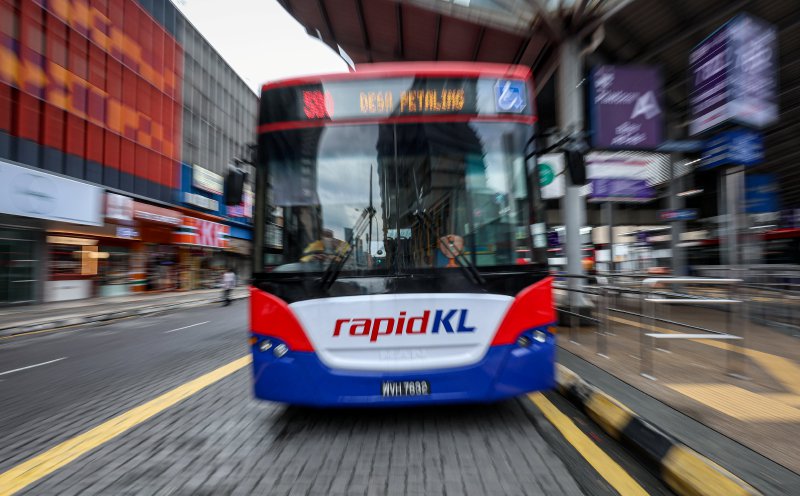
Malaysia has heavily invested in railway infrastructure, and these investments should serve as many people as possible. Buses can facilitate this. A dependable feeder network can bring more neighborhoods within reach of a station. Frequent buses can serve communities where constructing a railway would not be practical. Enhanced bus networks can also improve mobility in secondary cities, ensuring dependable public transport is not confined almost exclusively to the Klang Valley.
However, no bus should be funded without a realistic plan encompassing route, driver allocation, depot, maintenance, operating hours, and recurring costs. The public commitment should not conclude upon vehicle delivery. It should materialize when a useful and reliable service commences operation. BAS.MY presents an opportunity to implement this principle.
The government should delineate the desired routes, frequencies, operating hours, reliability, and accessibility standards required by communities. Operators should then be contracted to deliver these services. Public funding should cover a clearly defined service, and payments should reflect whether that service is actually provided.
WAN AGYL WAN HASSAN, Senior Advisor & Founder of MY Mobility Vision, offers this perspective in the New Straits Times.
Written by urgent.news from New Straits Times's reporting — not their text. Machine-written — may contain errors; check the original before relying on it.