What nine years of Pakistan civil awards look like when you turn them into data
Every August, on the eve of Independence Day, the Cabinet Division announces the year’s Pakistan Civil Awards. The following March, on Pakistan Day, they are conferred. In between, the lists circulate in the media for a day or two, read name by name, and then they pass out of view. Each announcement is accompanied by a document, complete in itself but rarely looked at again. Placed one after…
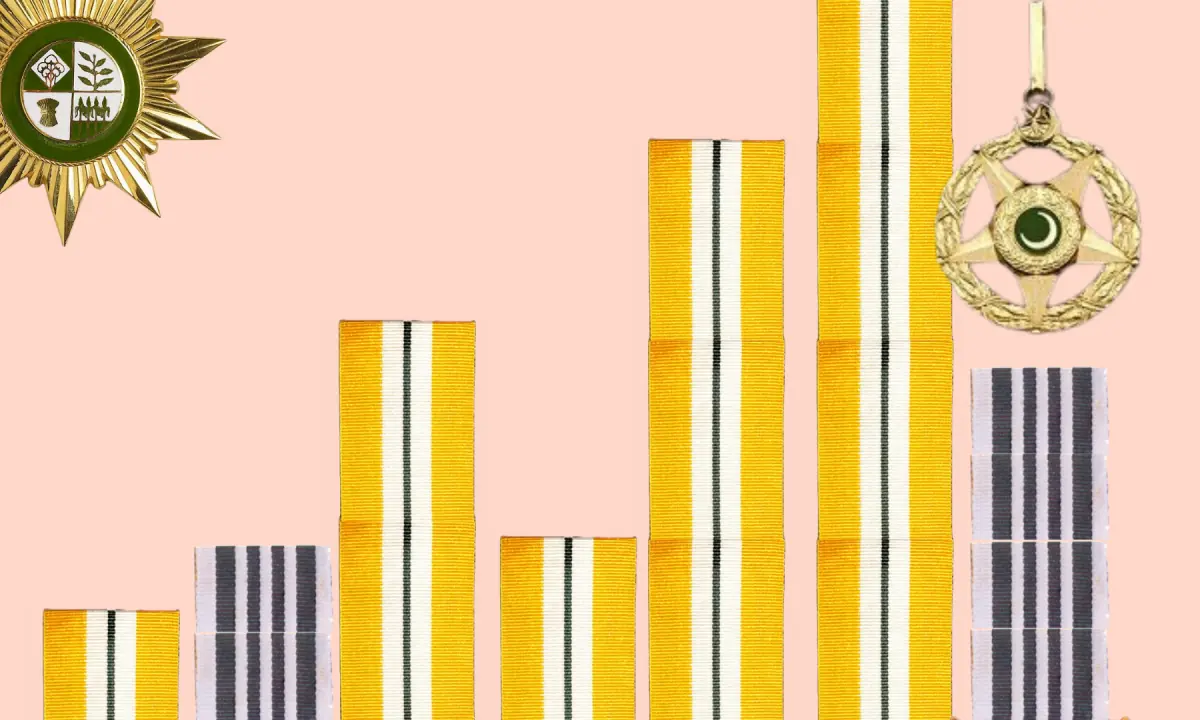
Every August, on the eve of Independence Day, the Cabinet Division announces the year’s Pakistan Civil Awards. These recognitions are then conferred on Pakistan Day in March. The annual lists circulate in the media for a brief period before they are set aside. However, when placed one after another, the nine documents from 2018 through 2026 reveal a dataset of 2,209 individual recognitions.
Examining these awards over time, a few patterns emerge. The number of awards varies each year, ranging from 73 in 2018 to 372 in 2026, with fluctuations in between. The shares of awards going to women remain relatively stable at roughly 10-16 percent, despite the varying sizes of the lists. This stability indicates that women are consistently recognized across different categories, even as the overall number of awards changes.
Another interesting observation is the distribution of awards across different fields. Women receive a smaller share of awards in engineering (2 out of 126) compared to other fields like social welfare (about 40 percent) and arts and culture (close to 25 percent). At the highest tiers of awards, women make up less than 5 percent of recipients, while at the lower tiers, they account for around 11-14 percent. This suggests that the overall female representation is an average of variations across different categories.
Public Service, which accounts for the largest share of awards, also has the most skewed composition. Out of the Public Service awards given to Pakistani recipients over the nine years, 294 were given to men and only 28 to women, which is below the prescribed 10 percent quota for women in the federal civil service. This indicates that the awards may reflect the existing composition of the services rather than being specific to the awards themselves.
In conclusion, the compiled dataset reveals several patterns in the Pakistan Civil Awards from 2018 to 2026. The awards' numbers fluctuate each year while women's representation remains relatively stable across different categories. The fields of recognition also undergo significant changes, with science and engineering being the most prominent in certain years. These findings highlight the importance of examining the data in detail, as a single year's list cannot reveal the underlying trends.
Written by urgent.news from Dawn's reporting — not their text. Machine-written — may contain errors; check the original before relying on it.