Authorities shift focus to evacuees’ prolonged displacement after Kumamoto quake
Initial response during the month after a disaster is essential for mitigating deaths resulting from extended stays in evacuation shelters, experts say.
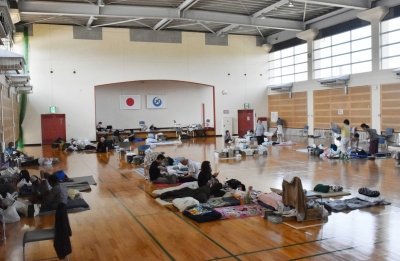
Three weeks have elapsed since a significant earthquake struck Kumamoto Prefecture on July 28, prompting authorities to redirect their efforts toward addressing the issue of prolonged displacement-related deaths. During the initial month post-disaster, experts emphasize the critical importance of prompt response. In 2016, following two major quakes, the number of evacuees soared to over 180,000.
Consequently, more than 200 individuals lost their lives due to physical and mental strain stemming from the extended period of displacement. These fatalities are categorized as disaster-related deaths.
According to data from the Kumamoto Prefectural Government, as of March 2021, 124 — comprising 56% of the disaster-related deaths — occurred within a month following the earthquakes. Similar tragic incidents were reported in the aftermath of the January 2024 earthquake in the Noto Peninsula area, with 147 deaths occurring within a month of the quake, as reported by the Ishikawa Prefectural Government in December 2023.
Shinichi Egawa, a professor of disaster medicine at Tohoku University’s International Research Institute of Disaster Science, underscores the necessity of closely monitoring each evacuee. Authorities and healthcare workers must exchange information on evacuees, encompassing those residing at home and those residing in their vehicles, as well as their age, nursing care requirements, and medication usage. Providing evacuees with access to suitable support is also crucial, Egawa asserts.
Egawa highlights additional preventive measures, such as engaging in dialogue with older individuals who often experience isolation following a disaster. He recommends encouraging regular tooth brushing to prevent pneumonia. Furthermore, he emphasizes the need for long-term support, citing instances where disaster-related deaths continued to be reported following the 2016 Kumamoto quakes and the 2024 Noto Peninsula quake, even up to a month after the events.
Egawa suggests that the resumption of operations by medical and nursing care institutions promptly, coupled with the ability of evacuees to resume their normal lives, would help alleviate stress and mitigate disaster-related deaths.
Written by urgent.news from Japan Times's reporting — not their text. Machine-written — may contain errors; check the original before relying on it.