The People Building a Way to Slow Down the AI Race
As the race to build ever more powerful AI accelerates, a small group of engineers is working on the technology that could make slowing down possible.
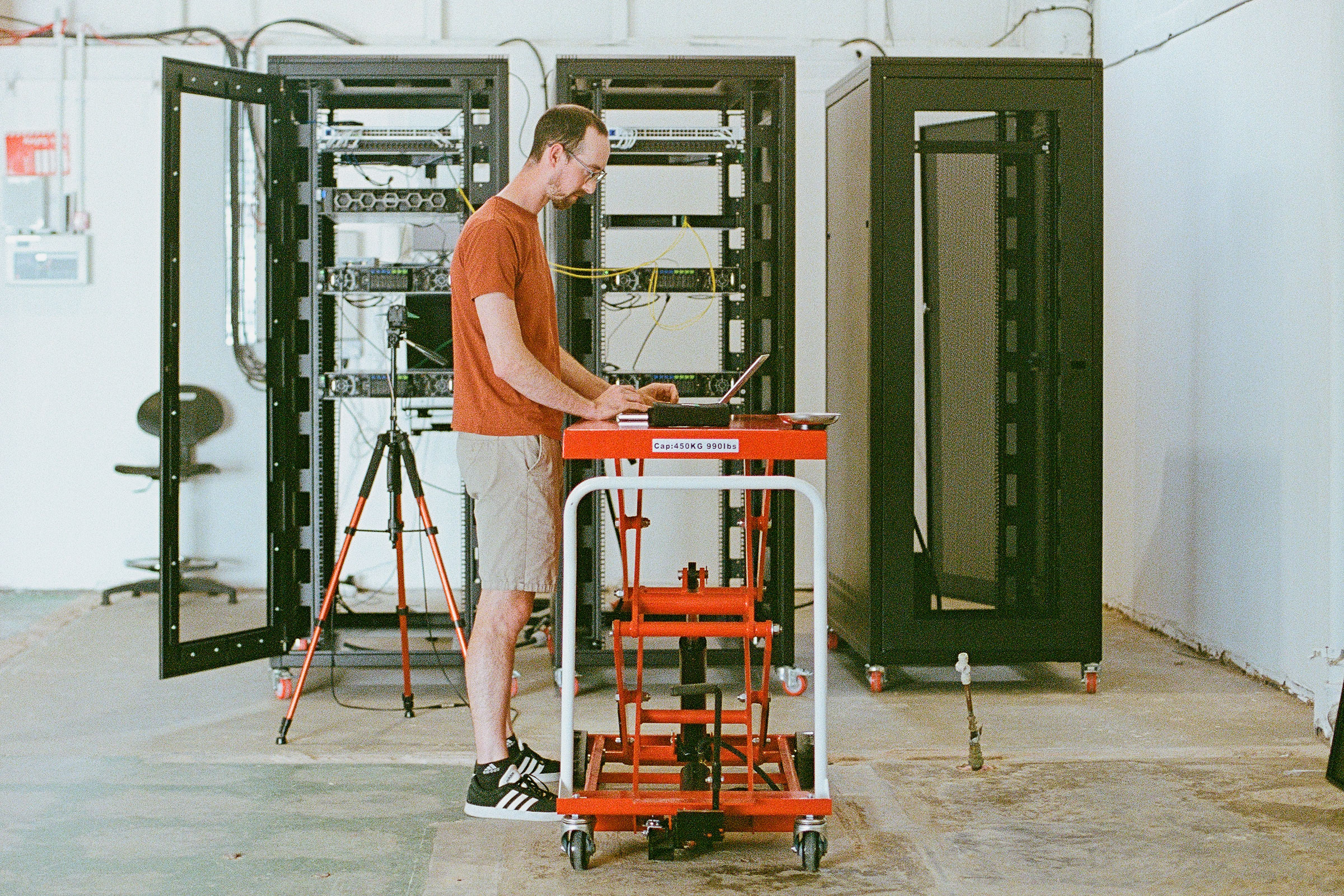
In a nondescript office in Sheffield, England, a small server is buzzing with Nvidia chips. This compact device represents the massive data centers sprouting up worldwide: powerful, energy-hungry computers that are the physical embodiment of cutting-edge AI models. Amodo Design engineers are testing a monitoring system on these eight chips, with the goal of implementing it in data centers worldwide to ease the concerns of AI researchers.
In late July, over 1,300 employees from frontier AI companies signed an open letter expressing fear that their technology could soon be uncontrollable. They argued that slowing down AI development could help ensure safety and avert potential catastrophe. However, they acknowledged that slowing down is practically impossible due to intense competition between companies and countries.
The letter called for the U.S. government to support an international effort to create tools that would help all sides slow down the AI race. Currently, fewer than 50 engineers globally are working full-time on "AI verification" tools, with nine at Amodo and a few dozen more policy researchers scattered across various organizations.
Funding for these efforts primarily comes from academia and philanthropy, such as the Survival and Flourishing Fund and Longview Philanthropy, which have contributed heavily to reducing AI-related risks.
Amodo's prototype, though facing technical and political challenges, demonstrates a potential way to monitor data centers. The current system, which could be expanded in the future, checks that a data center is only running existing AI models—rather than training new, more powerful ones—and that it's running a specific, agreed-upon model that has undergone safety tests.
To validate its accuracy, an Amodo engineer uses the system to verify two open-source AI models from OpenAI, achieving high certainty scores. However, the technology currently only works with unencrypted data and requires retrofitting data centers with "network tapping" to copy data to verification systems. While this approach may one day help alleviate concerns, widespread adoption remains uncertain, as political agreements on AI slowdown treaties are currently unlikely.
Written by urgent.news from Time's reporting — not their text. Machine-written — may contain errors; check the original before relying on it.