Standard Bank transitions to AI-enabled organisation
The bank scales AI across relationship management, payments and lending, while investing in governance, skills and infrastructure.
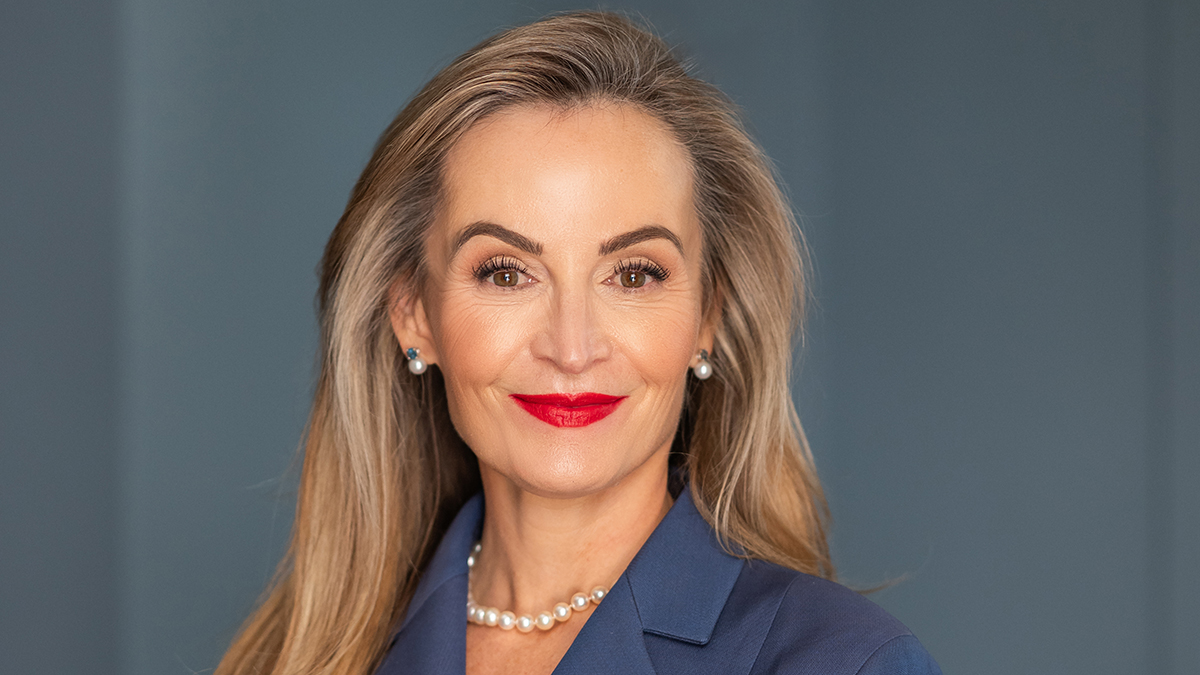
Standard Bank is transforming itself into an AI-driven organization, shifting its focus from merely experimenting with AI tools to embedding AI as a core component of its operations. The bank recognizes that competitive advantage in the AI era will hinge on the effective integration of these models with trusted data, robust governance, skilled workforce, and deep understanding of customers and markets.
With over 39,000 employees now utilizing generative AI, accounting for 72% of the bank's workforce, and around one-third of its technology staff employing AI-driven coding tools, productivity improvements of approximately 20% have already been observed. Margaret Nienaber, the bank's COO, emphasizes the transition from providing AI tools to employees to fundamentally altering the organization's operations.
She describes the bank's ambition as moving beyond using AI tools to becoming an AI-enabled organization, a more significant objective.
Nienaber stresses that the winners in AI will not necessarily be those with the newest technology, as many organizations will have access to similar models and tools. Instead, the key differentiator will be how effectively these technologies are combined with trusted data, strong governance, relevant skills, and deep market knowledge.
AI is increasingly becoming a core, long-term competitive capability rather than just a technological one. The bank's focus is on embedding AI into client service, employee support, and internal operations, aiming to create a foundation for sustained growth.
Standard Bank's AI strategy is grounded in an analogy of an iceberg, where the visible portion represents the AI tools, client-facing experiences, and individual use cases. Beneath the surface are the less visible foundations—trusted data, technology infrastructure, AI models, security controls, risk management, responsible governance, skills, and organizational culture. These foundations are critical for scaling AI initiatives and preventing them from remaining isolated experiments.
The bank employs an enterprise AI platform built on Amazon Bedrock, utilizing a multi-model approach to evaluate and deploy various open and closed models while maintaining consistent security, governance, and operational controls. The bank has identified four "lighthouse" areas for its initial AI focus: relationship management, servicing, payments, and lending.
In relationship management, AI helps reduce the time bankers spend searching for information, allowing them to focus more on clients. Servicing aims to simplify interactions across digital channels, contact centers, and branches, enabling employees to concentrate on more complex customer needs. In payments, AI is applied to operational efficiency and fraud management, with preparations underway for AI agents in commerce. In lending, AI streamlines processes in credit assessment, contracting, and disbursement.
While the goal is not to eliminate human work, Nienaber asserts that AI can provide employees with more time, which they can reinvest in tasks where humans excel—judgment, creativity, relationships, empathy, and complex problem-solving. This approach positions AI as an augmentation of human capabilities rather than a mechanism for automation.
The bank's AI expansion is supported by its broader technology modernization program, with 78% of migratable compute transitioning to the cloud by the end of the first half of 2026. This scalable infrastructure is crucial for deploying AI applications across the organization while maintaining consistent controls.
To support its AI initiatives, Standard Bank has been internally building AI skills. More than 9,000 employees completed its Foundational AI Pathway by 2025, and over 12,300 employees used its integrated prompt guide. Additionally, more than 1,000 leaders participated in its Decision-Maker Pathway. The bank views the next stage of AI adoption as less about discovering new use cases and more about integrating AI into the operating model.
Nienaber stresses that Standard Bank's strategy places data, infrastructure, governance, and people beneath the visible layer of AI applications, aiming to transform these foundations into a repeatable capability applicable across different parts of the group.
Written by urgent.news from ITWeb's reporting — not their text. Machine-written — may contain errors; check the original before relying on it.