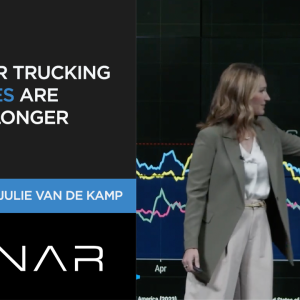
Slowest Freight Monday: Why Volume is MISSING from the Market
The freight market is experiencing one of its slowest Mondays this year, with experts noting a significant lack of volume. Is this a seasonal blip or a deeper structural shift? We dive into how contract repricing, rising tender lead times, and intermodal’s surge are impacting the trucking industry. What does this mean for capacity and […] The post Slowest Freight Monday: Why Volume is MISSING…

The freight market saw its slowest Monday of the year this week, with freight volumes collapsing to a six-month low, according to experts at Eaze Logistics. Industry observers were taken aback by the significant lack of volume, even as rate levels remained relatively stable. Ken Adamo, Chief Strategy Officer of Eaze Logistics, identified two main factors contributing to the drop: a surge in contract repricing and a swift mini-bid cycle that rerouted freight away from the spot market onto stabilizing routing guides.
The contract repricing effort was completed rapidly, with shippers wanting to finalize deals before the peak season. This trend was evident in tender rejection data, which showed a 70% capacity problem and 30% demand problem driving the imbalance. Adamo pointed out that tender lead times had lengthened from an average of 3.25 days to 3.75 days, signaling that shippers are planning further ahead and moving freight more systematically.
Intermodal volumes, in particular, surged to record levels, with a 34% higher rate compared to truckload. This shift was concentrated on specific eastern U.S. corridors, such as Atlanta-to-Chicago and Harrisburg-to-Chicago, rather than the traditional west-to-east lane. Railroads, especially Norfolk Southern and Union Pacific, held contract rates steady to accumulate market share without antagonizing shippers or regulators.
However, the longer-term debate centers on where new capacity will come from. Despite a surge in new carrier filings, analysts argue that many registrations are being "banked" by operators rather than reflecting genuine new capacity entering service. Transportation employment has been flat since February, and there are concerns that the market may not absorb sustained double-digit contract rate increases without policy interventions, such as lowering the driving age to 18 or adjusting hours-of-service rules.
The market appears to be signaling a critical need for more trucks and drivers, and the key question is when the cycle turn will occur.
Written by urgent.news from FreightWaves's reporting — not their text. Machine-written — may contain errors; check the original before relying on it.