Q&A: Rethinking how innovation happens
In his latest book, Professor Eugene Fitzgerald examines the forces that turn breakthroughs into value — and why innovation resists simple formulas.
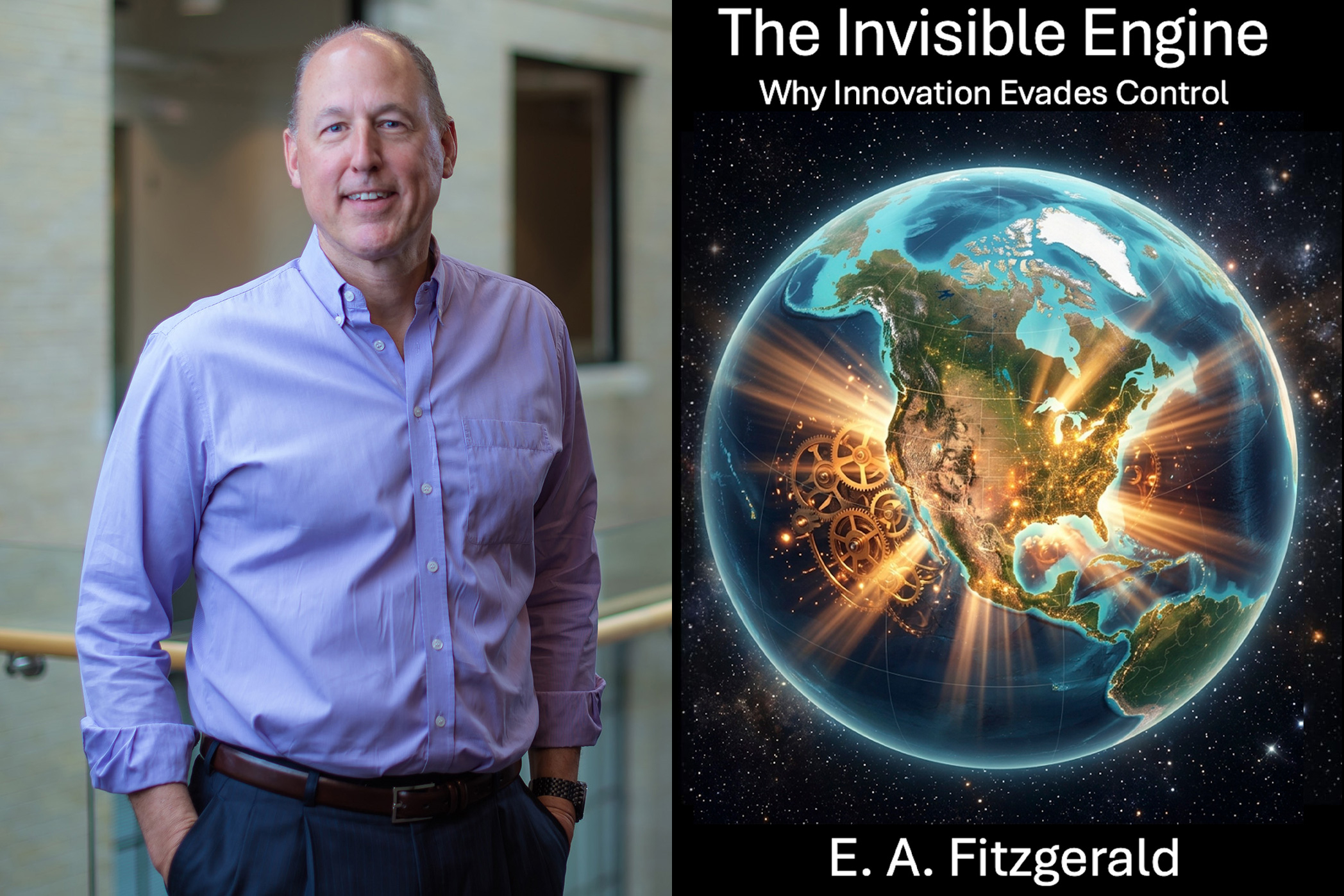
The book "The Invisible Engine: Why Innovation Evades Control" by Eugene Fitzgerald examines the nature of innovation and challenges common misconceptions. Fitzgerald, a professor at MIT, draws from his decade of research experience, including co-inventing strained silicon at AT&T Bell Laboratories, to explore how innovation works and how society can invest in it.
Fitzgerald introduces the idea of the "invisible engine," a decentralized collective intelligence of actors who create unexpected, profitable outcomes in the marketplace. This concept is rooted in the work of economist Frank Knight, who studied entrepreneurs and their ability to take on uncertainty and reap rewards.
Fitzgerald discusses three types of research investment: altruistic science, strategic research, and fundamental innovation. Altruistic science aims to produce educated people, while strategic research focuses on achieving specific goals, such as developing advanced technologies for a single customer. Fundamental innovation, however, encompasses the entire process from research to economic growth, bridging the gap between academia and industry.
The book also touches on Fitzgerald's personal journey from developing semiconductor technologies at Bell Labs to establishing a company and navigating patent disputes, illustrating the innovation process in action. He emphasizes that the path from Bell Labs to MIT to a startup, and then to industry adoption, is a prime example of the innovation process, despite the chaos and uncertainty it may entail.
Written by urgent.news from MIT News AI's reporting — not their text. Machine-written — may contain errors; check the original before relying on it.
Also reported by 1 other outlet
- Q&A: Rethinking how innovation happens news.mit.edu