Power station sales at Epicentr chain up 28%, power banks up 44% amid massive shelling
Demand for backup power products at the Epicentr retail chain remains consistently high, with power bank sales up 44% and power station sales up 28% in the period from Aug 3-9 compared with the previous week, the company’s press service told Interfax-Ukraine.
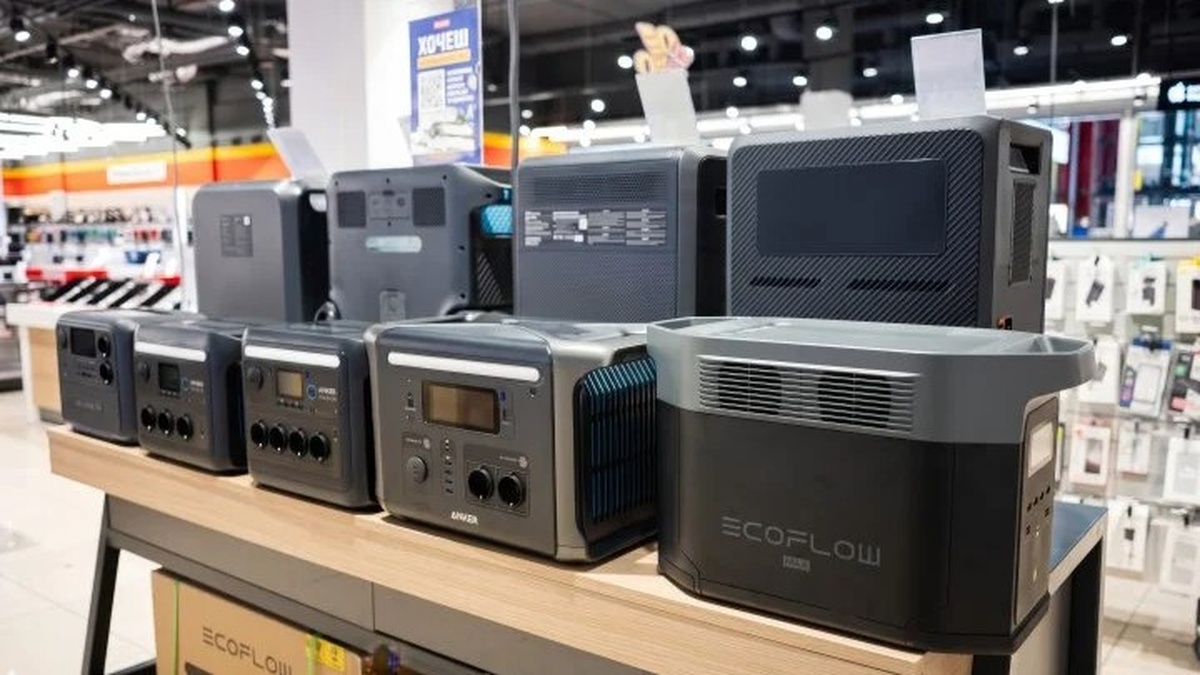
Epicentr, a retail chain, experienced a 28% increase in power station sales and a 44% jump in power bank sales between August 3rd and 9th, compared to the previous week, according to their press service. This surge in demand for backup power products has been driven by the recent massive shelling and government warnings of a difficult winter, although there has not been a global shift in consumer behavior during this period.
Epicentr's director, Dmytro Tanko, noted that demand for backup power products remains consistent and is growing year-on-year, reflecting Ukrainians' gradual adaptation to wartime conditions and regular power outages. He added that consumers now have significant practical experience with these solutions, leading to a shift towards more powerful models and precise selection of equipment based on individual needs.
In the power bank segment, models with a capacity of 20,000-30,000 mAh are the most popular, accounting for nearly half of sales. However, the share of higher-capacity models has only increased by 1.3 percentage points over the year, suggesting that mobility, power capabilities like laptop charging, and fast charging support have become more important factors in choosing power banks.
Power stations with a capacity of up to 1,000 W made up 37% of sales in 2025, but this percentage dropped to 26% in 2026. Meanwhile, the share of stations with a capacity of 1,000-2,000 W rose by nearly 13%. Stations with a capacity of over 2,000 Wh are the top sellers by capacity. Uninterruptible power supplies (UPS) saw an astounding 3.6 times increase in sales year-on-year, with models ranging from 1-1.5 kW in demand.
The main reason for this growth is the affordability of UPS devices compared to kits based on hybrid inverters and batteries. UPS devices in this price range are becoming a more accessible option for consumers seeking basic backup power without significant upfront costs.
While hybrid inverter and battery kits with a capacity of 5 kW or more experienced a 2.2-fold increase in sales compared to last year, this surge was not widespread among Epicentr's retail customers due to the high cost of the equipment. Steady growth in sales of inverters and batteries can be seen in the cashless segment, driven mainly by small and medium-sized businesses investing in their own energy independence.
Epicentr stated that there is currently no shortage of products in the backup power segment, and prices remain stable compared to last year. Therefore, the current increase in sales cannot be attributed to a distinct wave of mass preparation for winter, as buyers are primarily addressing their current backup power needs while also considering the coming winter when choosing equipment.
Overall, sales dynamics in other product categories remain stable, with increased demand mostly localized, including in food categories such as grains, flour, oil, and canned goods.
Written by urgent.news from Interfax-Ukraine's reporting — not their text. Machine-written — may contain errors; check the original before relying on it.