Urgent.News

One page, thousands of outlets. See who else covered it.

Editions

Business

Índia abre setor nuclear ao capital privado

A Índia vai abrir seu setor nuclear aos investimentos privados. Num discurso neste final de semana – marcando os 80 anos de independência do país do domínio britânico – o primeiro-ministro Narendra Modi prometeu tornar a Índia uma nação desenvolvida até 2047, o que passa pela ambiciosa meta de atingir 100 gigawatts em usinas nucleares […] The post Índia abre setor nuclear ao capital privado…
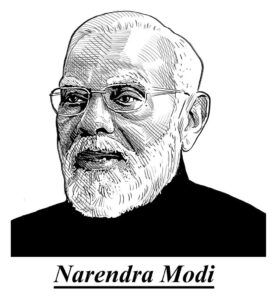
Índia abre setor nuclear ao capital privado

India opens its nuclear sector to private capital. In a speech this weekend marking the country's 80 years of independence from British rule, Prime Minister Narendra Modi pledged to make India a developed nation by 2047, with the ambitious goal of reaching 100 gigawatts of operating nuclear power plants. To put this into context, this represents nearly a tenfold increase in the country's current capacity of 8.8 gigawatts, equivalent to the entire Brazilian hydroelectric power grid.

On Friday, the day before Independence Day, India's Atomic Energy Department placed a regulation on public consultation that would allow private companies to build and operate nuclear power plants - a monopoly previously held by the state. This move is part of the "Shanti" program, a liberalization effort in the sector that passed through Parliament in December.

Prime Minister Modi stated that "energy security is the demand of our time," and with the Shanti program approved by Parliament, the necessary structure is in place to achieve the 100 gigawatt nuclear capacity target. The plan calls for five new reactors to be operational this decade. While India has significantly expanded its renewable energy capacity with wind and solar farms in recent years, its electricity grid still relies heavily on coal.

Modi cited the growing demand associated with technology and AI, as well as a strategy to reduce dependence on other countries, as drivers for the nuclear plans. The country currently imports nearly 90% of its petroleum, much of it passing through the strategically important Strait of Hormuz, which has become a focal point of the US-Israel-led war against Iran.

In recent years, countries around the world have resumed investment in nuclear energy following the Fukushima accident in Japan in 2011, which had paralyzed the industry for years. In the United States, nuclear power is being seen as a clean energy source to meet the massive demand of AI, including new technologies like small modular reactors and microreactors, which are also part of India's plans.

In Europe, Italy is among the countries considering returning to investments in atomic energy, seen as an alternative to dependence on Russian gas after the Ukraine war. Brazil delayed a decision on completing Angra 3 until after the election, but it joined a group of 38 countries that signed a commitment in March to triple nuclear energy use by 2050.

Written by urgent.news from Brazil Journal's reporting — not their text. Machine-written — may contain errors; check the original before relying on it.

Read the original at braziljournal.com →

More in Business

Ten Great DevOps Job Opportunities

Ten Great DevOps Job Opportunities

DevOps.com is now providing a weekly DevOps jobs report through which opportunities for DevOps professionals will be highlighted as part of an effort to better serve our audience. Our goal in these challenging economic times is to make it just that much easier for DevOps professionals to advance their careers. Of course, the pool of […]

More from Monday 17 August →