Has Turkey Really Resolved Its Kurdish Question?
Aliza Marcus’s Resurgence and Revolution sheds light on the past and future of the Kurdish cause.
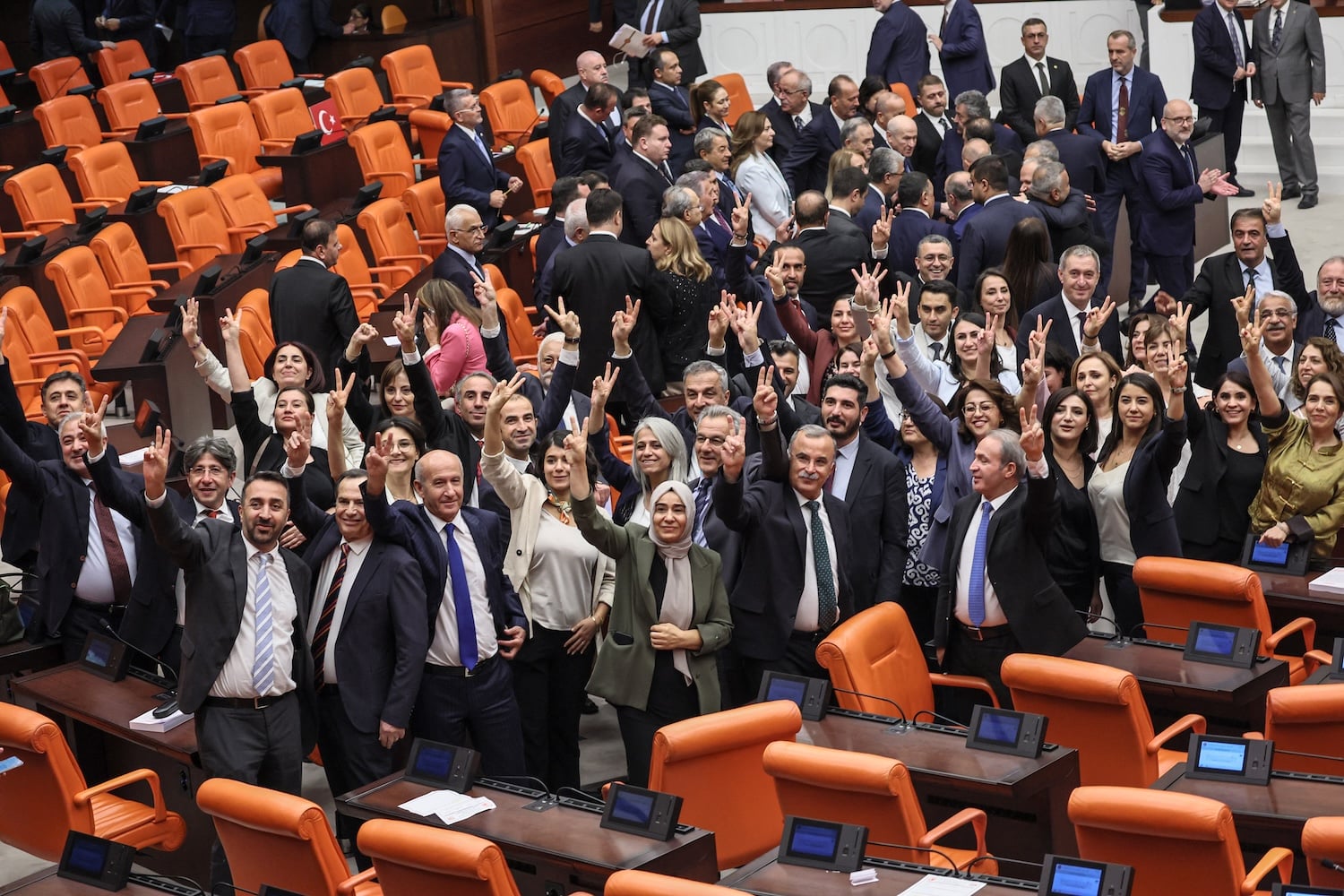
The Turkish parliament passed a bill on August 10, 2025, granting limited amnesty to demobilized members of the Kurdistan Workers' Party (PKK), which had waged an insurgency against the Turkish state since 1984. The PKK announced its formal dissolution last year, following the order of its imprisoned founder, Abdullah Ocalan. Ocalan, who is not included in the amnesty, has praised the bill as a significant step towards democratization.
The speaker of the Turkish parliament declared the end of Turkey's longstanding Kurdish issue, proclaiming the amnesty bill as a path to unity and solidarity in the nation. However, former Middle East-based journalist Aliza Marcus argues that optimism surrounding this resolution might be misplaced. Marcus points out that dissolving the PKK does not necessarily mean the movement will disappear; rather, it represents another stage in their struggle for Kurdish rights within a democratic Turkey.
She believes the group could potentially evolve into a peaceful organization, advancing Kurdish goals nonviolently.
Ocalan's willingness to accept the amnesty bill without prior agreement with Turkey has raised questions about his intentions. Previously, he had insisted on formal agreements with Turkey before disarming and laying down arms. Marcus suggests that Ocalan's change in stance may be due to the PKK's impasse, as their armed struggle had become increasingly ineffective against Turkish military technology and tactics.
Additionally, the failure of their 2015 people's uprising in southeastern Turkey and the group's loss of power in urban areas may have prompted Ocalan to seek alternative strategies for advancing Kurdish rights within Turkey.
Written by urgent.news from Foreign Policy's reporting — not their text. Machine-written — may contain errors; check the original before relying on it.