German bund yields hold flat near multi-day highs as rate hike fears recede

German government bond yields struggled to gain traction at the beginning of the week, nearing multi-day peaks before stabilizing flat. This stabilization occurred amid a shift in U.S. Federal Reserve expectations and ongoing geopolitical energy risks. The 10-year Bund yield reached an 11-day peak before dropping back to trade essentially unchanged around 3.199%.
The yield-sensitive two-year Schatz yield remained flat near 2.790%, after a recalibration of global rate curves the previous week. Trading desks found support from sovereign bond markets in the U.S. and Asia, where borrowing costs had eased due to cooling U.S. macroeconomic releases. Fixed-income markets absorbed a dovish mix of soft U.S. economic indicators, including a decline in July nonfarm payrolls, revised downward prior-month data, an on-target Consumer Price Index, a flat Producer Price Index, a 0.6% month-on-month drop in U.S. July retail sales, and an unexpectedly negative payrolls report.
This softened data suite suggested a 70% probability that the Federal Reserve would maintain interest rates steady in September. The downward shift in transatlantic rate expectations provided respites for European duration, stopping the 10-year Bund yield from surpassing recent resistance levels. With the European macroeconomic calendar notably light at the beginning of the week, fixed-income desks lacked immediate regional data catalysts to push yields higher or lower.
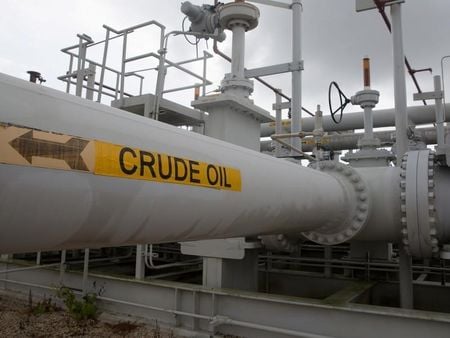
Consequently, traders maintained a cautious stance ahead of preliminary August Purchasing Managers' Index (PMI) surveys expected later in the week. The persistent geopolitical risk premium, arising from the ongoing diplomatic impasse between Washington and Tehran over shipping access through the Strait of Hormuz, kept Brent crude prices elevated near $89 a barrel.
Fixed-income investors were cautious about sharply lowering long-end borrowing costs, fearing that elevated raw material costs could continue to fuel pipeline inflation across European supply chains.
Written by urgent.news from Investing.com's reporting — not their text. Machine-written — may contain errors; check the original before relying on it.