Ebola outbreak in DR Congo becomes deadliest in country's history
KINSHASA: The Ebola outbreak in Democratic Republic of Congo has killed 2,325 people, government data showed on Sunday, surpassing the toll from the 2018-2020 outbreak to become the deadliest in the country’s history.
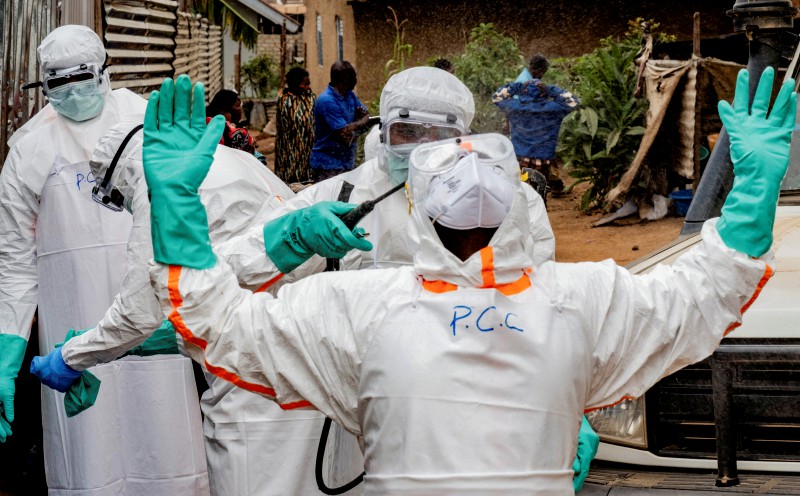
The Ebola outbreak in Democratic Republic of Congo has claimed 2,325 lives, according to government data released on Sunday. This toll surpasses the death count from the 2018-2020 outbreak, making it the deadliest in the country's history. Congo's public health institute reported an increase in confirmed cases to 4,945, with 101 new cases identified in the last 24 hours.
The outbreak, Congo's 17th, achieved this milestone in late July and now surpasses the previous deadliest outbreak, which occurred three months prior and claimed 2,299 lives. Currently, there are 4,945 confirmed cases. In comparison to the 2014-2016 West Africa Ebola outbreak, which affected Guinea, Liberia, and Sierra Leone with 28,616 cases and 11,310 deaths, Congo's outbreak is the most lethal in the country's history, with 2,000 deaths occurring within just three months.
The Ebola strain responsible for this outbreak, Bundibugyo, lacks approved vaccines or treatments. Since the outbreak was declared on May 15, it has gained momentum due to weak health infrastructure, community resistance, and instability, making it challenging to control the spread. The case fatality ratio, or the proportion of people dying from the outbreak after a confirmed infection, has risen from about 20 percent in early June to 46 percent, indicating that nearly half of confirmed cases are now fatal.
Experts attribute this trend to persistent shortcomings in surveillance, case detection, and access to care. Medical professionals emphasize that the increasing fatality ratio does not suggest the virus has become more lethal, but rather highlights the need for improved surveillance, early identification, and timely treatment. Currently, experimental vaccines and therapies are being evaluated, while global health authorities assess the potential of existing Ebola treatments for protection.
The virus spreads through direct contact with the bodily fluids of infected individuals, leading to symptoms like fever, vomiting, diarrhea, and in severe cases, internal and external bleeding.
Written by urgent.news from New Straits Times's reporting — not their text. Machine-written — may contain errors; check the original before relying on it.
Also reported by 8 other outlets
- WHO chief warns DR Congo Ebola outbreak ‘far from being under control’ scmp.com
- Ebola outbreak in DR Congo becomes deadliest in country’s history thechronicle.com.gh
- How Ebola became the deadliest outbreak in DR Congo’s history peopledaily.digital
- WHO says Congo Ebola outbreak can still be brought under control within three months nst.com.my
- WHO says Ebola outbreak in DR Congo remains far from under control english.ajel.sa
- WHO says DR Congo Ebola outbreak far from under control freemalaysiatoday.com
- How Ebola became the deadliest outbreak in DR Congo’s history aljazeera.com
- Ebola outbreak in DR Congo becomes deadliest in country's history semafor.com