Commentary: What STI’s record run doesn’t say about the Singapore stock market
When Singapore is more than just its financial sector and banks, the Straits Times Index shows an incomplete picture, says former financial journalist Ven Sreenivasan.
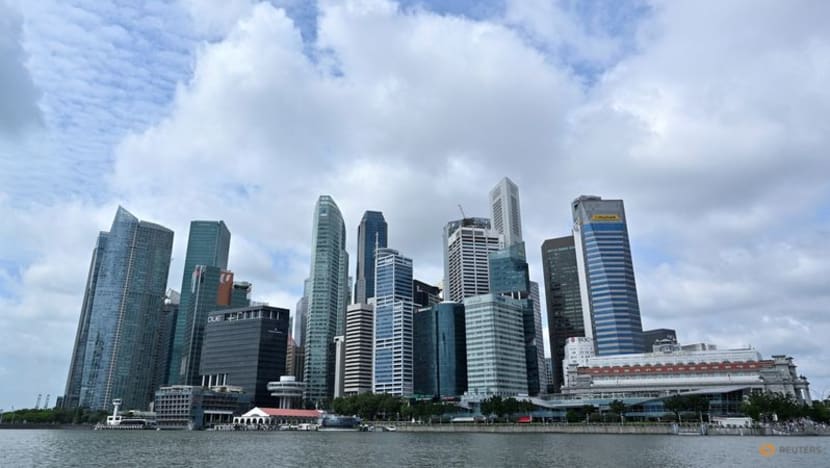
The Straits Times Index (STI) has been on an impressive upward trajectory this year, closing near all-time highs nearly every week. However, this raw index figure only scratches the surface of Singapore's stock market reality. The STI is the primary gauge of the Singapore Exchange (SGX) and represents the performance of the 30 largest companies listed on the exchange.
On a year-to-date basis, the STI delivered a 24% return, outperforming the broader Asia-Pacific market (19.4%) and global equities (13.8%) over the same period. While this appears to indicate a strong market, the STI's composition belies a more nuanced picture. The index is heavily weighted, with 57% of its composition resting on just three local banks - DBS, United Overseas Bank, and OCBC.
Consequently, fluctuations in their share prices have a disproportionately large impact on the STI's overall performance. When compared to the S&P 500, where the top three companies make up only 20% of the index's weight, the concentration in Singapore's banking sector is notable. The three local banks have been among the STI's strongest performers, with DBS leading the charge, with its market capitalization surpassing the S$200 billion mark following a surge in its share price.
OCBC and UOB have also seen significant gains. This concentration in banks is unsurprising given their robust earnings and Singapore's status as a safe haven for funds. However, the STI's reliance on these banks raises concerns about the market's depth and sustainability. While strong bank performance is expected, the STI's lack of representation from other sectors, such as property, technology, manufacturing, and biotechnology, indicates that the index does not fully capture the diversity of Singapore's listed market.
Initiatives by the Monetary Authority of Singapore (MAS) to boost overall market participation, including a recent S$6.5 billion Equity Market Development Programme, have shown some success. Yet, the STI's heavy concentration in banks means that investments in benchmarked funds, which mirror the index's composition, are heavily weighted towards the three component banks.
This concentration also makes the market vulnerable to bank-specific factors, such as interest rate changes and AUM flows. As Singapore's market continues to evolve, it is crucial to examine whether the STI's current weighting accurately reflects the market's overall health and performance.
Written by urgent.news from CNA - Business's reporting — not their text. Machine-written — may contain errors; check the original before relying on it.
This story
This is one outlet's version. Read the fullest account.
- Commentary: What STI’s record run doesn’t say about the Singapore stock market channelnewsasia.com