Commentary: What STI’s record run doesn’t say about the Singapore stock market
When Singapore is more than just its financial sector and banks, the Straits Times Index shows an incomplete picture, says former financial journalist Ven Sreenivasan.
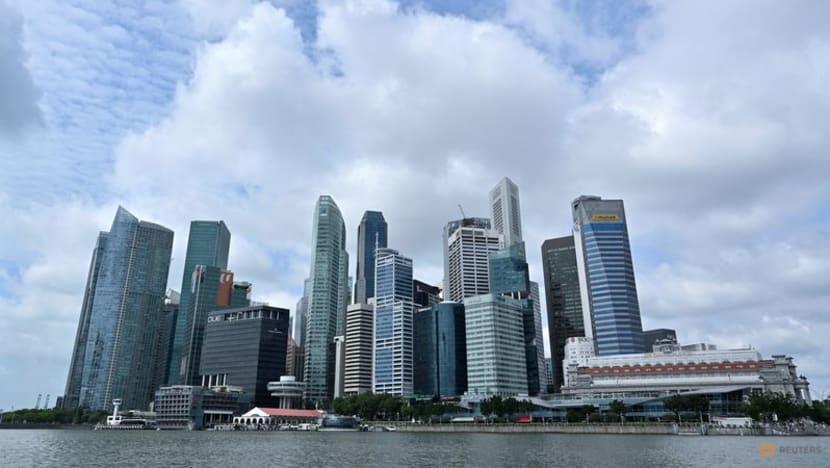
The Straits Times Index (STI) has seen an impressive run this year, closing at new highs nearly every other week. However, this raw index number does not offer the full picture of the Singapore stock market. The STI is the flagship indicator of the Singapore Exchange, reflecting the performance of the 30 largest companies listed on the exchange.
In the first half of 2023, the STI delivered a 24% total return, surpassing both the broader Asia-Pacific market (19.4%) and global equities (13.8%). On the surface, these figures might suggest an exceptionally strong Singapore market. However, the STI is not a simple average of how its 30 companies are performing. Approximately 57% of the index's weight is carried by the three local banks: DBS, United Overseas Bank, and OCBC.
Consequently, movements in their share prices have a more significant impact on the STI's rise or fall. These banks have been strong performers, with DBS leading the charge, its market capitalization surging past S$200 billion and shares jumping over a third this year. OCBC has risen nearly 60%, while UOB has climbed about 17%. Beyond the banks, Singapore Exchange, Singapore Technologies Engineering, Wilmar International, and Singapore Airlines have also contributed to the index's advance.
The strength of these banks' performance is not surprising, given their robust earnings and Singapore's status as a safe haven for funds. The inflow of funds into the Singapore market has been substantial, particularly after geopolitical crises in the Middle East and elsewhere. The Monetary Authority of Singapore (MAS) has launched an Equity Market Development Programme, injecting S$6.5 billion to boost investor participation and listing activity in the broader market.
While the programme has shown some success, the "concentration problem" persists, which means the ST index continues to present an incomplete picture of the market. The STI's heavy reliance on banks shapes where investment money flows and introduces additional risks. The combined assets under management (AUM) of STI exchange-traded funds (ETFs) exceeded S$5 billion in June, with net inflows for a 15th consecutive month.
This heavy investment in banks raises concerns about vulnerability to factors affecting banks, such as changes in interest rates and asset flows, which could pull down the index even if other sectors remain strong. To truly reflect the market's value, depth and representation beyond the surface momentum are crucial. While the STI shows promising momentum, the IPO market has shown signs of weakness lately, indicating a potential lack of depth in the market.
Investments should be directed toward other segments of the market to ensure true representation and market resilience.
Written by urgent.news from Channel News Asia's reporting — not their text. Machine-written — may contain errors; check the original before relying on it.
Also reported by 1 other outlet
- Commentary: What STI’s record run doesn’t say about the Singapore stock market channelnewsasia.com