Commentary: What STI’s record run doesn’t say about the Singapore stock market
When Singapore is more than just its financial sector and banks, the Straits Times Index shows an incomplete picture, says former financial journalist Ven Sreenivasan.
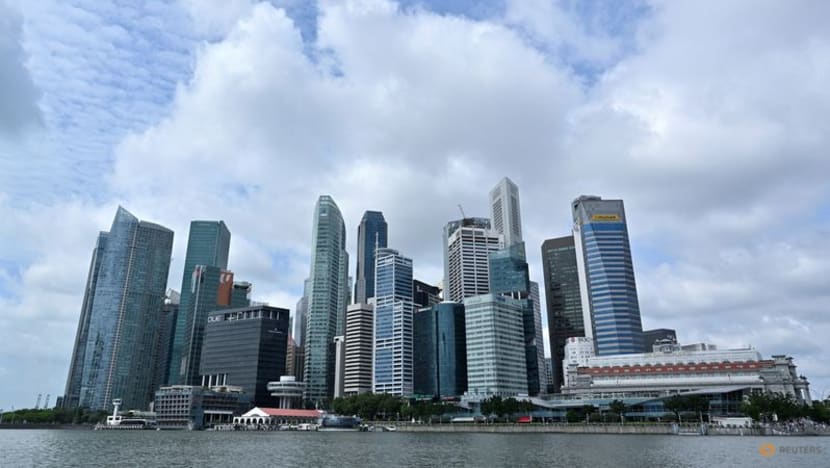
The Straits Times Index (STI) has experienced a remarkable year, closing at record highs almost every week. However, relying solely on raw index numbers fails to capture the full picture of Singapore's stock market. The STI, the flagship indicator of the Singapore Exchange (SGX), comprises the performance of the 30 largest companies listed on the bourse.
As of Monday (Aug 17), the index delivered a 24% total return year-to-date, outperforming both the broader Asia-Pacific market (19.4%) and global equities (13.8%). At first glance, this suggests a robust Singapore market. Yet, this apparent strength is deceptive. A significant portion of the STI's weight is concentrated in three local banks - DBS, United Overseas Bank, and OCBC - which collectively account for 57% of the index's weight.
Consequently, fluctuations in their share prices exert a more pronounced impact on the STI's direction compared to other companies. This concentration is starkly different from the S&P 500, where the top three companies represent only 20% of the index's weight. The dominance of these banks in the STI is understandable given their strong earnings and Singapore's appeal as a safe haven for funds.
Nevertheless, the strength of the STI and its banks is not solely attributable to their performance. Singapore's broader market comprises a range of sectors such as property, technology, manufacturing, and biotechnology, which are underrepresented in the STI. The Monetary Authority of Singapore (MAS) has initiated the Equity Market Development Programme, investing S$5 billion in 2025 and expanding it to S$6.5 billion this year, to enhance investor participation in the broader market.
This initiative has seen some success, with exchange-traded funds (ETFs) tracking the STI garnering over S$5 billion in combined assets under management (AUM) in June, resulting in 15 consecutive months of net inflows. However, the STI's heavy reliance on banks introduces additional risks. Should significant changes to interest rates or AUM flows occur, they may adversely affect bank earnings and share prices, subsequently pulling down the index, even if other sectors remain robust.
To truly reflect the market's value, Singapore's stock market needs depth and diversity, not merely surface momentum. The current structure of the STI raises questions about whether it sufficiently represents the market's depth to sustain its recent resurgence. The weakness lies in the fact that despite a promising beginning, the IPO market has faltered recently.
For liquidity to extend beyond the usual blue-chip companies, particularly the banks, other sectors of the market must receive genuine representation on the benchmark index.
Written by urgent.news from CNA - Singapore's reporting — not their text. Machine-written — may contain errors; check the original before relying on it.
This story
This is one outlet's version. Read the fullest account.
- Commentary: What STI’s record run doesn’t say about the Singapore stock market channelnewsasia.com